I started a new semester of school in January, and so any room for personal reading has shrunk exponentially, sadly. When this happens, I tend to reach for shorter, sometimes breezier, books. I want to be mostly entertained, and I don’t want to have to work for a story. If you’re also in need of a quick-ish read amidst a hectic schedule, I’m sharing a few of my recent reads that require minimal commitment. I hope you find something you enjoy!
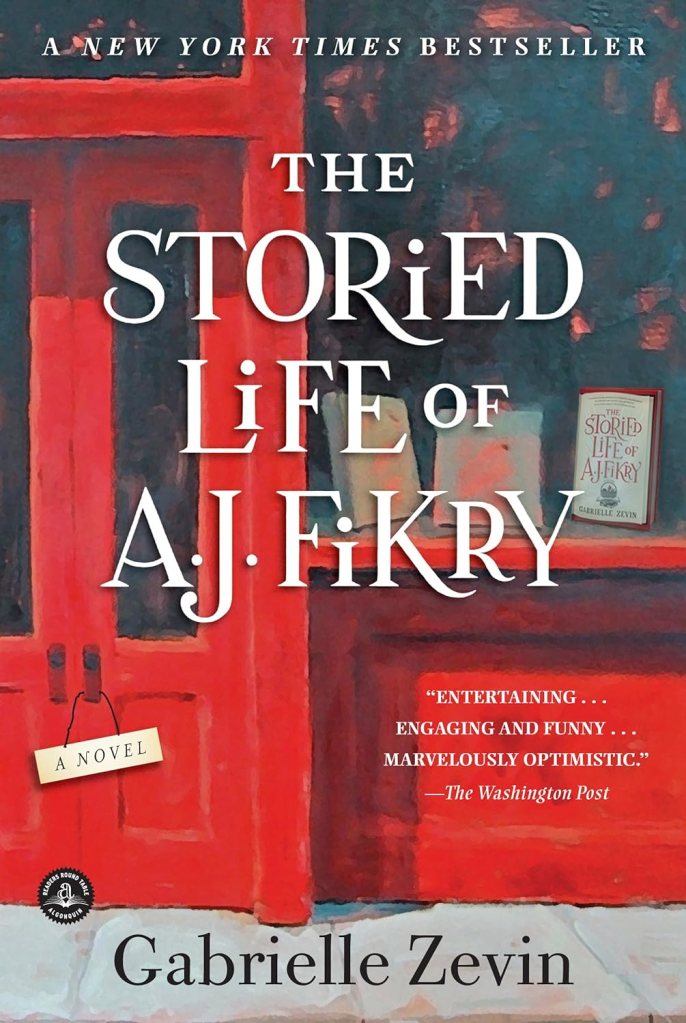
I started the year strong with The Storied Life of A.J. Fikry, by the same author who wrote Tomorrow, and Tomorrow, and Tomorrow, a book I loved. Like that novel, this one is charming and moving without ever feeling too dense or heavy.
Once upon a time, A.J. Fikry moved to Alice Island with his wife to open a bookstore. This pleasant life temporarily softened his cynical outlook. Everything changes when his wife unexpectedly dies. Now a widowed bookseller, there’s not much keeping him tethered to Alice Island… or to life, for that matter. He devises a simple plan: sell his rare Edgar Allan Poe book and leave town for good.
But when the precious book goes missing, his early retirement evaporates into thin air. And that’s only the beginning. Another surprise soon implodes his carefully laid plans in a much more meaningful way. The unexpected twists and turns offer A.J. something he never anticipated: a second chance. He might have become an isolated, grumpy older man, but instead life offers him love, community, and a renewed sense of purpose through books.
This novel was such a joyful reading experience. A.J.’s life has its ups and downs, as all lives do, but the story never feels like an unwieldy roller coaster. It’s more like a Ferris wheel: you reach a high point almost without realizing it, and then steadily come back down. The triumphant moments feel like delightful gifts; the harder ones are easier to swallow. Each chapter opens with a short literary review written by A.J., which feels like a little bonus for fellow bookworms.
Dear reader, I have returned with more comforting Japanese reads for you. Every time I write this type of blog post I feel as if I am collecting my favorite throw pillows to sit amongst on my favorite couch. The pillows may be mismatched but all have the same theme, whether it be a print, color, design, etc. And each pillow has a story behind it. I hope to tell those stories well in today’s post.
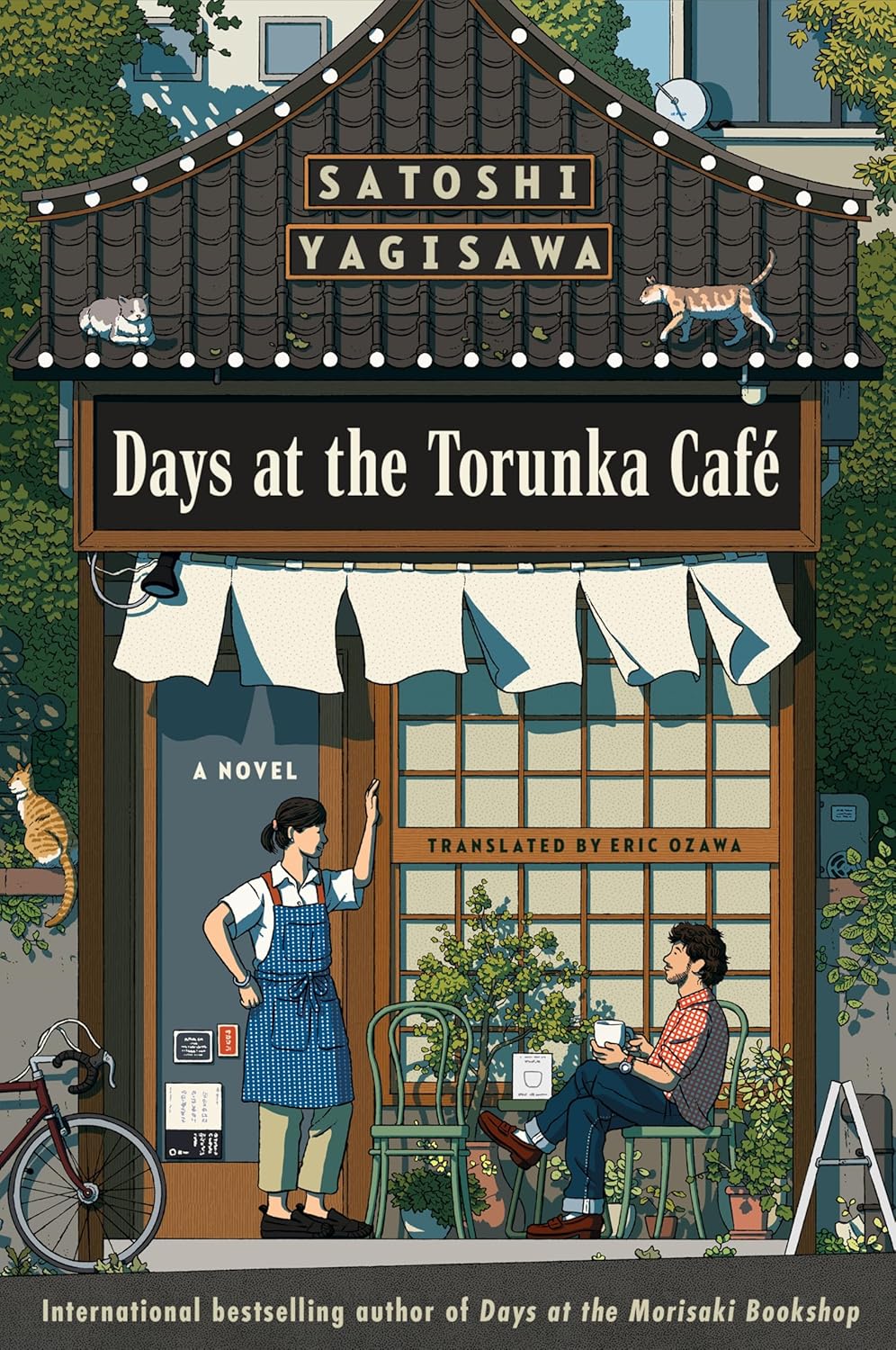
Tucked away on a narrow side street in Tokyo is the Torunka Café, a neighborhood nook where the passersby are as likely to be local cats as tourists. Its regulars include Chinatsu Yukimura, a mysterious young woman who always leaves behind a napkin folded into the shape of a ballerina; Hiroyuki Numata, a middle-aged man who’s returned to the neighborhood searching for the happy life he once gave up; and Shizuku, the café owner’s teenage daughter, who is still coming to terms with her sister’s death as she falls in love for the first time.
While Café Torunka serves up a perfect cup of coffee, it provides these sundry souls with nourishment far more lasting. Satoshi Yagisawa brilliantly illuminates the periods in our lives where we feel lost—and how we find our way again.
As with many other Japanese novels I have read, the business in question has its solidified customer base that knows how to find it, and it is always hard to find except by those who need its mysterious healing powers and the camaraderie of its inhabitants. The Torunka Cafe happens to be down a narrow alleyway and there is always a cat to guide you to its door.
This book is as much about the nourishing properties of a well made cup of coffee as it is about the customers finding healing and the ability to forgive both themselves and others. Each chapter is written in the first person from the perspective of a different character. I found this perspective switch hard to follow at first, but quickly got used to it as the book went on.
In a particular conversation one of the characters tells another, “When things don’t go well, you might think ‘damn it’, but sooner or later what happened to you is going to become something that sustains you in the future. And when you start something new, there’ll be hassles too, but it’ll be exciting, won’t it?” This is a theme carried throughout the book with all three of the main characters.
There is also an interesting backstory on the cafe’s name that sent me down a rabbit hole, but I’ll leave you to discover that on your own, dear reader!
People generally look ahead in the New Year, to the dawning possibilities and the existential dread of endless choice. It’s not for me, this embarrassment of variety, this perversion of content creation, this deluge of intellectual property. Let’s, you and I, with the power of library catalog software, look at some of the books that have been available for checkout since their publication or since Mead first opened its doors in 1897.
The Overcoat (1842) by Nikolai Gogol The Russians are great to read in winter. I love feeling desolate. Gogol is my particular favorite among them. His writing is bleak and luminous, much like some winter days. This short story is considered his greatest.
The Moonstone (1868) by Wilkie Collins Collins is often credited for writing some of the first stories we could compare to modern mystery fiction. As a fan of classical mysteries myself, I have found Collins to be slightly long-winded and dusty, but others will revel in his gilded language. He is contemporaneous to Sir Arthur Conan Doyle, who I encountered first, and who is still my Victorian ideal for mystery/adventure writing.
The Hamlet (1940) by William Faulkner Faulkner makes my head hurt. He is not for me. I find the prose dense and hard to parse. The rest of the world disagrees, and the rest of the world has a bigger, higher-functioning brain than I, with which to comprehend Faulkner. Visit any library in the country and you are likely to find something by William Faulkner, and Mead is no exception.
A Tree Grows in Brooklyn (1943) by Betty Smith I have never read this book but I always knew about it. There was this gag in a 1940s Looney Tunes cartoon in which a bunch of tough New York City dogs are getting ready to kick Bugs Bunny’s ass, so he grasps around him and holds something out to defend himself. All of a sudden all the dogs RACE away from Bugs, which is when we learn the title of the book: A Tree Grows in Brooklyn. That’s right. A dog pee joke. Mid 20th century animation has provided me with an education in the humanities, and has made me the refined citizen I am today.
Anyhoo, I bet the book is worth a read since it has been in continual circulation since its publication.
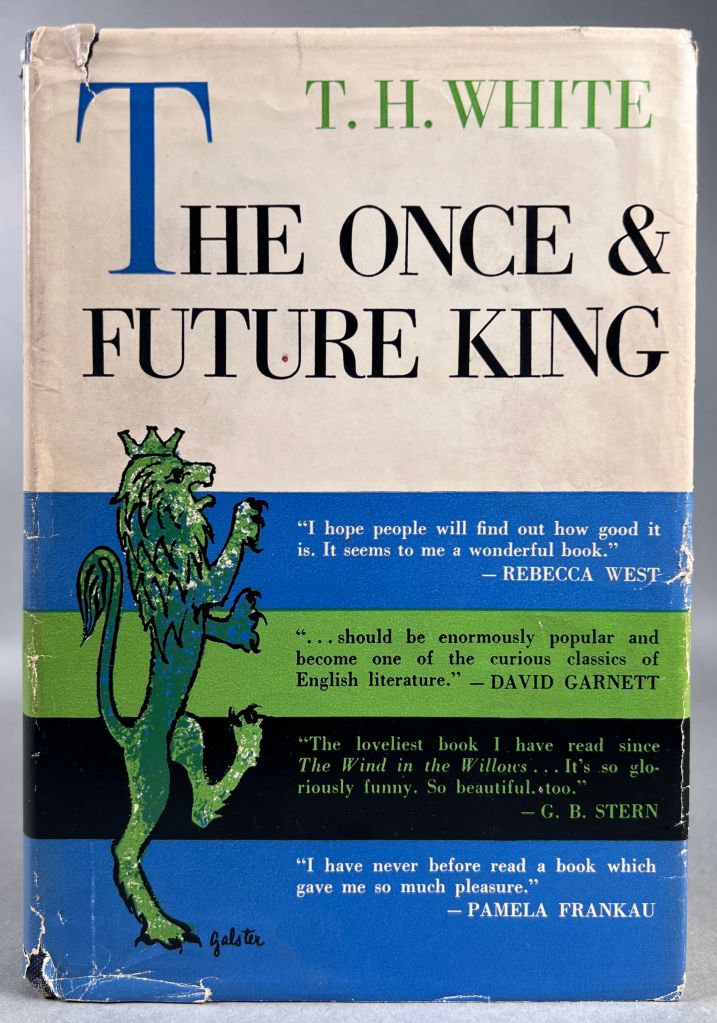
The Once and Future King (1958) by T.H. White This is the five-book collection of White’s definitive retelling of the Arthurian legend. The first book, The Sword in the Stone, was published in 1938, and is an abiding classic. Mead’s copy was published in 1958 and has been in constant circulation since. Do you get a sense of time and place from old objects like books? I do.
Memories, Dreams, Reflections (1962) by C.G. Jung The esteemed Swiss psychiatrist and physiotherapist spent his last days finalizing this autobiographical work. His contribution to the field of psychiatry has impacted the study of religion, philosophy, archeology, anthropology, and literature. The man defined the concepts of introversion and extroversion, for one, and we all frame ourselves through this lens. Read all about it, in his own words here.
Never Cry Wolf (1963) by Farley Mowat Hey, I never read this book either, but I HAVE seen the movie. There is a scene relating to canines and canine urine in this story, which I think dovetails nicely with my remarks about A Tree Grows In Brooklyn.
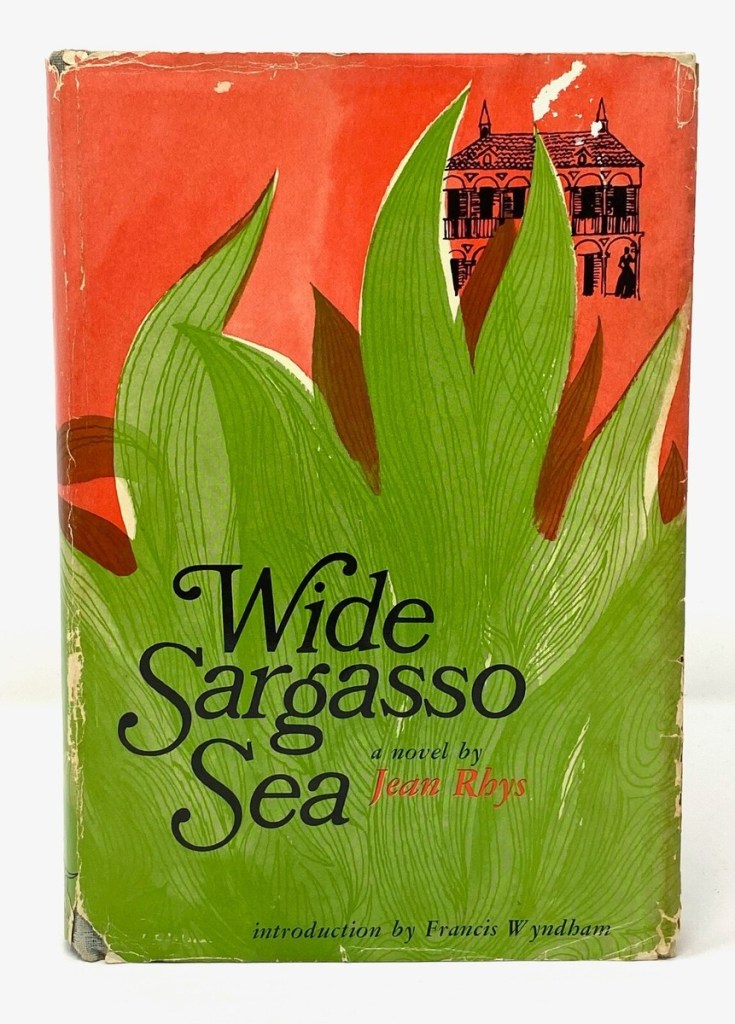
Wide Sargasso Sea (1966) by Jean Rhys Remember how Mr. Rochester was keeping his crazy wife hidden in the attic? Yeah, that wasn’t so cool, was it? The mad wife has a name, Antoinette Cosway, and this is her story.
Twiggy: How I probably just came along on a white rabbit at the right time, and met the smile on the face of the tiger (1968) by Twiggy This book is tall and thin, just like Twiggy. Damn her, for pushing these unrealistic beauty standards on printed material.
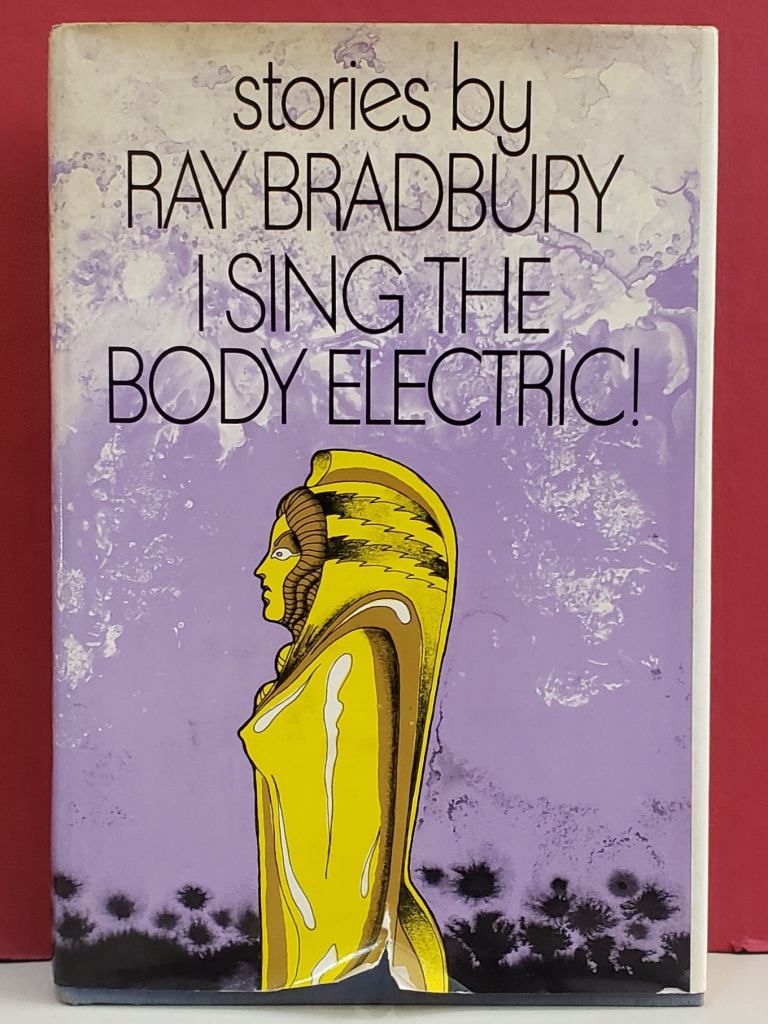
I Sing the Body Electric! And Other Stories (1969) by Ray Bradbury Isn’t that the title of a song from the hit 1980 musical, Fame? That’s what I thought for a long time until I became familiar with the work of Walt Whitman. We all learn at a different pace.
As for Bradbury, his work doesn’t need promoting. He is easily one of the most beloved authors of the 20th century. We had to read one of the Illustrated Man short stories in 6th grade English class and then we had to read the same story in freshman English four years later. Sheboygan Area School District’s failure to branch out from “The Veldt” in the 1990s is a failing I won’t soon forgive.
How does Mead staff decide what stays on the shelf and what goes? Once material has been added to the collection, it mostly depends on how often something circulates. Books that sit unmoving for three years are usually removed from the collection, or “weeded”, to make way for newer, more sought-after titles. This material is donated to the Friends of the Mead Public Library, who then use it to stock their fabulous annual book sale. I love the process of managing the collections at our library, and I love the ecosystem of access it creates.
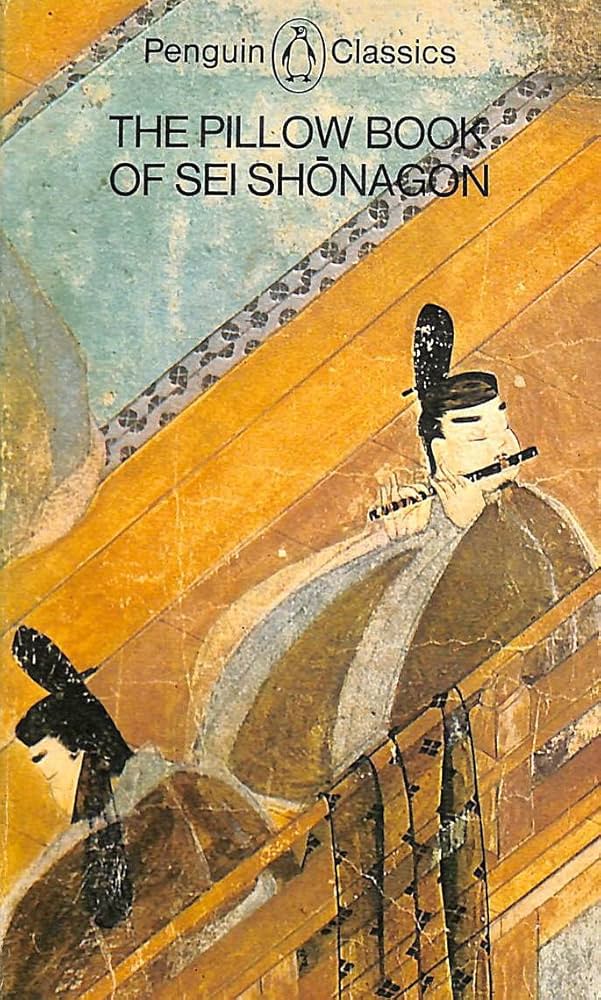
What are your favorite books published in the 20th century or earlier? What is the earliest-published book you have ever read? Mine is The Pillow Book of Sai Shonagon, first published in Heian-era Japan in the year 1002. Available now in the Monarch catalog!
Dear reader, I did a revolutionary act these past weeks. You want to know what it is? Hold onto your seats! Wait for it! I…read a book on my own bookshelf! I simply selected one and started reading it. I know, I know, I can’t believe it either. So many library books sitting at home, and yet I go and do something like that. Unbelievable!
However, it was for a good cause, so I could have something to write about for my blog post. The first book I’ll be talking about I just finished last night. Evening shifts at work are good for something after all, who knew? This first book wasn’t exactly a light read, despite what the cover may portray, but it was still highly satisfying. What I love about reading books by foreign authors is the glimpse into the everyday lives of people that at once seem familiar, but in other ways teach you something new and surprising. As a person who has never travelled outside of the United States, I approach these books as my “travel guides”, so to speak.
Dok-go lives in Seoul Station. He can’t remember his past, and the only thing he knows for certain is that he could really use a drink. When he finds a lost wallet filled with documents, his life is drastically changed.
Mrs. Yeom, a retired history teacher and current owner of her neighborhood’s corner store, is distraught over the loss of her purse, until she receives a mysterious call from the person who found it. To thank this down-on-his-luck stranger, she offers him a free meal from the convenience store. Seeing the joy the food brings him, Mrs. Yeom impulsively invites him to stop by for lunch every day.
In a twist of fate, Dok-go saves the store from a robber—a brave act that propels Mrs. Yeom to offers the bear-like man a job working the night shift, despite the objections of her wary employees. The store’s new employee quickly wins over the quirky denizens of the neighborhood, becoming a welcoming ear and source of advice for his coworkers and neighbors’ problems, and helping his new boss save the store from financial ruin. But just when things are looking up for Dok-go, Mrs. Yeom’s good-for-nothing son, eager to sell the store, hires a detective to dig into the mysterious man’s past and what he seems to be trying so hard to forget.
The Second Chance Convenience Store is a moving and joyful story of a woman fighting for her community and a man who has lost everything except the will to try again.
If you’ve read my other my other blogs highlighting various novels by foreign authors you will recognize what is coming next, that many of them have the characters drawn to or interacting with the same thing, person, experience, etc., and then showing how each character is changed because of that interaction. This may seem repetitive to some, and even boring, but believe me when I say it is anything but! I never tire of reading about each character’s transformation.
In the case of The Second Chance Convenience Store, all the characters interact with – you guessed it! – the convenience store, but more importantly, it’s recent nightshift hire, Dok-go. Mrs. Yeom doesn’t need the convenience store from a fiscal point of view, but she keeps it running to provide jobs for those who do. When Dok-go returns Mrs. Yeom’s wallet to her and she – out of gratitude – gives him a job, this creates a butterfly effect for several other characters Dok-go comes in contact with. These are all characters who in some form or another have hit rock bottom and feel they have nowhere to go. Through food, kindness, his halting speech, and corn silk tea, Dok-go gives them hope and a new perspective.
These characters have dark, depressive thoughts. They contemplate suicide, – as does Dok-go himself – they’ve been alienated from their families, from society, from themselves. The book goes into how each character got caught up in the rat race, sacrificing everything to make it big in life, to prove that they’re not a failure to their parents, spouses, or families, but in the end this didn’t satisfy them, they were lost. The glimpse into how Dok-go slowly lost his humanity as a homeless individual living at Seoul Station was eye-opening as well. There is one line in the book where, when Dok-go finds Mrs. Yeom’s wallet and sees the note that, if found, please call this number, he says that please is what made him feel human. Even after he gets the job at the convenience store, Dok-go continues to visit the homeless community at Seoul Station and show them kindness, offering corn silk tea in place of alcohol, and conversation in place of silence.
One thing I found lacking with this book was the lack of closure with Mrs. Yeom’s son. I won’t give it away, but basically he is spiraling ever downward from one money-sucking scam to another, and while the book mentions in the end what became of his latest scam, unlike other children who were reconciled to their parents and turn their lives around, we are left hanging as far as Mrs. Yeom’s son is concerned. Again, it’s highly possible I missed something! I’m not the most attentive reader, after all.
‘Tis the season for year-end lists! This is one that I’m super excited to share. It’s been a truly incredible year for sci-fi, fantasy, and horror. Some of these books have been getting well-deserved hype, whereas others have flown more under the radar. All of them and many more can be found in our collection at Mead Public Library. A quick caveat before we begin: I’m only one person, and even with my book-dragon tendencies, it would be impossible for me to keep up with all the great new releases in a given year. If I overlooked one of your favorites, give it a shoutout in the comments! Sharing recommendations is one of the great joys of the reading life. Now, without further ado, on to the list!
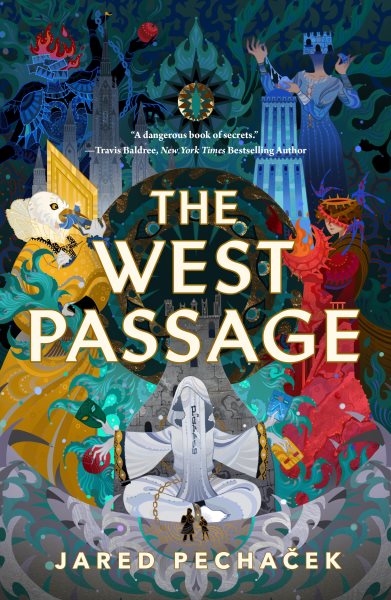
For centuries, the Guardian and the women of Grey Tower have defended the rest of the enormous palace where they dwell from the invasion of the Beast through the West Passage. But when the Guardian dies without passing on her name to her successor, the West Passage falls into jeopardy, and winter comes out of season. Yarrow, the new Mother of Grey House, embarks on a quest to set the seasons right. Meanwhile, the deceased Guardian’s successor goes to petition the Ladies of the palace for the right to take the Guardian’s place. The West Passage is that true unicorn of a fantasy novel – reading it feels like reading fantasy when you were a kid, balancing the familiar and the completely new into a synthesis of enchantment. You can see influences here from Lewis Carroll, Ursula K. LeGuin, Hayao Miyazaki, and more, but The West Passage remains its own beautiful and strange creation. This was a privilege to read, and I can’t wait to see what Pechaček does next, whether in this imagined world or in a new one.
Dear reader, concerning books, is there any greater joy than finding out a sequel is coming out in one of your favorite series? I think not!
This recently happened to me with two of my favorite series. The first is the On Devonshire Shores series by Julie Klassen, book three is slated to be published in December of 2024! A small town by the sea, rambling old houses, romance, a hint of danger, and family drama, but it’s all wrapped up in a cozy shawl you curl up with in your favorite reading chair. Dear reader, if you have not acquired a reading chair, let me implore you to do so quickly! A short second to finding out a new volume is soon coming out in your favorite series, is knowing your favorite reading chair is waiting for you at home, along with a table for a cup of hot tea.
But I digress! Getting back to that family drama bit I mentioned, this is the main thread in book three of this series. You see, there is the mysterious eldest sister that is hinted at in books one and two, but finally in book three we learn how she is doing in the present time and get to hear more of her backstory in her own words, rather than through the lenses of her younger sisters.
Disgraced eldest sister Claire Summers has been living in exile as companion to a stern great-aunt in Scotland. About to lose her place and longing to be reconciled with her estranged family, Claire sees an advertisement from someone looking for a “respectable female partner” in a Sidmouth boarding house. Is it a sign? She answers the ad, hoping she has not made another reckless mistake. When she meets the handsome, secretive proprietor, she wonders what he’s hiding and if he’s any more trustworthy than the nobleman who betrayed her years ago. Claire is drawn to him even though she fears he will reject her when he discovers her genteel façade hides a less-than-respectable past.
Meanwhile, the Summers family learns their great-aunt has died and Claire has disappeared without a word. The sisters rally together to find their lost sibling, but will their unexpected reunion heal old wounds and rekindle their bonds . . . or deepen the divide?
Return to the captivating Devonshire coast as the Summers sisters navigate romance, second chances, and the enduring strength of sisterhood in the face of adversity.
I started reading books in the regency romance genre last year, and haven’t looked back! It’s fascinating to read about all the different types of clothing – especially for women – as well as all of the societal standards and marital expectations. It really makes you think about all the modern conveniences we take for granted today.
Dear reader, this next series is something completely different, the Kamogawa Food Detectives series by Hisashi Kashiwai. Every once in a while I go down a rabbit hole of looking up a book on Amazon and at the bottom there’s a handy thing where Amazon shows you similar books that other customers bought, and before you know it I have several new, upcoming releases on hold at the library! Does anyone else do that and yet act surprised when they all come in at once? Please tell me it isn’t just me. No? Good!
Anyway, that’s how I found out about The Restaurant of Lost Recipes, the second in the Kamogawa Food Detectives series. The first book, The Kamogawa Food Detectives, is another you could shelve under the heartwarming category. People who have lost their way find the restaurant by providence – it’s poorly advertised on purpose, so only those who really need its services can find it – and have favorite meals recreated for them, bringing them back to a specific place and time, and by the time they finish the meal they have peace of mind and found closure, finding it easier to move on.
I distinctly remember the first time I had bibimbap, a Korean dish where bibim means mixing and bap means rice. I had just toured the Mitchell Park Domes in Milwaukee with friends in winter. Once at the restaurant I ordered a Lavender jasmine tea, thankful for the warmth, but was even more delighted when a steaming and sizzling stone bowl of bibimbap was set before me. Dear reader, those crispy rice bits at the bottom of the bowl, let me tell you! That was in 2017 and I still remember it fondly.
I also have fond memories of waking up and walking down the stairs to breakfast at my grandparent’s house. Grabbing my favorite mint green bowl and filling it with apple jacks, or coming back after a day of adventuring to find the whole house smelling of my grandma’s stew, the little kids table set up in the living room for my brother and I, where our uncle would sometimes join us and make us laugh so hard we could barely eat.
We all have strong memories attached to food. In the first book of the series, Chef Nagare and his daughter, Koishi, ask as much about the remembered dish as possible, even the specific place and time it was cooked in matters, as there are often regional differences with food. By reading this book – and the sequel! – you’ll learn so much about Japanese food, as well. It’s fascinating!








 Mead Public Library Blog