How many of you can finish this quote: “Oh, look, another glorious morning….” Can you guess the journey that I took in my readings this past month? I have always enjoyed watching shows like Charmed, Sabrina the teenage witch (the original), The Chilling Adventures of Sabrina, A discovery of Witches, and movies like The Craft, Hocus Pocus, and Practical Magic during this time of year. I’ve even added a few new witchy shows to my watchlist this year. I also noticed that my reading list has been quite lacking in witchy reads, and when I say lacking, what I mean is almost non-existent. Yes, I have read books with witches as sub-characters, but not usually the main character. Which surprised me a bit! Perhaps, I have watched so many witches on television and in movies I felt content.
As we move into the next season, I was looking for something a little different. I decided to go on a quest to meet some new witches. So, grab some of your favorite witch’s brew and come, let’s start our journey…
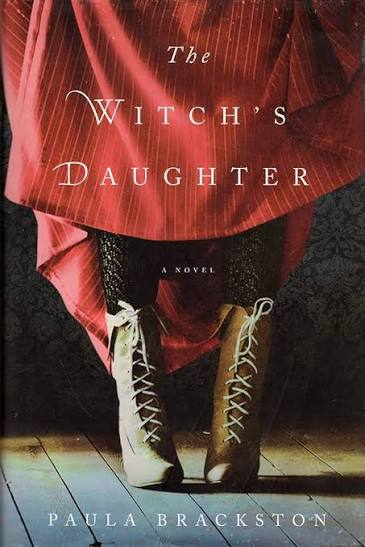
The first witch I got to meet is, Bess Hawksmith. We first meet the young, carefree, spirited Bess in 1628 at the height of the witch hunts in England. After tragedy hits her family and village in the form of a deadly plague, she also has to watch her mother be tried and hanged as a witch. All alone, Bess is forced to go seek protection from a local warlock, Gideon Masters. Gideon teaches Bess how to use and awaken powerful magic. She is forced to make a deal with Gideon, not knowing all that it entails. Part of the magic makes her immortal. Bess knows that she does not want to be connected to evil, she makes a vow to never use magic in dark ways and flees to escape Gideon’s control. She then spends the next hundreds of years on the run.
We next meet, Elizabeth three hundred and eighty-four years later in modern day England. She has recently settled in a small English village; attempting to find the balance of being seen just enough not to draw attention to herself and trying to remain isolated and not draw attention to herself. Yes, you read that correctly. This is something that every time Elizabeth reinvents herself, she has to learn all over. Every society is different in what they will accept, and since she ages very slowly, staying in one place too long would bring too many questions and attention. Elizabeth knows the dangers firsthand of letting others get too close to her. So, when she meets Tegan, a new inquisitive teenage girl, she realizes just how lonely she truly is. Tegan is also lonely, and their relationship goes quickly from teacher/student to maternal. The teaching’s Tegan receives are how we get to meet the many different versions of Elizabeth’s throughout the years and history. We meet four in this book. Elizabeth is extremely protective of Tegan, almost to the point of smothering. So, when Gideon re appears after all this time, she is finally ready to fight him head on for the first time to protect the young girl that she has come to love and care so much for.
This book is a wonderful blend of my two favorite genres: Historical Fiction and Fantasy. The author did an amazing job including small details so that you were able to imagine yourself right there experiencing everything right next to Bess. Including the time that there was a certain infamous killer on the loose in England. This book will also make you hear a popular holiday song differently; I don’t think I will hear it now and not think of these characters. I felt the writing/story was easy to follow even though the timelines do jump around a bit. I really enjoyed this story, and I can’t wait to see how Bess and Tegan’s story continues in the sequel, “The Return of the Witch.”
Dear reader, I have reached that point in my manga reading where I’ve finished one beloved series while also waiting for the latest English-language volumes of other series to be released. So I went to Google and searched for other series similar to ones I’m reading now, to tide me over! That is how I found the three manga series I’ll be talking about today.
Of course, if you’ve been reading my blog posts for any length of time you’ll know that I love cats! So what better to write about than cat-themed manga? Name a better duo, I’ll wait!
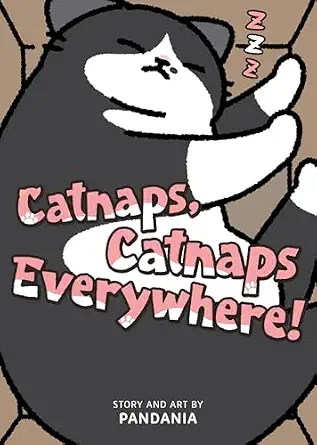
Return to the adorable world of PANDANIA in the newest cat comic. A box, a sunbeam, or a comfy lap: there’s plenty of places to find a napping cat!
Necchi is a big, long cat who enjoys napping, lazing around, and finding new ways to get attention from his human. Stretched out in a sunbeam or curled up in a box, Necchi is never picky about where he lounges! This sweet boy never scratches or knocks things over if he’s displeased–he simply extends a paw in refusal. And he always knows when his human needs cuddling.
Enjoy the daily life of Necchi and his human from the master of cat manga, PANDANIA!
Dear reader, I feel like I wasn’t fair to this manga series the first time I read it. I kept expecting it to be like one of my most favorite manga series, Nights With a Cat, where both the cat and humans are very expressive and very realistic both in looks and in actions. While Necchi the cat is realistically drawn and behaves like a normal cat, his human is not realistic in appearance. My main problem could just be I didn’t like the art style of Catnaps. I think it kept me from fully immersing in the story.
But that aside, I still enjoyed reading this volume! The dynamic between Necchi and his human was fun to read. Necchi got into things he shouldn’t, behaved in ways that his human found bizarre, and made him worry as well! The seemingly trivial things he worried over where Necchi was concerned made him very relatable. Which one of us that has pets hasn’t fretted over the smallest thing?
Also, having grown up with a 20+ lb. cat I found Necchi’s big size relatable as well! Every time I see “normal-sized cats” I’m always shocked how small they seem! What do you mean your cat isn’t the size of a small dog? How strange!
Dear reader, I am here today to talk about something I’ve never talked about in a blog post before, magazines! Thanks to the kind and very helpful librarians at our reference desk here at Mead I was able to learn about a new feature in the Libby app! Do you use Libby at all? I hope you do, it’s a great resource available to all cardholders!
Earlier this year my sister-in-law’s mom mentioned to me how she was gifted a subscription to a magazine called TeaTime. After looking it up I was intrigued! Of course I went straight to the Monarch catalog to see if I could find it, but alas, it wasn’t there! I remembered that Mead has several resources available where you can read magazines online, but I didn’t have any luck finding it there either. So I did what any respectable library patron does when they need help…I asked the librarians! They showed me how to access the Magazine Rack feature in Libby where you can search for and subscribe to magazines! I was set! There is even a feature where you can read back issues, which, believe you me, really held me over during those two month stretches between issues!
If you’re worried about the magazines not translating well to a tablet, phone, or computer, have no fear! Although admittedly, the bigger the screen you can view them on, the better. At the beginning of each story there is a button that says article that you can click on. Not only do the pictures come up full screen, but the orientation of the text changes too so it’s easier to read.
Another bonus is that, since you’re reading the magazine online, if there are product links you can simply click on them and they will take you straight to the website! Let me tell you, this has been a most dangerous feature whenever I’m reading TeaTime. Many a new and exciting tea has been ordered each issue!
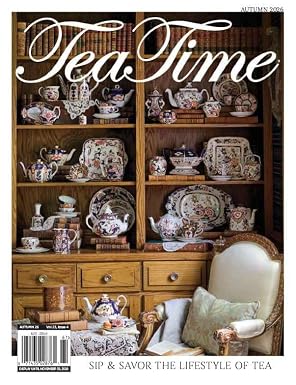
TeaTime is designed to appeal to the growing market of tea lovers. This bimonthly publication highlights tearooms and their owners, providing tea party ideas and sharing enhancements to the enjoyment of tea. TeaTime is a source book for all who love tea and who want to enrich life with the serenity of teatime. The magazine proclaims the pleasures of tea as a gourmet beverage, and offers informative articles that range from food features to tearoom profiles. TeaTime goes beyond the history and science of the beverage and celebrates the art and passion that make drinking tea a memorable occasion.
Dear reader, I have only ever attended one tea party in my life, and I cannot bake anything, even if I was facing imminent death, but even still, I thoroughly enjoy each TeaTime issue bestowed in my Libby app! That is one of the greatest powers of reading, is it not? Living vicariously through others, whether they be real or imagined! Each delicately made, miniscule finger sandwich, tart, scone, etc., that graces an elegantly designed table almost makes me want to take up baking, just to experience some of the pure magic for myself! Emphasis on the almost! Each table setting is thoroughly thought out, from the design of the dishes and cups, the flatware, and even to which desserts will be paired with which teas, and the order the teas arrive in! At the end of each article it will always list each tea and where to find it.
TeaTime also features elegantly appointed tearooms throughout the United States, as well as outside of it. It also features tea cruises! Who even knew those were a thing? Amazing! What I find most tantalizing, though, are the train rides featuring tea! Dear reader, when it comes to train rides, I am a hopeless romantic. It’s a direct byproduct of my obsession with steam trains. Imagine sitting on a plush velvet chair looking out at the mountains and small towns gliding by while you sip delicious tea. Pure heaven!
Of course the magazine also talks about the history of tea, which is equally fascinating. I don’t know about you, dear reader, but when I read historical accounts from other countries that are centuries old, I’m always struck with a sense of awe. Compared to most other countries, the United States is truly a young country. It’s hard for me to imagine such ancient history! But that doesn’t get in the way of my enjoyment of such stories.
How the tea is grown, how it’s harvested, the different drying methods to achieve different strengths and types of tea, it’s always intriguing! Learning about such things can make you appreciate that hot cup of tea all the more
Book selectors in public libraries often rely on tools known as core collection databases. These resources provide lists of material that will, under ideal circumstances, always be on the shelf. Think books like James Baldwin’s Giovanni’s Room, Mastering the Art of French Cooking by Julia Child, or Antoine de Saint-Exupéry’s The Little Prince. There isn’t really a resource of this nature for maintaining library DVD collections. Instead of relying on publisher-provided collection lists, I compare which DVDs Mead owns against lists of films from around the internet. I look at the New York Times 1000 Essential Films, lists provided by the American Film Institute, as well as lists on Rotten Tomatoes, Letterboxd, IMDB, you name it. Basically, any list of movies I encounter gets compared against the catalog and I purchase what we’re missing and what might need replacing.
Lately, one of the best and most interesting lists I’ve been referring to is the Library of Congress National Film Registry. Each year since 1989, 15 films deemed culturally, historically, or aesthetically significant are inducted into the registry. The films must be at least 10 years old at the time of their nomination. The registry was formed at the behest of filmmakers like Martin Scorsese and Frank Capra in response to practices like pan & scan for television or videocassette release, and colorization of black and white film without creator input or approval.
Film has always been a particular area of interest for me, but the rate at which I watch has decreased significantly since about 2015. I blame my lapse mostly on the twin attention destroyers that are smart phones and COVID-19. The National Film Registry (NFR) was filled with dozens of movies I haven’t seen, and many that I had never even heard of. While comparing the list against our collection, I made a separate list of all those unseen (to me) films, and started checking them out based on which hadn’t circulated for the longest time. I’ve been enjoying myself a great deal and decided to record my progression through the watchlist, and challenge myself to watch one movie a day for an entire year. Below, I listed the films I’ve been watching starting on June 30, 2026. I hope to have watched roughly 365 movies by the time June 29, 2027 rolls around.
Gentle reader, please understand that I am going to spoil the shit out of some of these movies, so proceed at your own peril. Also please notice that not all films on this list have been inducted into the NFR. The National Film Registry list is merely my cata-list for this post, you know what I mean?
Date range I watched these movies in: June 29-August 11, 2026 Days elapsed: 42 Total movies watched: 30
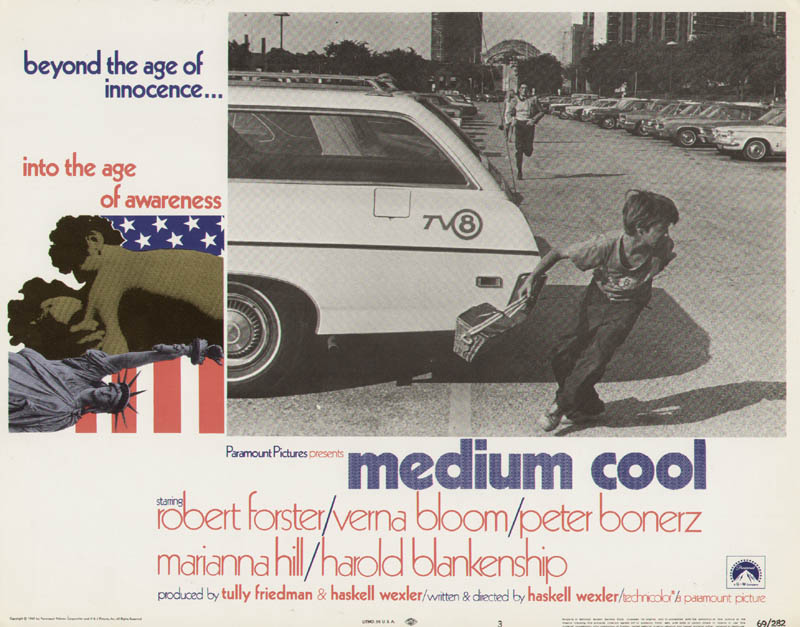
Action: The Equalizer 2 (2018) starring DENZEL The Equalizer 3 (2023) starring DENZEL Medium Cool (1969) starring Robert Forster and Verna Bloom One Battle After Another (2025) starring Leonardi DiCaprio and Sean Penn Tokyo Drifter (1966) starring Tetsuya Watari
While Glory (1989) and Philadelphia (1993) ARE in the NFR, none of Denzel’s three Equalizer films have been inducted, yet. Man, that guy hates it when things are not equal! He’ll equalize at night, or during a hurricane, or on a train. Man, you name it, and Denzel has equalized in and around it.
Medium Cool and One Battle were directed by the big-timers. Legendary cinematographer Haskal Wexler filmed the astonishing Medium Cool partially during the Chicago Democratic National Convention riots in 1968, blurring the line between storytelling and the 6 o’clock news. One Battle won Best Picture in 2025, and it’s worth a watch just to see Sean Penn’s face go through every facial expression known to man.
Tokyo Drifter is slick, stylish, and fascinated Quentin Tarantino. I don’t think Reservoir Dogs would exist without Tokyo Drifter.
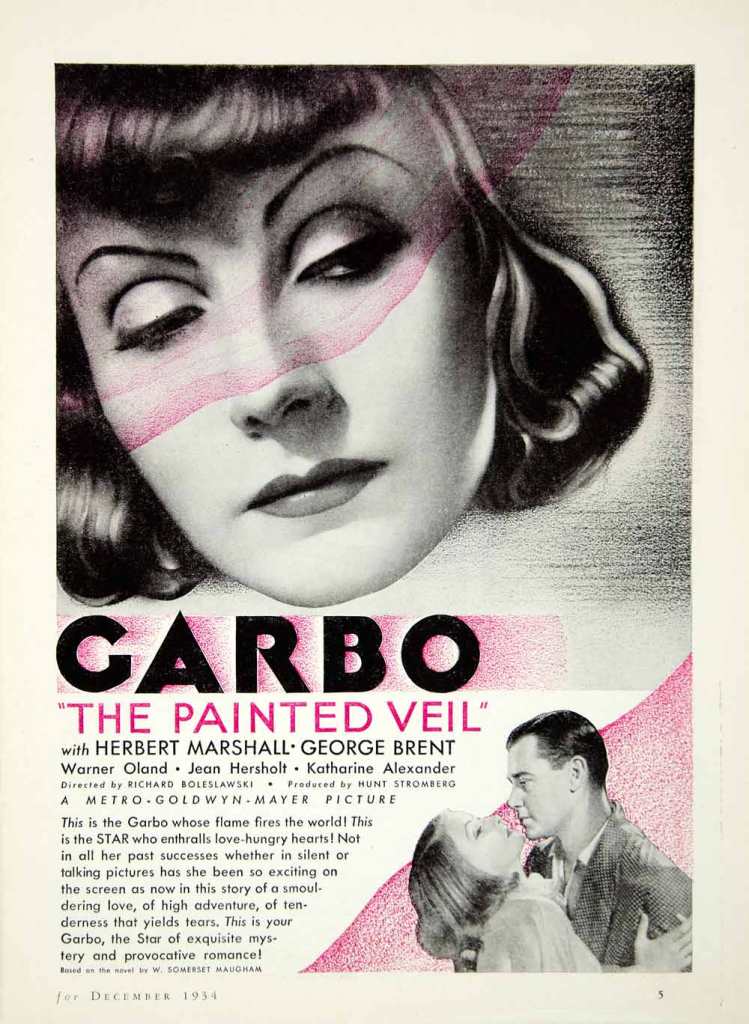
Did Not Finish: Lassie Come-Home (1943) starring Roddy McDowall and Elizabeth Taylor Love Affair (1939) starring Irene Dunn and Charles Boyer The Painted Veil (1934) starring Greta Garbo This is Cinerama (1952) dir. Mike Todd Jr.
Give yourself permission to not finish what you started when it comes to leisure reading or viewing. It’s good to push through some discomfort, but it’s also good to give yourself grace. I DNFed the above movies all for various reasons.
Lassie Come-Home was filmed in the 1940s, so I was feeling a lot of distress for the wellbeing of the on-screen animals and once they killed off a fictional dog, I tapped out. Read the book and get the idea without the added animal cruelty. Elsa Lanchester spotted.
When Irene Dunn gets hit by a car and decides not to tell her love interest Charles Boyer in Love Affair, I practically threw the remote across the room and performed what I believe the kids call a “rage quit”. Fun fact: it is widely believed that Chuck Jones based Looney Tunes character Pepe Le Pew on the mannerisms of Charles Boyer.
Greta Garbo is so good and I love to watch her in most anything, but the depiction of Asian people in The Painted Veil and at this time in general is appalling and completely wrung out any possible enjoyment of the narrative. Racist depictions of non-white people is a big, greasy stain on the shimmer of Hollywood.
This is Cinerama was just sorta boring and very very very long. Don’t believe me? This film is available for checkout ONLY from Mead Public Library. Put it on hold and feast your eyes.
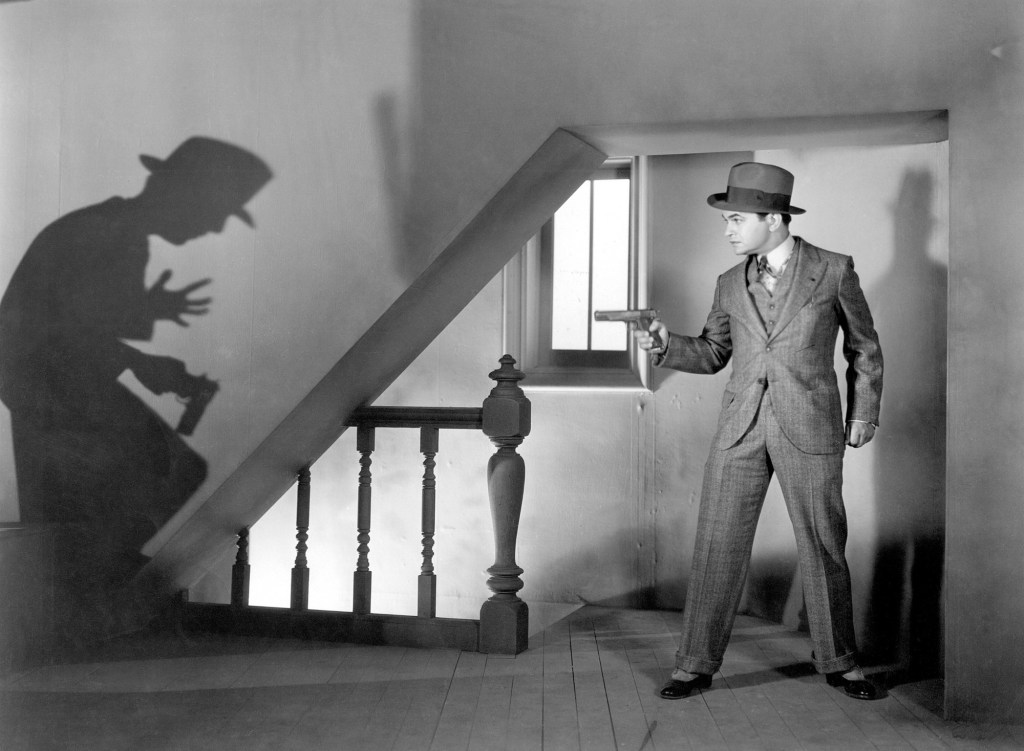
Gangster: Little Caesar (1931) starring Edward G. Robinson and Douglas Fairbanks Jr. The Public Enemy (1931) starring James Cagney and Jean Harlow Scarface (1932) starring Paul Muni and George Raft
Little Caesar and Scarface were both on Kanopy at the same time so I watched them back-to-back. I loved Little Caesar with my whole heart. Edward G. Robinson really DID have that sneer and really DID say things like “Yeah, see? I’m gonna beat you up, ya mutt, see?” His 5’5” frame could not contain the charisma he bubbled over with.
By contrast, the Howard Hawks-directed Scarface landed a little flat for me. Lead actor Paul Muni, while physically intimidating in his portrayal, relied on silent film-style over-emoting and predictably negative Italian stereotypes.
1930s Chaos: Footlight Parade (1933) starring James Cagney and Joan Blondell Naughty Marietta (1935) starring Jeanette MacDonald and Nelson Eddie She Done Him Wrong (1933) starring Mae West and Cary Grant The Emperor Jones (1933) starring Paul Robeson and Frank H. Wilson
James Cagney was well-known as a song and dance man until starring in The Public Enemy, which he was very good at, too. Modern audiences remember him more for being the little tough guy than Yankee Doodle Dandy, so it was a pleasure to watch his turn as an ambitious mile-a-minute stage musical producer in Footlight Parade. He delivered his dialogue in sharp staccato bursts and never stopped moving.
By contrast, I didn’t think much of Mae West or She Done Him Wrong. West’s character in the film, Lady Lou, was based on her vaudeville persona Diamond Lil. I love a bawdy lady, but I don’t think it translated well to the screen due to Hays Code interference. Also notable as having the shortest run time of any Best Picture nominated film at a brisk 66 minutes.
Nelson Eddie and Jeannette MacDonald teamed up for a bunch of romantic comedy musicals in the 1930s for a reason. These two corny charmers are so gorgeous on screen and together. They practically glowed in Naughty Marietta. Elsa Lanchester spotted.
I wish Paul Robeson had been in more pictures and I wish actors of color weren’t relegated to supporting or worse roles throughout much of the 20th century. I have no idea what to make of a movie based on a Eugene O’Neill play whose reliance on the n-word even managed to raise the eyebrows of contemporaneous audiences.
Noir: The Lady From Shanghai (1947) starring Orson Welles and Rita Hayworth The Long, Hot Summer (1958) starring Paul Newman and Joanne Woodward The Maltese Falcon (1941) starring Humphrey Bogart and Sydney Greenstreet
The Long, Hot Summer is actually considered a southern gothic as opposed to noir, but eh. This film has got it all. Paul Newman gleams like a prize in the southern heat and is unbelievably beautiful. Orson Welles plays a Big Daddy-type southern patriarch complete with absurd accent and community theater white hair. Cat on a Hot Tin Roof was released the same year to wider acclaim, which may account for why this movie is largely unknown to modern audiences. The Long, Hot Summer takes cues from Faulkner short stories as well as Tennessee Williams, and both star the incandescent Newman, so there is some connective tissue between the two films.
Welles showed up in The Lady From Shanghai, too, which he also wrote, directed, and starred in. The film is sort of a mess, but I loved how messy & most of the mess was studio-interference-adjacent to begin with. Instead of a southern patriarch, here Welles portrays an Irish sailor. He might be a towering genius of the 20th century, but man that accent sure came and went. He was married to Hayworth at the time and insisted that she cut off her iconic long red hair into a shorter blonde bob for the role, which incensed audiences.
We’ve been discussing three Bogie films at my movie club over the summer and we started with The Maltese Falcon in June. It’s based on the Dashiel Hammett novel of the same name, so I gave it a re-read. Hammett was cranking out some of the greatest noir fiction in the 1940s and this might be his best. The film was of course subject to Hays Code restrictions, so reading the novel provides us with a much queerer Joel Cairo and a much seedier Brigid O’Shaughnessy. Book and movie five out of five stars.
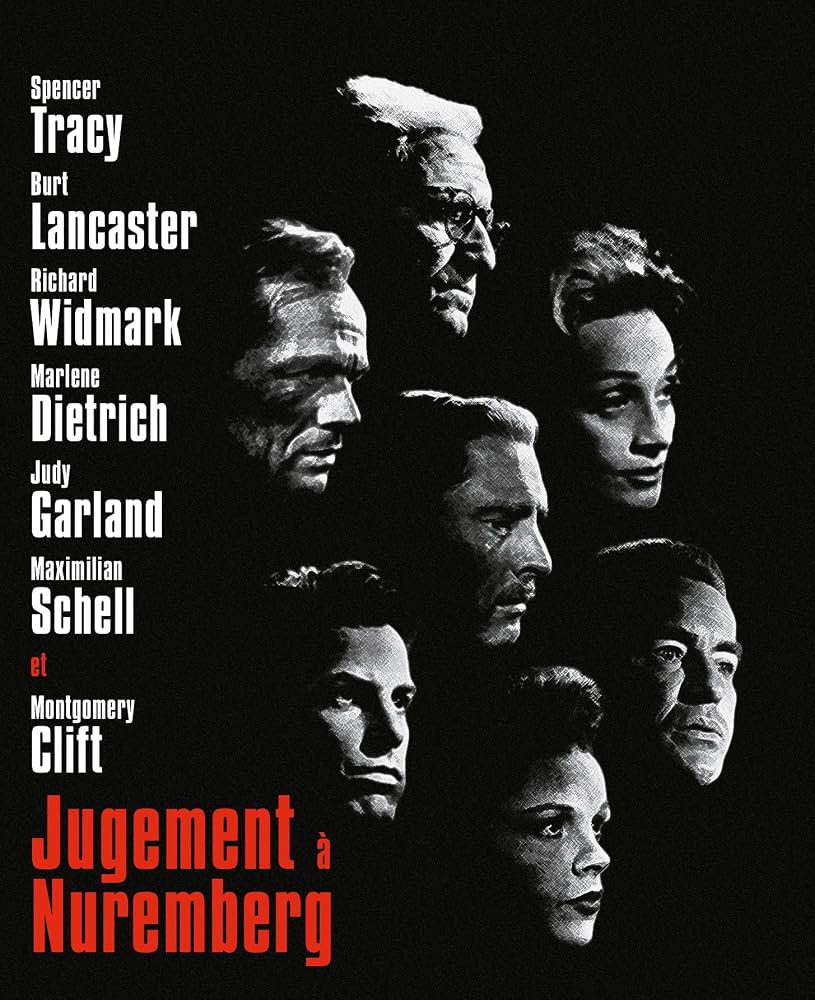
Political: The Bridge on the River Kwai (1957) starring Peter O’Toole and William Holden The Day of the Jackal (1973) starring Edward Fox and Michael Lonsdale Judgement at Nuremberg (1961) starring Spencer Tracy and Burt Lancaster The Manchurian Candidate (1962) starring Frank Sinatra and Janet Leigh
War movies tend to fall outside my comfort zone, so I was pleased to find my everloving mind blown apart by The Bridge on the River Kwai. It’s not a surprise that it cleaned up during awards season including but not limited to the Academy Award for Best Picture. The ending was so good I forgot to breathe.
The Day of the Jackal: serviceable spycraft movie, but would you believe the Book Was Better? Forsyth wrote the book over a feverish 35-day period in 1970, and I think the urgency is present in the prose in a way that can’t be translated to film.
Americans were aware of Jewish persecution by the Third Reich long before the liberation of death camps, but nothing could have prepared the world for the film and photos coming out of those camps. Judgement at Nuremberg was the first American film to incorporate actual Allied footage of camp liberations into the movie plot. I had to pause and walk away after that segment of the movie. It’s important to bear witness to the atrocities of the holocaust, but it’s hard work to not look away. This is a challenging, thought-provoking, complex film. Prestige cast before that was a thing. Just go watch it already.
Frank Sinatra is a better actor than a singer. Fight me. While The Manchurian Candidate is bleak as hell, it’s filled with towering performances. Angela Lansbury delivered the greatest role of her career depicting one of the all-time worst villains I have ever seen, and was nominated for a Supporting Actress Academy Award for it. I loved watching the plot unravel and feeling as uncertain as some of the brainwashed characters. Reminder: super bleak.
Romance: Ball of Fire (1941) starring Gary Cooper and Barbara Stanwyck Casablanca (1942) starring Humphrey Bogart and Claude Raines The Quiet Man (1952) starring John Wayne and Maureen O’Hara The Worst Person in the World (2021) starring Renata Reinsve and Herbert Nordrum
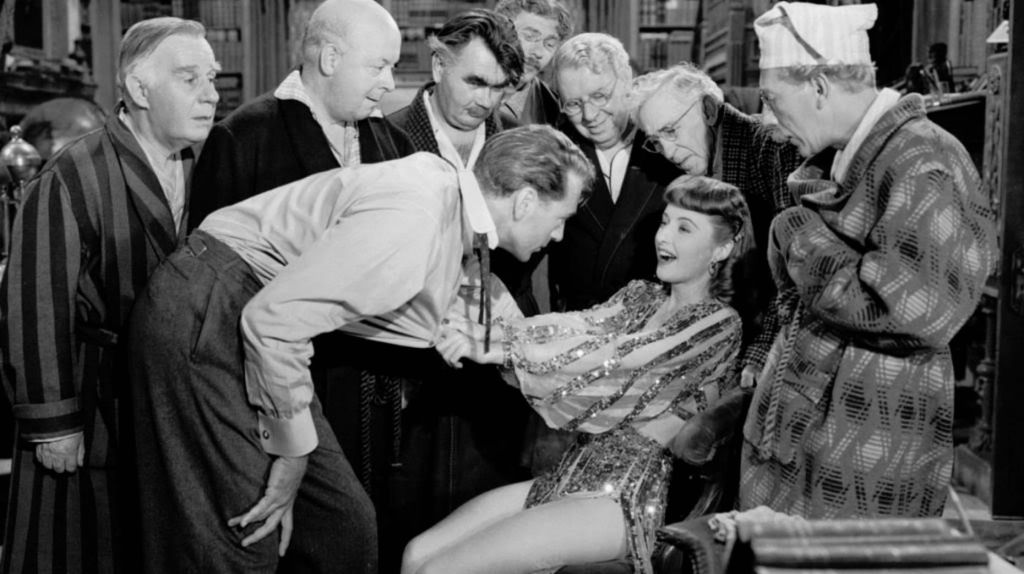
Barbara Stanwyck is best known for her icy femme fatale role in Double Indemnity. But in Ball of Fire, she is the heat to Gary Cooper’s academic coolness (and cluelessness). It’s a bit screwball, and a bit Snow White. Who doesn’t dream of rooming with a household of tweedy bachelors single-mindedly focused on writing an encyclopedia? It’s every girl’s dream. Stanwyck is so funny and beautiful. I don’t understand why this movie isn’t more well-known.
Casablanca was the July pick at my movie club. There are a few films I still haven’t seen that most people have seen, and this was one of them. I knew the dialogue by heart just from living in the world, but how fun to see it in context. Has anyone ever looked as beautiful on-screen as Ingrid Bergman in this film? Not only is this a romance, it’s a war protest picture and could be viewed through a queer lense, as well. Also, what the everloving hell does “Here’s looking at you, kid” mean????
John Ford and The Duke team up again for The Quiet Man. It’s a funny, charming, and affecting romance set in the Irish countryside. In my favorite scene John Wayne finds Maureen O’Hara in the abandoned farmhouse he just purchased. She’s getting things tidy, like a good neighbor. The door flies open from the wind, blowing her skirts and red hair around violently. She makes to leave, and John Wayne catches her around the waist and pulls her close for their first kiss. I never found John Wayne to be terribly compelling as a romantic lead, but MAN DID I SWOON. Plus ten points for nigh-indecipherable drunken Irish patois.
The Worst Person in the World is a gorgeous meditation on intimacy, milestones, work, and rest. Renata Reinsve is a STAR.
Westerns: High Noon (1952) starring Gary Cooper and Grace Kelly Stagecoach (1939) starring John Wayne Westward the Women (1951) starring Robert Taylor and Denise Darcel
High Noon was so FRUSTRATING. Poor ol’ Gary Cooper is out there grinding away to raise a posse to face the no-goodnicks he and the local judge sent up on murder charges years earlier. The townspeople are reluctant to risk their lives, his underling is a drunk manchild, and his Quaker bride is leaving town because violence is against her principles. The film takes place in real time, and that ticking clock is never far from our minds. This is one tense film.
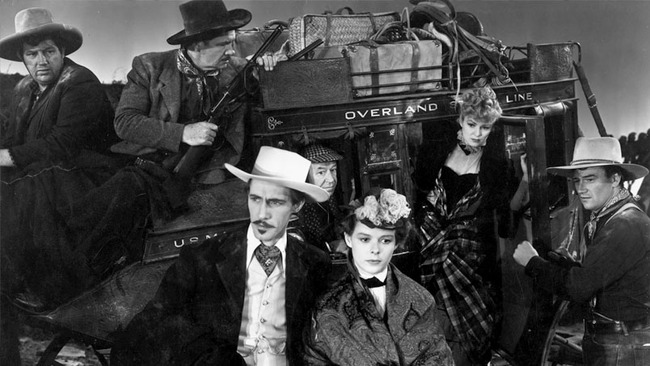
Did you know John Ford was Orson Welles’ favorite director and that he watched Stagecoach 40 times in preparation of filming Citizen Kane? Watch the film that made John Wayne a star to see why.
I wrote a little about Westward the Women in an earlier blog post, but it overlapped with my big ol’ watchlist and I don’t mind mentioning it again. This is an unconventional and gritty film that any western fan will love.
All of the above movies are available in the Monarch catalog on DVD, BluRay, or streaming on Kanopy. People living in the City of Sheboygan with an active Mead Library card have access to this streaming service. If you’re unfamiliar, take a look HERE and get an account set up. The platform is filled with a staggering array of film from home and abroad.
If none of the films I mentioned above seem compelling, consider using Mead’s Your Next Five Movies tool. Tell us your favorite movies, actors, or directors, and we’ll send you a list of five movies you might love.
In the meantime, I’ll be at home doing my best to look at the bigger screen instead of the tiny screen. Know of a great film list I might like to look at? Please write to me at publicservices@meadpl.org. And stop saying “lists” in there!
I have always found myself drawn to history. My interest ranges from more recent history all the way back to ancient histories of Egypt, Greece, and beyond. One of my favorite genres to read is historical fiction, usually I find myself with more questions at the end of a historical fiction book than I had prior to starting. Some stories really just stand out to me more than others. When that happens to me, I go searching for either books, documentaries, or movies about the actual event, or the actual person I have just finished reading about.
I find myself frequently visiting the WWII era. My journey started like most, learning in school of Anne Frank, and although I was young when the movie Schlinder’s List, I remember watching it. So much from that time period is hard to fathom, that I believe, that is what keeps bringing me back to it. Whether it be through books, movies, or documentaries if something that I have not read or seen comes to my attention, I usually dive right in.
I found that happening a lot in the past year. I feel like when the big box office shines light on this era, it brings attention back to a pivotal point in our history. With big office movies like Nuremberg and Truth & Treason hitting the screens last fall and available for streaming or DVD this past winter, I have spent the good part of this year in that era specifically on one story.
The story that stuck with me the most this past year has been Truth & Treason.
Dear reader, that is what it feels like! Although I know it isn’t true. After having been moved out of my parent’s house for almost a year, a few months ago I finally bought my own DVD player! For some reason, this more than anything else cemented the fact that I live on my own. Does that sound silly? Maybe it’s the fact that anytime I wanted to watch a movie at my parent’s house I had to either A) Wait until my parents weren’t at home or B) Ask if they wanted to watch it with me because it was their TV and their DVD player. I’m sure after my brother moved out I could have bought my own and set it up in his old room, but somehow that never occured me. I did, however, buy my own recliner and create a reading nook for myself in a corner of his old room, which tells you everything you need to know about my priorities!
Truth me told, I’m still not a big movie watcher, even with my own magical DVD player and TV! I feel like I watched the normal amount of movies growing up just like every other 90’s kid, so I really can’t explain where my preference for books over movies started, but it has always been that way. With that said, once I successfully hooked up my DVD player – with help from my coworkers! – that didn’t stop me from requesting several movies in rapid succession! The movies I’ll be talking about today are mostly those that were recommended to me from others. You see, dear reader, I’ve always been out of touch with what movies are cool and new, so I had to ask others what they’ve been watching lately! Luckily my sister-in-law and brother are big movie watchers so they are always a treasure trove of recommendations! They also have this magical thing called multiple streaming services! Something I refuse to indulge in myself because no matter how many you have, dear reader, there will always be one you don’t! So what is the point, I ask you? One of my coworkers recently shared an article that talked about how the lending of DVDS from local libraries is on the rise due to many streaming services becoming more expensive while simultaneously dropping titles and series. It’s just one more way that libraries are staying relevant and helping people to save money
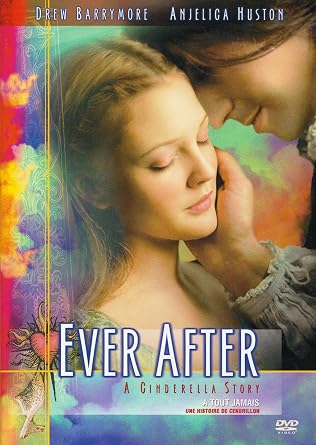
A ‘modern’ young woman of the 16th century, Danielle is as independent and wise as she is beautiful and kind. Against remarkable odds, she stands up to her scheming stepmother and works miracles on the lives around her, including the prince of France.
Dear reader, this movie came recommended to me by not one, but several people! My sister-in-law even said it is one of her comfort movies, and after watching it I agree! There was something about the setting and the characters that drew me in, especially Danielle’s character, of course. Her ability to see the positivity in every situation was notable too. When I was telling my sister-in-law how much I enjoyed watching the movie, I even had to share a quote from it with her that I had found particularly striking. It comes when Danielle goes uncover as a noble lady – and it won’t be the last time, either! – to try to release the husband of a servant who has been imprisoned. While she is confronting the cargomaster who is leading the team of the prison cart the prince walks up and asks why Maurice, the husband, should be released. Danielle replies, “If you suffer your people to be ill-educated, and their manners corrupted from infancy, and then punish them for those crimes to which their first education disposed them, what else is to be concluded, sire, but that you first make thieves and then punish them?”
Throughout this movie I even felt some affinity for Danielle’s step sister, Jacqueline, who, unlike her sister, Marguerite, is neglected by her mother and often left in Marguerite’s shadow, deemed the ‘ugly sister’ while Marguerite is pampered and preened for an advantageous marriage. I even found myself wondering, after we learn what kind of person the Baroness Rodmilla de Ghent – Danielle’s stepmother – is, why her father would have married her in the first place. What did he see in her? Maybe she was successful enough in hiding her true self and opinions, revealing them only once he was gone and she had full control of the estate.
There is another poignant scene in which Danielle confronts the Baroness, asking why she has never liked her, telling the Baroness she is the only mother she has ever had yet this is how she is treated. The Baroness responds with “how can anyone love a pebble in their shoe”? How heartrending! One feels a strong affinity with Danielle after such a scene. It also exposes the depth of evil in the Baroness.
Over the year I’ve bought very few movies, but Ever After is one I am strongly considering finding a copy of to add to my small but now slowly growing movie collection!
The Wild West period in American history only ranged from about 1850 to the early 20th century, depending on who’s measuring. Despite its brief timespan, we have remained collectively enthralled as a people to the American Frontier. In fact, one of the earliest silent film commercial successes was The Great Train Robbery (1903), which titillated audiences with footage of Justus D. Barnes aiming and firing a gun directly at the audience (proto inspiration for James Bond 50 years later? I believe so). The western is baked into the culture now, and has even left the confines of the planet (looking at you, Mandalorian). Below, I listed a few broad categories and some examples of film that would fit into each category. All listed titles are available on DVD or BluRay in the Monarch system.
Hollywood’s Golden Age The “Golden Age” as I refer to it here is loosely referring to the years between 1940 and 1960. The good guy wore white, the bad guy wore black. The quest was for justice, or to conquer an unruly wilderness. We had gunslingers, and manifest destiny. Films were still subject to the Hays Code Authority at this time, so filmmakers had to be subversive or trust the audience to pick up on subtext like domestic violence, pregnancy, queerness, and so on.
High Noon (1954) dir. Fred Zinneman; starring Gary Cooper and Grace Kelly
Johnny Guitar (1954) dir. Nicholas Ray; starring Joan Crawford and Sterling Hayden
Shane (1953) dir. George Stevens; starring Alan Ladd and Jean Arthur
Westward the Women (1951) dir. William A. Wellman; starring Robert Taylor and Denise Darcel
John Ford and John Wayne The Duke and Ford made almost 20 pictures together, most of them westerns. Along with Humphrey Bogart, Marylin Monroe, and Elvis, few other famous 20th century Americans have the same international recognition factor as John Wayne, just like the Universal movie monsters. And much like the movie monsters, John Wayne may not have had much range as an actor, but he sure was fun to watch.
The Quiet Man (1952) with Maureen O’Hara and Barry Fitzgerald
The Searchers (1956) with Vera Miles and Natalie Wood
Stagecoach (1939) with Claire Trevor and Andy Devine
1960s Some of the greatest films in history were being produced in the 1960s. The Hays Code had dissolved, and directors started flexing their muscles in earnest without the shackles of absolute studio control. While plenty of unusual and boundary-pushing American westerns were being produced at this time, the genre was making its rounds through other cultural lenses, most famously in Japan and Italy.
Cat Ballou (1965) dir. Elliot Silverstein; starring Jane Fonda and Lee Marvin
The Wild Bunch (1969) dir. Sam Peckinpah; starring William Holden and Ernest Borgnine
Yojimbo (1961) dir. Akira Kurasawa; starring Toshiro Mifune and Tatsuya Nakadai
Sci-fi westerns One of the coolest elements of the western genre is how well it blends into other genres. Below, I listed some western sci-fi highlights that saw us through the end of the 20th century and helped usher in the 21st.
Firefly (2002-2003) dir. Joss Whedon; starring Nathon Fillion and Gina Torres
Westworld (1973) dir. Michael Crichton; starring Yul Brynner and Richard Benjamin
The films I listed barely scratch the surface. Like, I hardly left a smudge on the glass here. Look for a list of western films online and you will be overwhelmed. Something like 20 westerns a year were being cranked out of Hollywood in the 1930s alone. We have access to a pretty great DVD collection in the Monarch system, so it would take a while to work through all the westerns if that’s the plan. Please send requests my way if there’s something missing. In the meantime, consider using Mead’s Your Next Five Movies tool. Fill out the form and we respond with a list of five movies you might love based on the information provided to us. And Mead Library cardholders, DO NOT SLEEP ON KANOPY. If you don’t already have an account activated, I do not know what you’re waiting for. Which movie genre should I take a shallow fly-by at next?
Dear reader, I start this blog post with yet another confession, which is thus: Although I will be talking today about three different variations on Jane Austen’s novel, Pride and Prejudice, I have yet to read the actual novel. Has that ever happened to you? I now have a fear that when I do get to reading the actual novel, my reading of it will be tainted by these three adaptations I’ve read before it. But I suppose, even if I hadn’t read them, I would still be bringing my own ideas, perspectives, and the like to the original anyway, so really is there a way for me to read Pride and Prejudice objectively?
Ironically, I have a hard time reading classics, but yet I have read three adaptation of it. My main problem with classic is I find the archaic language quite distracting, to the point where it almost gets in the way of my physical reading of the story, if that makes sense. But, never fear dear reader, I will read Pride and Prejudice at some point!
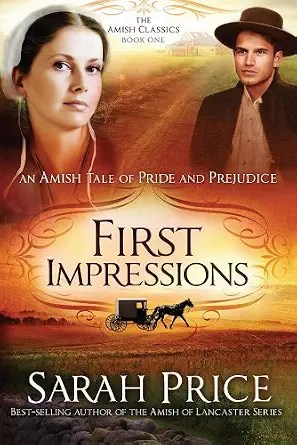
The first book I’ll be talking about is an Amish retelling by Sarah Price. The setting being Amish, I felt like this retelling was the closest to the original, what with the getting around by horse and buggy and there being no electricity. This book was actually my first foray into Amish fiction. It was something I found myself avoiding for a long time because I assumed I wouldn’t like it. What a silly thing, our assumptions! Much like regency romance, I have now fallen headlong down the rabbit hole of Amish fiction. Not only have I read other retellings of classic novels by Sarah Price, but I’ve also listened to several Amish fiction audiobooks. What worlds of reading we keep ourselves from simply by assuming we couldn’t enjoy them!
With five daughters and no sons, Daed and Maem Blank are anxious to find their girls suitors who might eventually take over their family farm. When news arrives that Charles Beachey, the son of a prominent Amish farmer, will be returning from Ohio with his cousin Frederick, they are hopeful that the young men might be good matches for their daughters.
The oldest daughter, Jane, starts courting Charles, a well-mannered and very respectful young man, but her younger sister Lizzie is not interested in either courtship or Frederick. In fact, she wants nothing to do with him, finding him full of pride and disdain for her family’s way of life. But in a community and culture where pride is scorned, Lizzie must learn that first impressions can be dangerous and people are not always who they seem to be.
This Amish retelling of the popular Jane Austen classic Pride and Prejudice is a beautiful take on the power of love to overcome class boundaries and prejudices that will win your heart.
Dear reader, I must fully admit to being more than a little bored while reading this retelling, which worries me in my endeavor to read the original text. While I was reading it, it made me think of that most infamous review of the original Pride and Prejudice, wherein the person claimed it to be “just a book about people going over to one another’s houses”. There is much more to it than that, I’m sure! Just as there was more to Sarah Price’s retelling. But taken at surface level, I could see how one would think that.
Not only was it my first glimpse into Amish life, but it was also an important lesson of the dangers of acting on first impressions, and, you guessed it, prejudices. One of the things I find most maddening in books is when one character won’t let another one fully explain a situation, instead interjecting with their own ideas and frustrations, and then leaving. It simply makes my blood boil! And then those misunderstandings get carried through multiple chapters with those characters avoiding one another, and nothing gets resolved.
I felt like Sarah Price’s retelling of Emma suffered from a lot of the same issues, with the main character – yes, you guessed it, Emma! – interfering in others lives where she shouldn’t have, and then having to face the consequences of that. Characters that think they know a certain situation and what is best, but in the end it turns out they had everything wrong and a bigger muddle is made than if they had just let things take their natural course. But isn’t that the human way?
Dear reader, can you imagine writing a book so many hundreds of years ago that is still being talked about and reimagined today? What staying power! I truly wonder what people thought of Pride and Prejudice when it was first released. How magical that must have been for readers.
The next retelling is something completely different, and is one I came across thanks to an Instagram video.
Library workers are often asked about their favorite books. My go-to answers are distributed between The Westing Game (1978) by Ellen Raskin, True Grit (1968) by Charles Portis, and The Hobbit, which is what I am most likely to answer. Between the Lord of the Rings trilogy and The Hobbit, JRR Tolkien has essentially ruined all other high fantasy for me, specifically, forever. Brandon Sanderson, Robert Jordan, George RR Martin, I respect your achievements, but dang those sure are a lot of words you wrote down, huh?
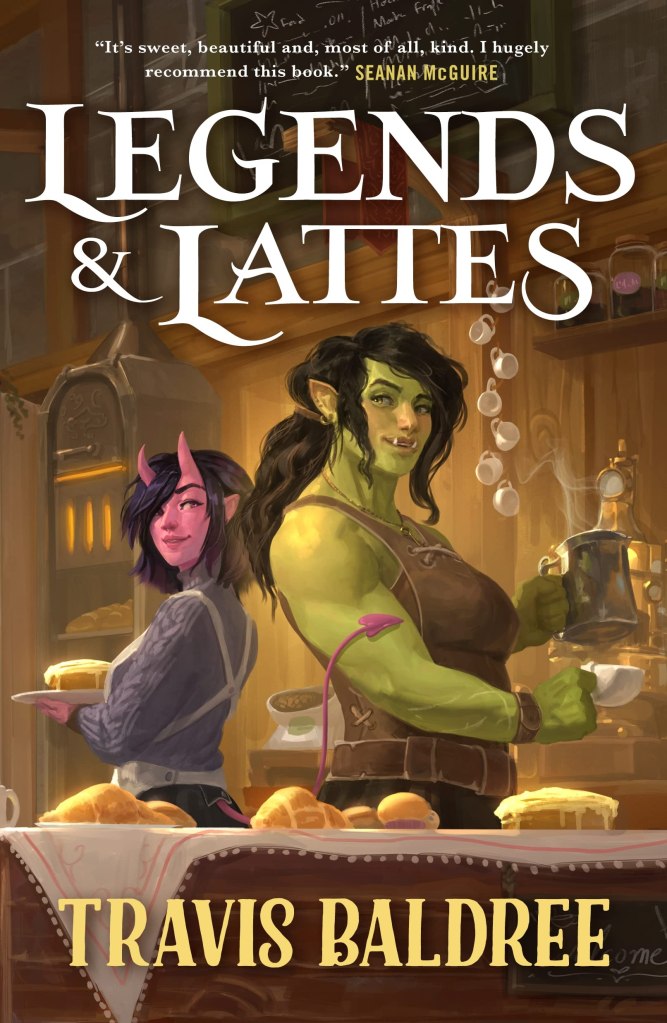
In 2022, Travis Bladree’s Legends & Lattes went mega best-seller to the surprise and delight of many. This was my gateway to cozy fantasy. There are orcs and swords and magic and whatnot, but there is also a bakery. A bookshop. An interspecies queer romance. Sometimes a mystery element. It was a balm to the soul in these trying times. I enjoyed the book so much I started looking for other books and series that might fit in the cozy fantasy realm. Below, I listed some of my favorite, and least-favorite, cozy fantasy books. All books are available in the Monarch catalog, often in a variety of formats.
Legends & Lattes (2022) by Travis Baldree This is the gold standard for cozy fantasy. It’s well-written and filled with appealing and complex characters we come to care about. Viv is an orc. She is battle hardened and weary. She is ready to settle down, and make her living slinging coffee instead of broadswords. As an audience, we know Viv won’t fail, but it sure is satisfying watching it play out. There is a prequel, and a sequel in this series. The stories relate, but don’t necessarily need to be read in order. I’m a series purist, and if I don’t read a series in order I am likely to perish. The Legends & Lattes series is now up to three books.
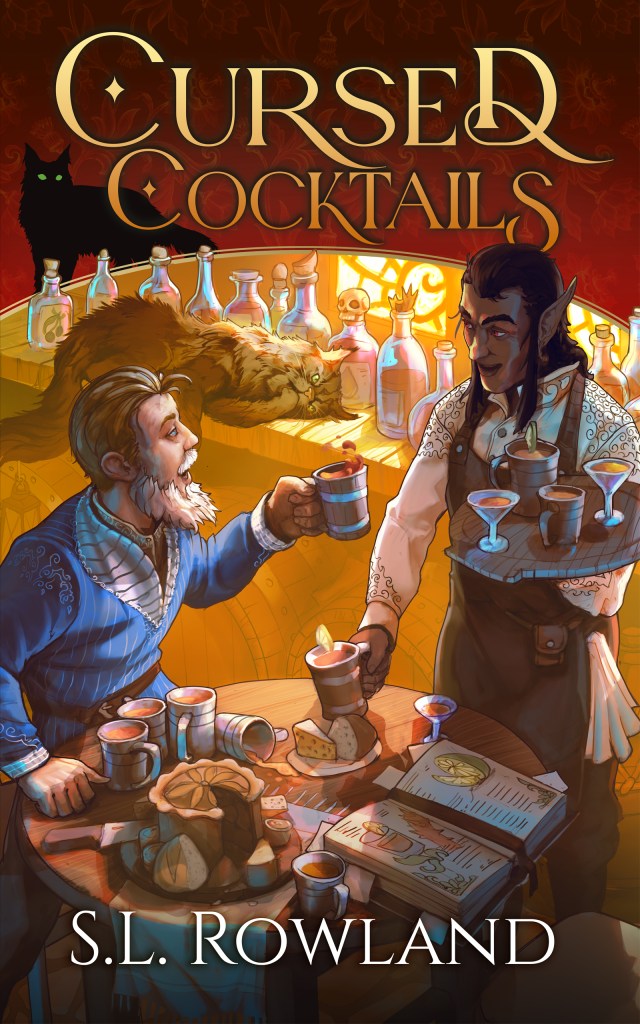
Cursed Cocktails (2023) by S.L Rowland Several imitators cropped up not long after Baldree’s massive success with Legends & Lattes, including this series by S.L. Rowland. While the prose is not as crisp and sparkly like Baldree’s, I still found myself drawn into these fantasy landscapes. The protagonist in book one of this series is an elf, not an orc. And he wants to sell cocktails, not coffee. Formulaic? Yes. But if it ain’t broke, why fix it? I read a lot of cozy mysteries for this reason, as well. The Tales of Aedrea series is now up to four books.
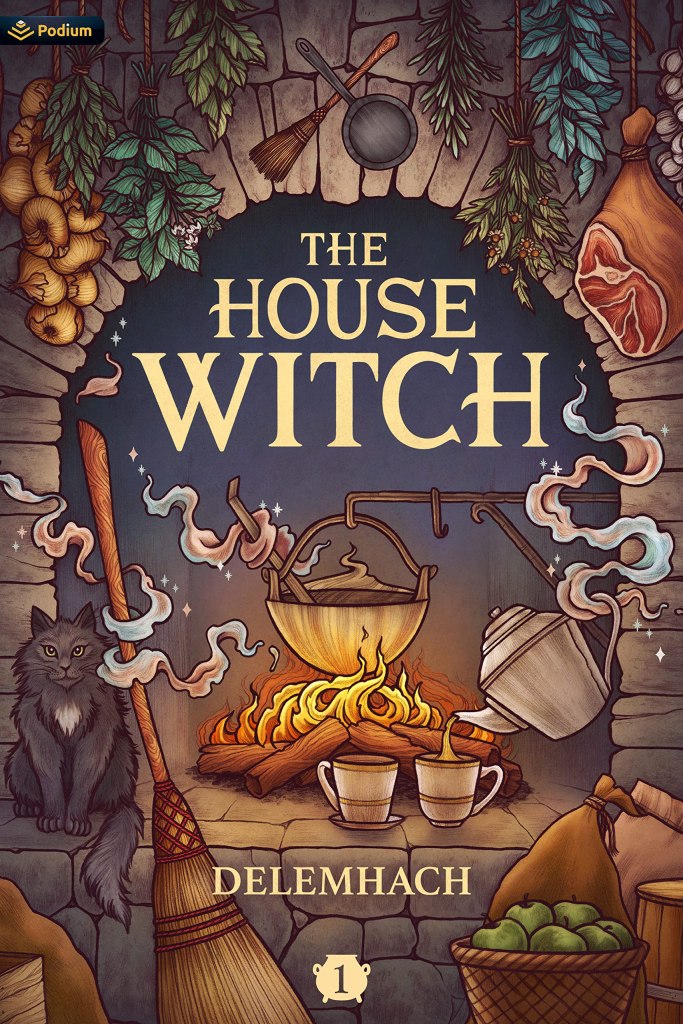
The House Witch (2022) by Delemhach Finlay Ashowen is a house witch IN SECRET. In the kingdom of Daxaria, magic is reserved for the rich and powerful, so Fin would like to keep his head down and focus on cooking the uncanny and delicious meals for his royal charges. The House Witch leans more into political intrigue and the machinations of power than the aforementioned series, so they are narratively more complex. I also enjoyed the system of magic portrayed in this series. The House Witch series is now up to four books.
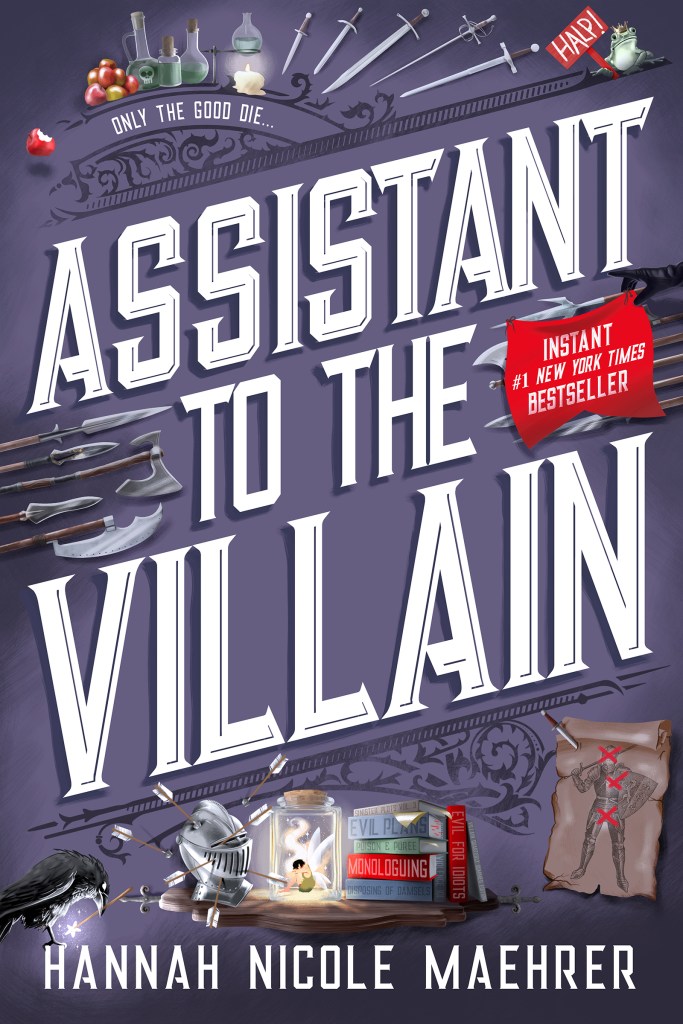
Assistant to the Villain (2023) by Hannah Nicole Maehrer While a sinister castle filled with blood and pain doesn’t scream “cozy”, one might be surprised at how sweet this story is. Evie Sage, our protagonist, stumbles into gainful employment when she needs it the most, but her new boss seems to be the big bad villain of her realm. Evie is a fish out of water who spends the next three books proving how adept she is at villain assistance. I adore the wide cast of characters we get to meet, including a sentient frog who communicates with signs, Wile E. Coyote-style. This book is occasionally very sweet and often incredibly funny. The romance element is of the slow burn variety and it is frickin infuriating. The fourth book in this series is expected to publish sometime this year.
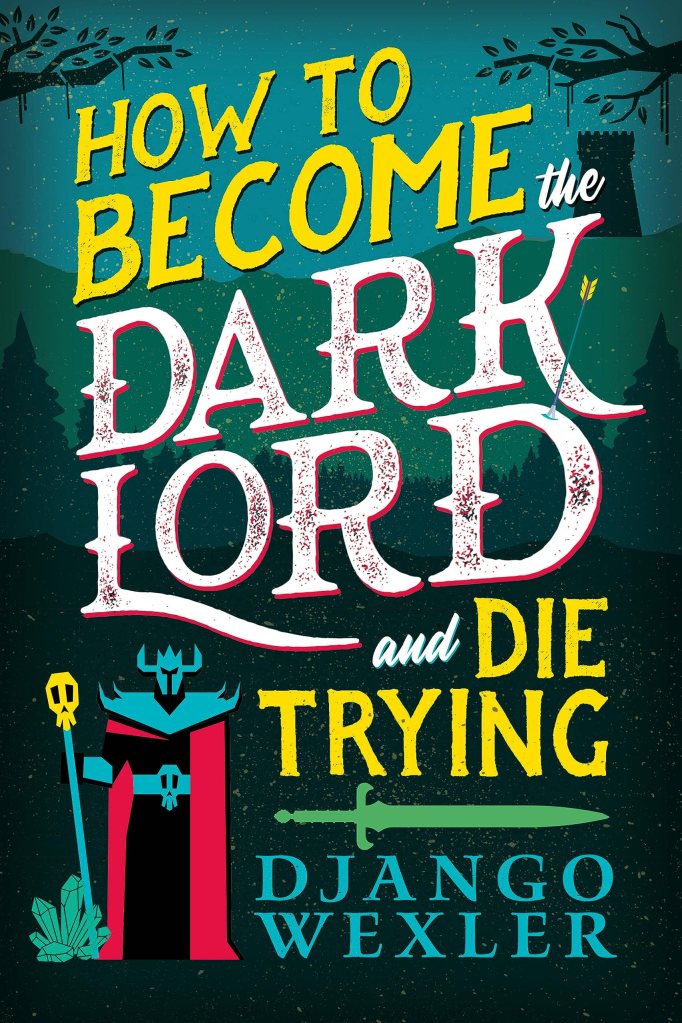
How to Become the Dark Lord of Die Trying (2024) by Django Wexler This was a great variation on the theme. Davi, our protagonist, is trapped in a time loop akin to Groundhog Day, but this time loop takes place in a massive live-action RPG. Resets happen when Davi gets killed. Davi has died over and over in her attempts to defeat the dark lord in the realm she is trapped in. Things don’t really start going her way until she decides to become the dark lord instead of defeating him. These books are much more violent than everything else on the list, and Davi does love to say the Eff-You-See-Kay word, so if that is unappealing maybe pass on this series. The Dark Lord Davi series is up to two books.
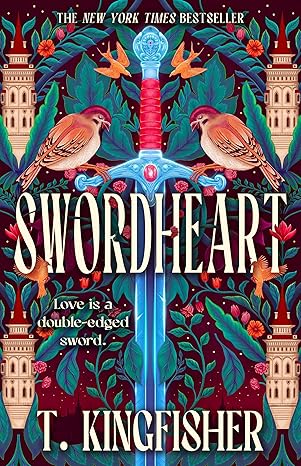
Swordheart (2018) by T. Kingfisher Yes, this book predates Legends & Lattes, but it does fit within the definition of cozy, and fantasy, and I love T. Kingfisher more than any other author, so I am going to shoehorn her books into every blog post I possibly can. Kingfisher often writes fantasy stories starring middle-aged women, which places me squarely in her demographic audience. The fact that she writes the best, scariest, weirdest stories is all a bonus. Swordheart stars Halla, and when we meet her, she is under the control of some ill-intended relatives. When she accidentally releases the berserker warrior inhabiting an enchanted sword, her world changes irrevocably, and for the better. Swordheart is one of several books set in the World of the White Rat. Characters from other books pop up here and there, which is always deeply enjoyable to me. Those who enjoy this book should run, not walk, to The Saint of Steel series. Each book has fantasy, romance, and horror elements. It works. There are two books in the Swordheart series, and four books in the Saint of Steel series.
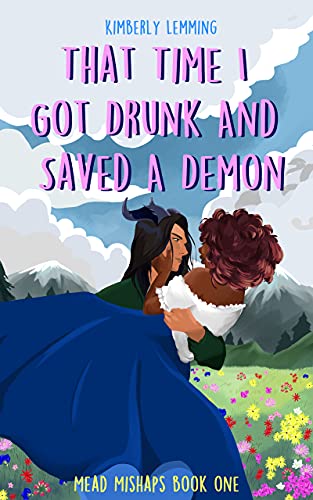
That One Time I Got Drunk and Saved a Demon (2021) by Kimberly Lemming This book is so much fun. It is irreverent, funny, and really spicy. I cannot overstate this facet. If you do not enjoy erotic content, this is not the series for you. If you want a light-hearted spicy romance to delight you on your commute to and from work, this is the one (I am assuming you are listening to an audio copy here). This is called the Mead Mishap series, which is cool because that is the name of the library I work for. There are currently three books in the Mead Mishaps series.
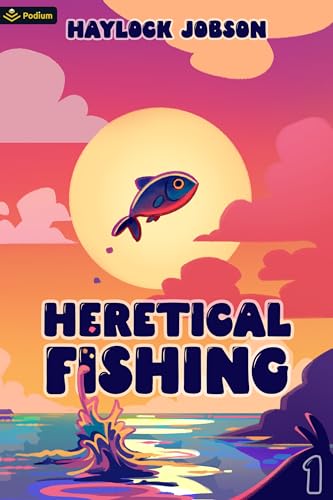
Heretical Fishing (2022) by Haylock Jobson This series popped up as a recommended read-alike to Dungeon Crawler Carl. There really isn’t anything else like DCC out there, so I was intrigued and excited. The only thing the books really have in common is that the protagonist is large, strong, and male. Here are some things I really loathed about this book: There are no conflicts, and any problems encountered are solved by the end of the chapter. I want smart people solving problems as a group and I want there to be high stakes. All the characters we meet are meant to be flimsy like NPCs, but it comes off as lazy writing. Plus, the plot was deeply predictable. This book was TOO LONG. I usually listen to audiobooks on 1.5 speed, but I had this one cranked up to double speed just to get it over with. The protagonist is Australian and if he calls one more person MATE I will die. Read this series if you want some background noise and aren’t really worried about catching all the plot points. Also, there is very little heresy in this book. The Heretical Fishing series is now up to five books.
Maybe things could have been different for me and my relationship with high fantasy if I had gotten my hands on a copy of A Song of Fire and Ice twenty years ago. My work bestie at the time, Aaron, told me about this book he loved and that he recommends it to all his friends and I just have to read it. I had never heard of George RR Martin at that point. So, I went to the public library and searched the catalog for what I believed to be the book my bestie told me about. I am still unsure how I took such a wrong turn, but I ended up checking out book one of Erin Hunter’s massively popular juvenile Warriors series. The series is about war between feral cat colonies and is aimed at a middle-grade audience. I could not figure out why Aaron was so pumped about these books. I didn’t want to hurt his feelings, so I never told him how underwhelmed I was. Once the HBO series debuted, my attentions were already diverted elsewhere.
Anyone casting around for what to read next might consider using Mead’s Your Next Five Books reader’s advisory tool. You can fill out the form by clicking HERE, and within days you will receive an email containing a book list tailored to the input you shared on the form. We also have one for movies HERE. Visit us on Mead’s second floor for in-person book finding help. As always, happy reading.
The American Library Association recently released their annual list of the top 10 most-challenged books. Take a look at the list HERE. This got me thinking about the kind of material I, personally, was reading in my formative years that would have caused my parents concern. Then, I got curious and asked library staff to tell me about the Forbidden Books and media from their own childhoods.
Below, I listed the responses from my coworkers by category with a little added commentary by yours truly. Names changed to protect the innocent. Most of the materials listed are available in the Monarch catalog if anyone wants to learn what all the fuss is about. Did you read any books in secret when you were a kid? I’d love to know what they were.
First Category: SEX A good portion of the off-limits materials my coworkers responded with was due to explicit depictions of a sexual nature. I will never forgive the Puritans for infecting this land with aversion to frippery, be it a ruffled petticoat, or a consensual roll in the hay.
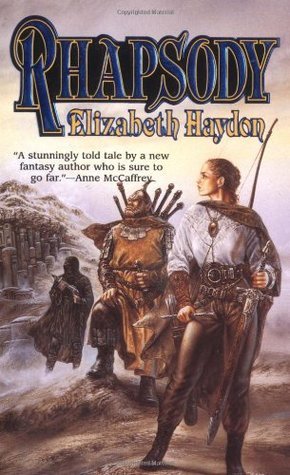
Co-worker A: “I should not have been reading The Symphony of Ages* by Elizabeth Haydon in 7/8th grade. Great action fantasy with lots of graphic sex scenes. Mom’s policy was that she trusted my judgement and as long as I was reading I could read what I wanted.” *Book one of this nine-part series is titled Rhapsody: Child of Blood (1999). And I must say, bravo mom. I wish more parents held this attitude. I knew a school librarian who really hated Captain Underpants, and I just couldn’t understand why she would hate something that got kids into reading.
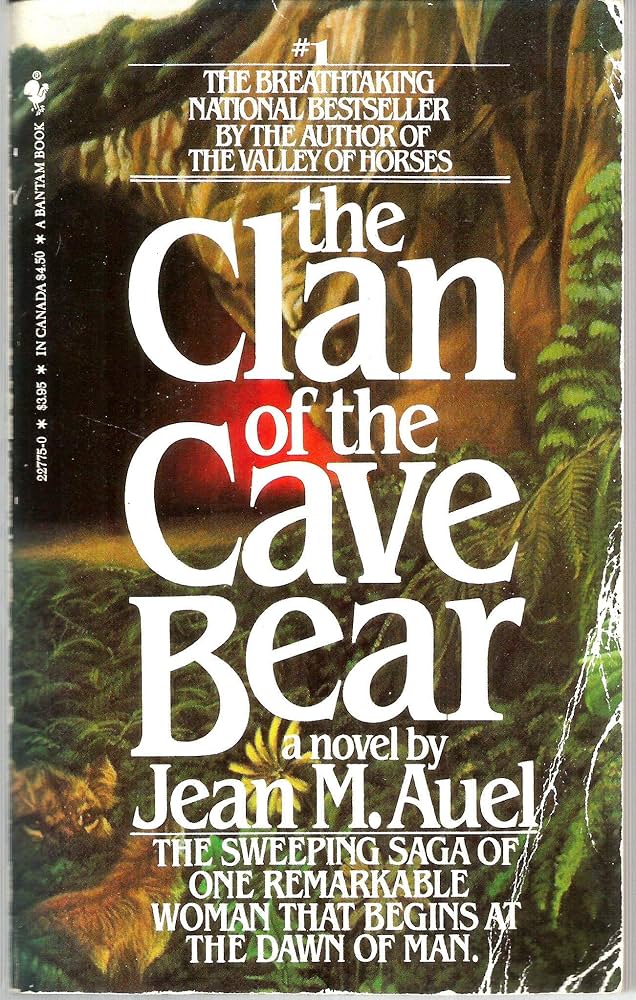
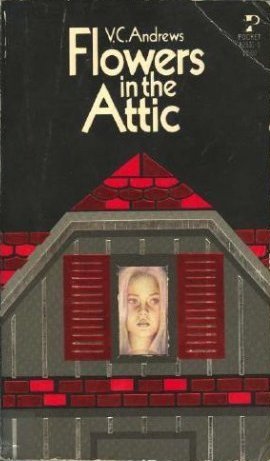
Co-worker B: “Flowers in the Attic* was still a thing when I was a kid. And of course a bunch of my friends weren’t allowed to read Harry Potter because of the witchcraft. Clan of the Cave Bear+ by Auel which has a whole bunch of rape in it … but it sounded cool and historical and maybe a bit magical, which were the things that counted when I read the blurb in middle school.” *there is a LOT of VC Andrews in the Monarch catalog as you can see HERE. +this is the first book in the six-book Earth’s Children series by Jean M. Auel. VC and Jean ruled in the 80s. They were everywhere for years.
Co-worker C: “TTYL and TTFN* by Lauren Myracle! I don’t think they’re edgy for adults but I learned a lot about uhhh…boys….Also The Clique series would have some interesting, juicy bits that I know my mom wouldn’t let me read/think about. The fact that I can’t type what content they had probably is also an indicator!” *these series were aimed at teen readers and debuted in 2004. I wonder if they hold up or not, and if mom and dad would approve.
Co-worker D: “Maybe kind of a weird one, but I was super into the Godchild manga series by Kaori Yuki as a teenager, was flipping through the next volume in the bookstore and my Dad looked over my shoulder on a page where the angsty brooding protagonist was very shirtless. I put it away quickly and claimed I was ‘just browsing’, don’t think he ever figured out he’d bought me some of that very series for prior birthdays.” *while I appreciate that manga can and does get extreme with depictions of sex and violence, and parents should probably be taking a general interest in the books their children consume, I just can’t get worked up about what’s going on in manga when most households have access to the cesspool that is the World Wide Web.
Second Category: DRUGS What are you, some kind of SQUARE? Actually, there weren’t too many Forbidden Books with drugs central to a salacious plot in this list. Young adult books depicting drugs and drug use were usually of the cautionary tale variety.
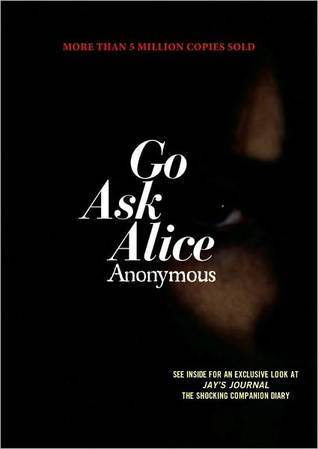
Co-worker E: “We passed around a dog-eared copy of Go Ask Alice in the fourth grade and acted like it was contraband on account of sex AND drug use. I remember being truly dismayed to learn this book was authored by a concerned mother as her way of warning the youth against cool things like sex and drugs* and that it was not a true first-hand account running afoul of hippies like I originally believed.” *we here at Mead Library do not think drugs are very cool. Sex is cool with enthusiastic consent, tho. Please do not ask any of us out, however.
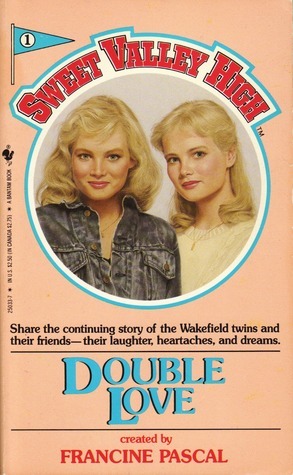
Co-worker F: “Sweet Valley High* series that I found at St. Vincent De Paul when I was 12.” *these books are really quite wholesome and I just think I am soooo funny to list them in the DRUGS category. My sister had a steamer trunk full of Sweet Valley High and Nancy Drew courtesy of my mother, who worked at Walden Books in the 1980s.
Third Category: VIOLENCE Most of the books I read these days would fall into the VIOLENCE category if one needed to categorize, on account of I mostly only read murder mysteries and MurderBot. I therefore consider the VIOLENCE category to be the superior one for this arbitrary reason.
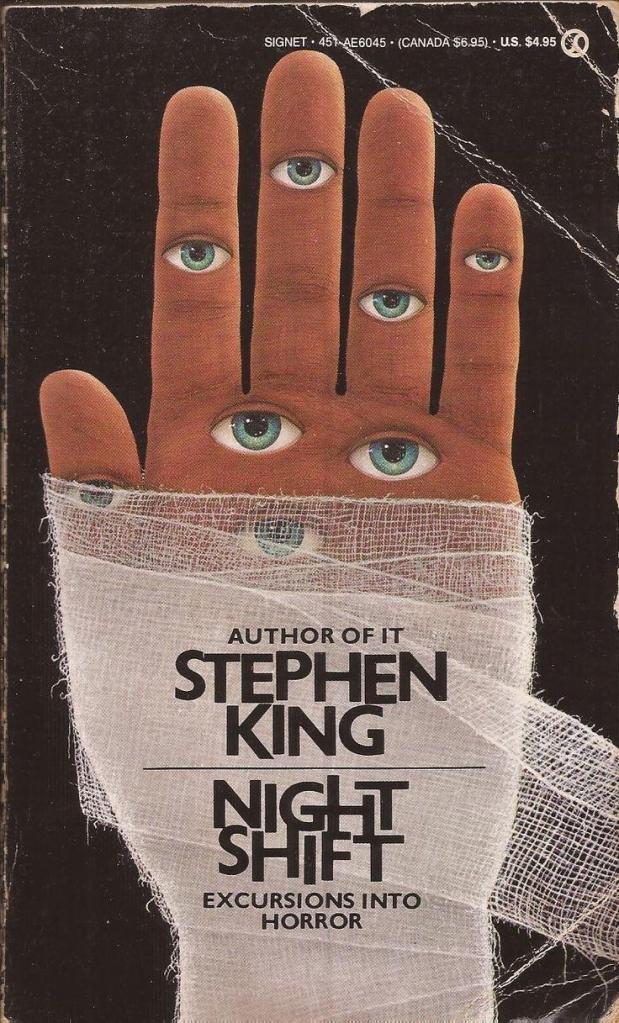
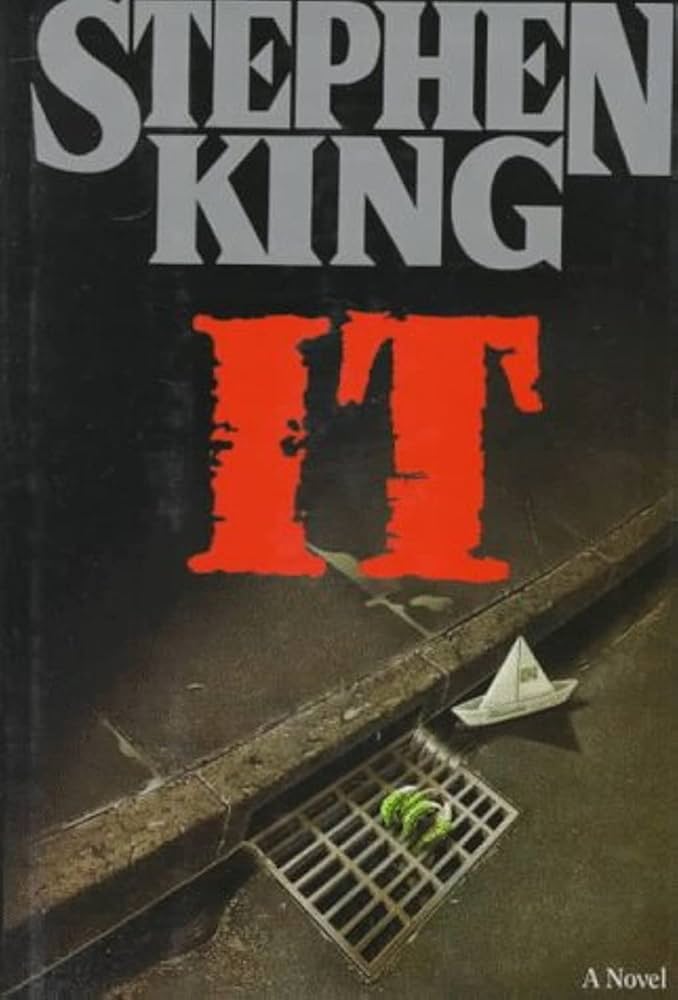
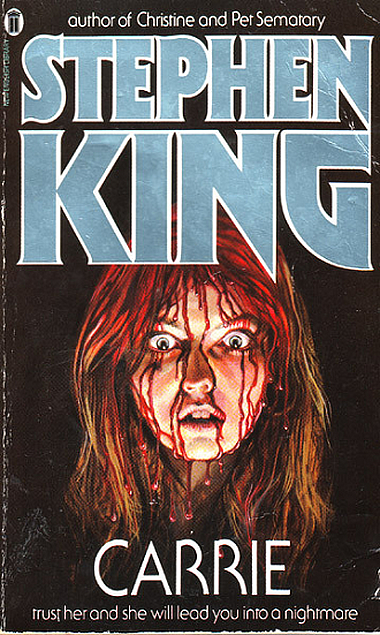
Co-worker G: “Anything by Stephen King*. Though it was hard not to, when the books were my mom’s.” *The work of Stephen King has been creating lifelong readers since the 1970s. Ask your friends what was the first “adult” novel they read, and I bet a notable ratio will say “King”.
Fourth Category: ROCK N ROLL This is the catch-all category for things that didn’t fit nicely elsewhere, but witches and vampires were for sure giving parents fits for awhile there.
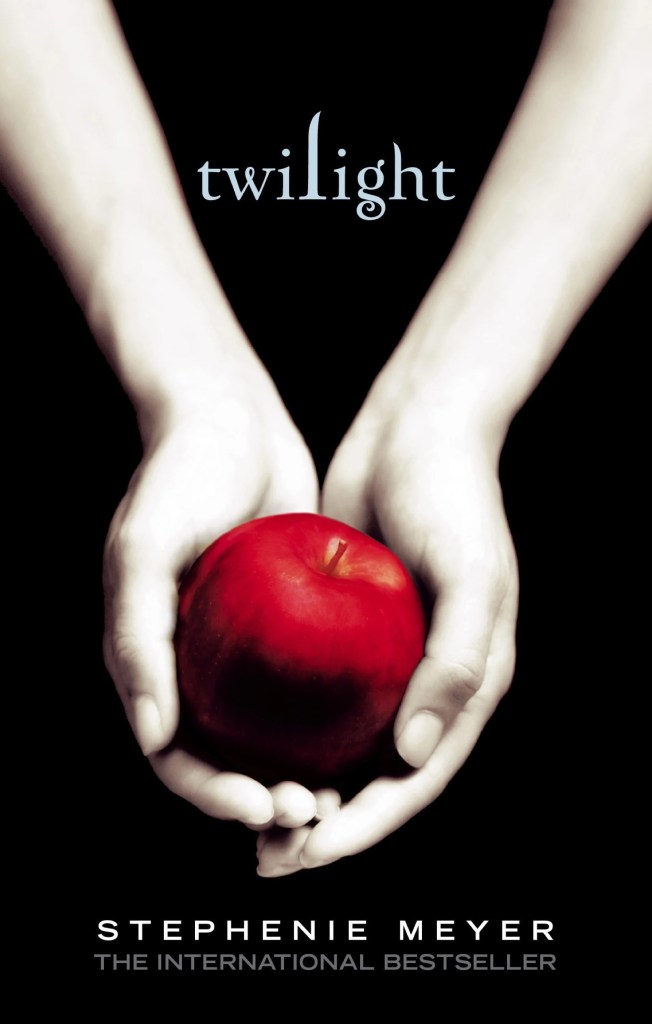
Co-worker H: “Twilight* as a 3rd/4th grader. I just wanted to read about cool vampires and a scandalous love triangle!! But there were things in there I probably should not have read haha.” *are we ever really young if we don’t read questionable things?
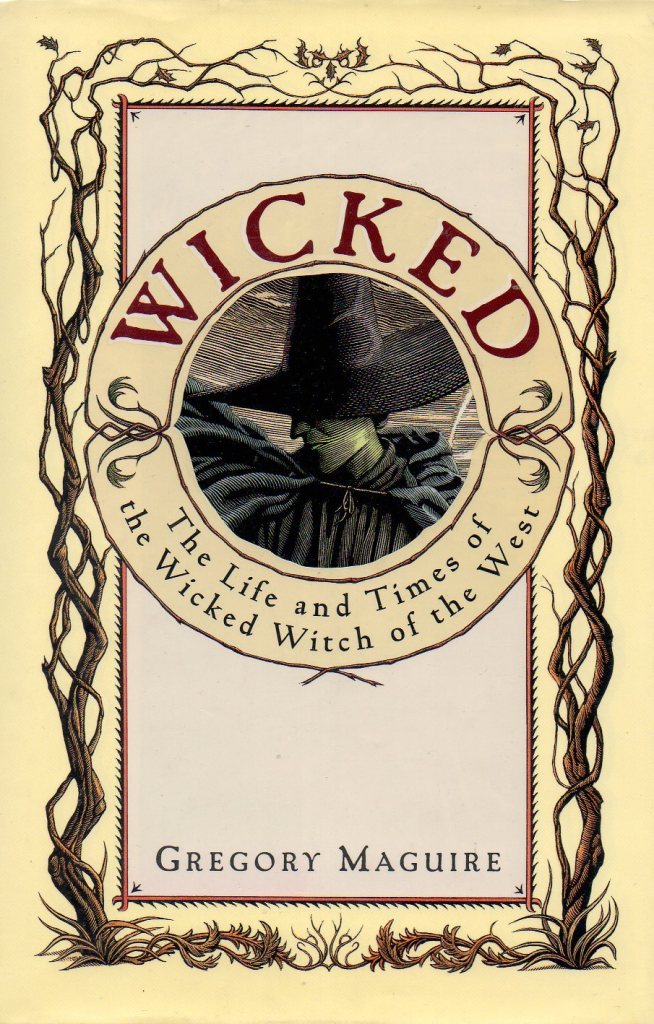
Co-worker I: “Wicked at 13/14 – a lot of the politics and the night club scene went over my head. My sister read it after me, and she’s two years younger. My mom asked me after my sister had started to read it if my sister should be reading it, and I said definitely not.”
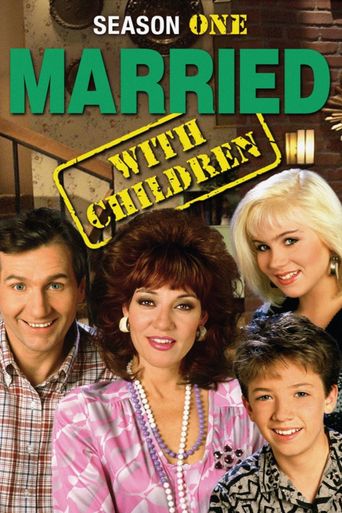
Co-worker J: “I could read/watch nearly anything*. The only forbidden entertainment was Married with Children.” *I once visited friends in Nashville and their 11 year-olds could watch Teen Titans but not Spongebob. I asked why so, and the mother said it was because Spongebob was “too weird”. Not being a parent my own self, I don’t think I will ever grasp the caprices of parental censorship.
Were there any books, movies, music, or television off-limits in your household? Here are some things that my older sister owned in the 1980s and early 90s when we were still fully school children: 2 Live Crew As Nasty as They Wanna Be (take that, Tipper Gore); Andrew Dice Clay live in concert bootlegs; Eddie Murphy Raw on cassette tape; Blood Sugar Sex Magic by The Red Hot Chili Peppers (double take that, Tipper Gore), and Ritual De Lo Habitual by Jane’s Addiction (TRIPLE TAKE THAT, Tipper Gore). Our lovely parents trusted us to engage with appropriate media, and for the most part, we did. My wish is that more parents would raise children confident enough to seek out the media they love, with no worries about judgement or censorship from loved ones.
After all is said and done, it’s really important to understand what is going on when someone challenges a book. Read more about it HERE on the American Library Association webpage. My belief is that many parents are projecting their anxiety onto children’s lit and using book challenges as a means of feeling in control. Many challenges come from parents who have children transitioning out of kindergarten, or grade school, or junior high, and while one cannot stop the progress of time, a book challenge seems like a concrete action someone can take in the name of “protecting the children”. It is not my intention to be flippant, and apologies if I have come across in this way, but book challenges are such a sore spot in the public and school library landscape at this moment that if I don’t laugh I’ll have to cry.
Anyhoo, please consider using the Your Next Five Books tool if you are casting around for something great to read. Or, use the Your Next Five Movies tool if you are a-hankering for something great to watch.