Did you know that Mead Library has memory caregiver kits? These kits are put together to support caregivers of those experiencing symptoms of dementia in all of it’s stages. Early stage kits focus on a goal with a tangible outcome. Early to mid stage kits involve activities that are broken into manageable chunks, so the user can focus on the experience rather than the overall outcome. Mid to late stage kits focus more on experience as well as sensations from an activity. Below are some of the items you might find in your kit:
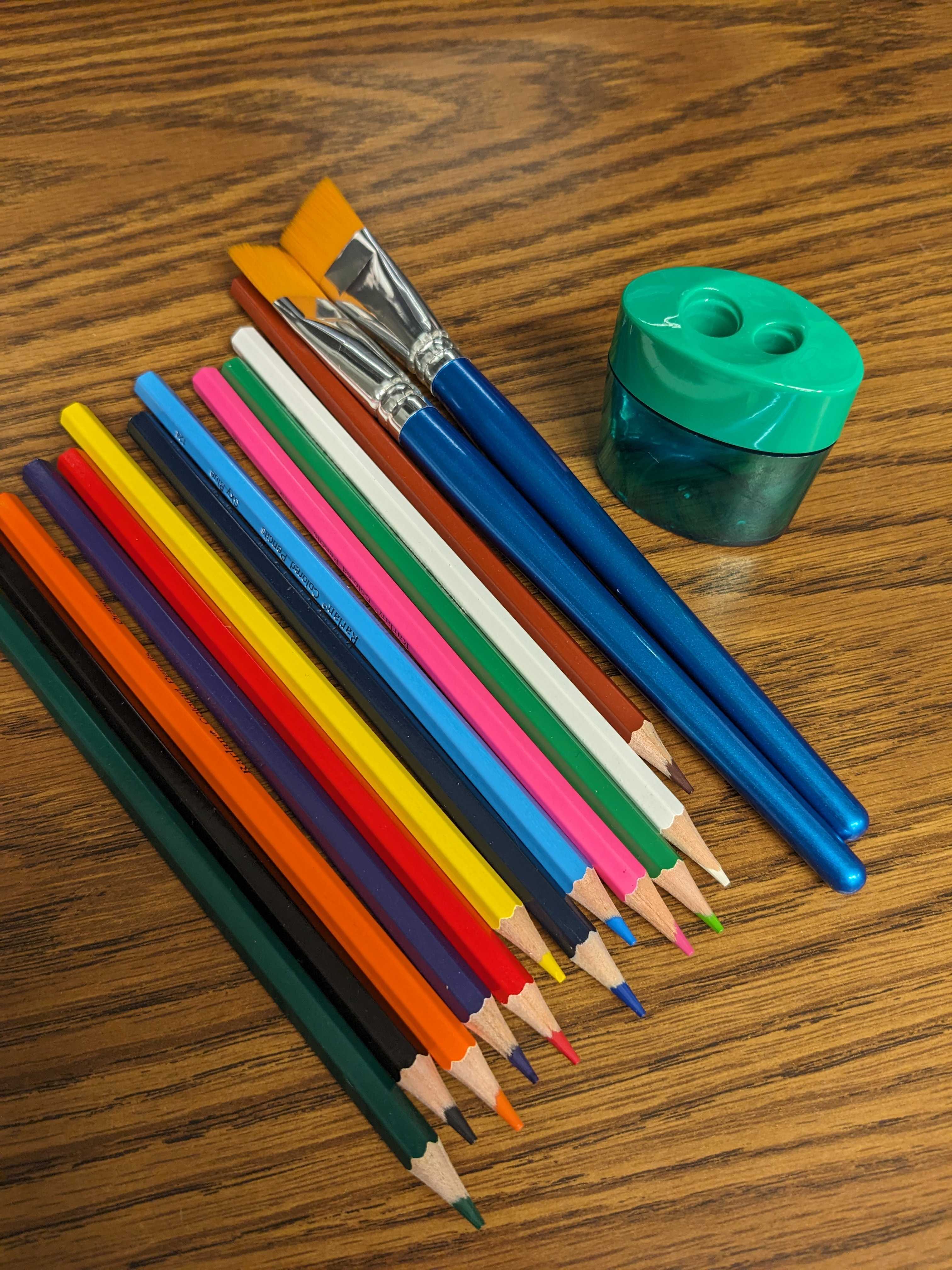
Colored Pencils and Coloring Pages
Coloring can be a very relaxing activity for those experience dementia symptoms. It allows a person to focus and “zone out” for a period of time, as well as relieve stress and improve a person’s mood.
Dear reader, today I want to talk with you about manga. I’ve been devouring it lately so I figured, why not talk about it?
First of all, what is manga? Manga is an umbrella term for a wide variety of comic books or graphic novels originally produced and published in Japan. Unlike American comic books, which are usually printed in full color, Japanese manga are almost always published in black and white.
There are also several different demographics of manga, three of which I will be talking about today.
Shonen – targeted at tween and teen boys
Shojo – targeted at tween and teen girls
Seinen – targeted at adult men 18+
Josei – targeted at adult women 18+
Kodomomuke – targeted at young children
The first manga I’m going to talk about is A Sign of Affection by suu Morishita. This is a shojo manga.
Yuki, who’s always been deaf, is used to communicating with sign language and her phone. But she’s not used to English, so when a tourist from overseas asks for directions, she nearly panics…until a handsome stranger steps in to help. His name is Itsuomi, and it turns out he’s a friend of a friend. A charismatic globetrotter, Itsuomi speaks three languages, but he’s never had a deaf friend. The two feel drawn to each other and plan a date on a romantic winter’s night…but Yuki’s friend is afraid that she might be setting herself up to get hurt. Could this be something real? Or will these feelings melt away with the snow?
Dear reader, I am thoroughly enjoying this manga! The author does a marvelous job showing how Yuki navigates her world, and in portraying the difficulties she encounters from day to day as a deaf person. She has friends who are supportive, but also people who use the knowledge of sign language against her. Throughout the series you can see Yuki striving for and achieving independence, and of course witness her growing relationship with Itsuomi. I’m sure you will fall in love with the characters as much as I did!
Yup, that’s right! Mead has new things for it’s library of things! If you aren’t familiar with Mead’s Experience Collection, this is a collection of non-traditional library items. It includes free entry passes for a variety of locations, STEM kits, baking pans, games, ukulele’s, and so much more! You can find our display of all of the items right when you walk into the library, or take a search through monarchcatalog.org for Mead Public Library Experience Collection. Here are a few of our newest additions:
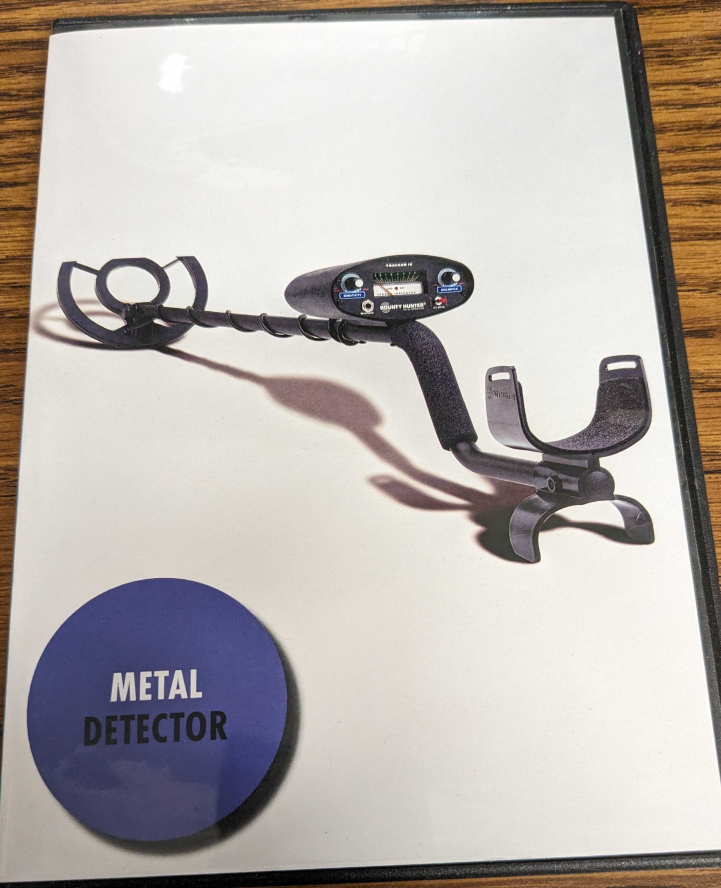
This is one of those things you wish you had while walking down the beach to see if you find any treasure. If you’ve wanted one, but just haven’t convinced yourself to get one yet, try out Mead’s Metal Detector!
This metal detector is perfect for searching in rugged ground conditions. There are 3 modes, which include Motion All-Metal mode, Discrimination mode, and 2-Tone audio mode. There is a Disc/notch control that you can set to distinguish between target metals and unwanted metals.
Have you ever wanted a book that takes you on a journey through someone else’s life? A life that is so opposite of your own, it almost doesn’t seem real? Once in a while, I like a “rock bottom” story, even if it feels uncomfortable, because there is usually a nice climbing out process that takes place towards the end, where the uncomfortable then turns to inspiration. But a little bit of humor is always nice. Here is a list of a few of my favorite darkly humorous memoirs.
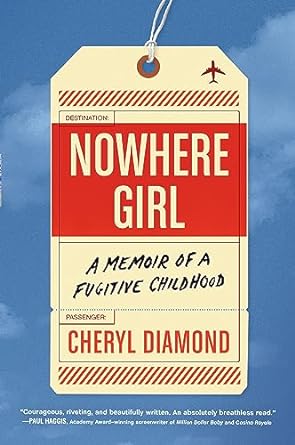
Cheryl Diamond spent her childhood feeling like she was on one adventure after another. She grew up with an extremely close family, her father, mother, and two older siblings. The five would travel across the world, changing identities and erasing their pasts. As a child, Diamond didn’t know that she was in a family of outlaws and fleeing from the highest international law enforcement agencies.
As Diamond grew older, the trust she had in her family and their closeness started to unravel. As much as she wanted to leave this tumultuous life created for her, it seemed to be too late. She had no proof she even existed. This crazy coming of age story will leave you with some shocking, yet lightly funny, situations and moments of self-discovery and satisfying triumph.
Dear reader, I have found myself going back in time this winter. Where do you ask? Why, the regency era of England of course! You know where this is going, don’t you? The word romance is in the title, so how could you not? That’s right, today’s blog is about regency romance novels. They happen to be my obsession this winter. Think of them as my comfort food, but in book form.
Maybe you’ve been reading regency romance novels too, but have you ever given thought to what the regency era actually was? I admit I did not until I researched it for this blog post. The regency was an era between 1811-1820, though historians generally look at the years 1780-1830 as the Regency period because those years were influenced by the role of the prince regent. The prince regent ruled as proxy as his father, King George III, was unable to rule due to his illness and mental instability.
Most regency romances focus on the upper class society, known as the ton. They operated on a complex and rigid set of rules that dictated their every behavior, from socially acceptable calling hours, having a chaperone or escort when a young man and woman were together, and appropriate dances. To be caught going against any of these rules would be grounds for endless gossip, or even a social pariah.
Dear reader, let me now tell you about some of my most recent favorite regency romance novels.
Miss Genevieve Wilde—a magistrate’s daughter and independent heiress—is determined to meet life’s challenges all on her own, just as her late father had taught her. So when her father’s pocket watch is stolen, she will do anything to get it back, especially when the local authorities prove incompetent.
Upon reading an advertisement in the paper, she takes a chance and contacts a thief-taker to find the watch. It’s a choice Ginny regrets when former Bow Street officer Jack Travers arrives on her doorstep. He is frustratingly flirtatious, irritatingly handsome, and entirely unpredictable, and Ginny wonders if she’ll be able to resist such a man.
But after Ginny discovers that the missing watch is just a small part of a larger, more frightening plot against her, she needs Jack’s help more than ever. To protect her home and her reputation, the two enter into a risky charade—pretending Jack is her cousin so he can begin his investigation, starting with the household staff. As they work together to unravel the mystery, Ginny finds herself falling fast for her charismatic thief-taker, leaving her heart in just as much danger as her life.
Dear reader, given the norm of arranged marriages at the time, is it any surprise that many regency romance novels center around the main female character declaring she will marry for love, instead of money, fame, title, etc.? I’ve lost track of how many books I have read in this vein, and yet I never tire of them! How realistic that was for the time is up for question, but that doesn’t detract from my enjoyment in the least.
It’s February, and as the romantics among us gear up for Valentine’s Day, it’s a great time to check out some romantic comedies from the library (or stream them on Kanopy or Hoopla)! While I’d never say no to a classic rom-com like When Harry Met Sally,Moonstruck, or 10 Things I Hate About You, I’d like to share some gems of the genre that you may have missed when they first came out. Read on for some possibly new-to-you movie selections, including double feature ideas!
I’ll kick off this list with one of my favorite lesser-known rom-coms – “Man Up” from 2015. Lake Bell of “In a World” and Simon Pegg of “Shaun of the Dead” have great chemistry in this London-set story of mistaken identity. When Bell’s character Nancy finds herself mistaken for Pegg’s blind date, instead of clearing up the misunderstanding, she decides to pretend to be the other woman. If that premise sounds too cringe-worthy, maybe this isn’t the movie for you. But if you like your rom-coms with plenty of laughs (and a dance number set to Duran Duran’s “The Reflex”), this film will hit the spot!
It’s that time of year again! The American Library Association has announced the winners of the 2024 Youth Media Awards. Materials for children and teens were selected by committees of literature and media specialists under different categories for their excellence. Check out some of the award winners below and click on the links to reserve your copies through the Monarch catalog. Scroll to the bottom of the post for a link to the full list of this year’s award recipients.
John Newbery Medal
The John Newbery Medal is awarded annually by the Association for Library Service to Children (ALSC) to the author of the most distinguished contribution to American literature for children. This year’s winner is The Eyes and the Impossible, written by Dave Eggers and illustrated by Shawn Harris.
Kanopy. We use it. We love it. Couldn’t be better. Or could it? For those who aren’t familiar, this is a streaming service provided for Mead Library cardholders with funding from the City of Sheboygan and Mead Library. Kanopy is a source for hundreds if not thousands of films and television shows, including indie, mainstream, domestic, and foreign material in every genre imaginable. For those who are familiar, but haven’t visited Kanopy lately, there has been a fundamental change to how we use this service.
Originally, Kanopy users received 10 credits per month, which meant each cardholder had the opportunity to view 10 programs. One credit per program, whether it was a 4 hour war epic or a 20 minutes television program, which meant I personally never used my credits to watch TV shows. The updated version of Kanopy provides users with 30 “tickets” per month. Users will notice each program lists a ticket cost to view, as well as how long the user has to watch the program once it’s selected. Below, I spend my way through a month’s worth of tickets to demonstrate how much excellent streaming can be done with this new system. Kanopy Kids does not require credits to view. Let me repeat that: KANOPY KIDS DOES NOT REQUIRE CREDITS TO VIEW. How much Franklin & Friends can you watch? Now is your chance to find out. To learn more about how this new ticket system works, take a look at the Kanopy info page by clicking HERE.
Program Title: After Hours (1985) directed by Martin Scorsese Tickets: 4 Watch within: 48 hours It’s the start of the month. I am almost choosing at random. I have so many credits to expend.
Program: Lunch Time Heroes (2015) directed by Seyi Babatope Tickets: 2 Watch within: 72 hours Martin Scorsese rubbed me the wrong way, so I need something tonally different in every way. Luckily, Kanopy comes with the variety. This Nollywood comedy should do the trick.
Program: Barry Lyndon (1975) directed by Stanley Kubrik Tickets: 4 Watch within: 48 hours It’s a new day, maybe it’s the weekend. My energy feels low. I want to zone out at something beautiful. Thanks to Barry Lyndon, (RIP Ryan O’Neil) each frame looks like a Rococo painting. I make a sandwich and stare open-mouthed at the screen for more than three hours.
Program: Scott & Bailey series one (2011) six episodes Tickets: 4 Watch within: 7 days I have all week to watch six episodes of this English detective show. I watch one episode after dinner of the work week each night and then two on Friday. This is totally engrossing and I spend some time each day looking forward to the next episode.
Program: The Good, the Bad, the Weird (2008) directed by Jee-Woo Kim Tickets: 2 Watch within: 48 hours It’s the weekend again and I want to be entertained. I want big, incomprehensible set pieces and chaos. This 2008 picture has been determined to be bonkers. I have a marvelous time.
Program: Marcel the Shell with Shoes On (2021) directed by Dean Fleischer-Camp Tickets: 2 Watch within: 72 hours While I still want to be entertained, I need something more on the gentle side than the non-stop freneticism of a Korean western. Marcel is wholesome and soothing. It’s an A24 production, but not horrifying. I watch before bed and sleep beautifully.
Program: The Prisoner (1967) SEVENTEEN episodes Tickets: 5 Watch within: 21 days It’s been a minute since I’ve seen an episode of this psychedelic time capsule. Nostalgia for a show I watched with my dad thirty years ago is strong, so I check it out. I have three weeks to watch seventeen episodes. I get half-way through before I lose interest. My enjoyment of the costuming and set design is not enough to distract me from the, uh, plot.
Program: Everything, Everywhere, All at Once (2022) directed by Daniels Scheinert and Kwan Tickets: 2 Watch within: 72 hours I’ve already seen this masterpiece, but I am in the mood for a re-watch, and I can’t find it on the streaming services I pay for. It’s kinda long, so I watch it over two days knowing I have a third day if needed.
Program: X (2022) directed by Ti West Tickets: 2 Watch within: 72 hours It’s almost Christmas and I have a friend over for a movie marathon. She picks this. It’s great, but not terribly Christmassy. FYI: this is an archetypal A24 production and should be approached with caution. Try not to look it in the eyes, you know?
Program Title: Black Christmas (1974) directed by Bob Clark Tickets: 2 Watch within: 72 hours SOMEone has to pick out an appropriate seasonal film to watch in the Christmas month. This is my favorite slasher film (besides The Burning) and it’s so super festive!!!!!!
I still had one ticket to burn at the end of all this, and I was unable to find any programs available for less than two tickets. But dang! Look at all that good stuff on the list. It still evened out to ten titles in all, but with the inclusion of two tv series, I found the ticket system to be pretty fair and consistent. Households with more than one active Mead Library card can join forces to enjoy one another’s tickets together. Or horde your own and watch in the dark basement on a cracked phone screen like the goblin you know you are.
What to do in case of no access to WiFi or other internet connectivity? Welp, Mead Library is in possession of many hundreds of DVD and BluRay discs, not to mention the wider Monarch consortium. But Molly, you ask, what if I do not own a DVD player? Please get a load of our circulating external DVD player. Take a look at the catalog listing HERE. BUT MOLLY, you implore, what if I do not have access to a television? Let me tell you about our private study rooms on the second floor. Two of them contain desktop computers for public use. The external DVD player can be hooked up to a computer very easily, and we can have you watching the DVD of your choice in mere moments. People can also use their Kanopy accounts on a library computer, as well. Call 920-459-3400 option 4 to learn more about our private study rooms.
We’ve had access to Kanopy via Mead for about five years now. It’s so appealing I know of several people who signed up for a library card after many years of absence just to have access to Kanopy. It’s an awesome service and I’m glad it brought people back into the fold. Keep in mind this is only one of a suite of resources one can use anywhere on earth that has internet access.
Please don’t hesitate to reach out in order to learn more about how to access and use Kanopy, or any of our other services. Not sure what to watch? Consider utilizing our excellent Your Next Five Movies service which you can find by clicking HERE.
Dear reader, today I have something a little different in store for you. Over the last year I have read several short stories by Japanese authors and felt moved to collectively talk about all of them.
Most of the short stories in today’s blog post have the characters coming together around a certain theme or object. For instance in What You are Looking For is in the Library, the characters all encounter a particular librarian, and in Before the Coffee Gets Cold, the characters all start their individual journeys in a certain coffee shop.
Another theme that all the short stories share is how each character encounters a seemingly innocent situation or thing, and that blossoms into an altered life, a change in character, a new outlook, etc. For example, in Sweet Bean Paste, the main character, after learning a new homemade recipe for red bean paste from an elderly lady instead of the pre-made store bought variety he was using, goes down a path of self-discovery , gains a new friend, and learns the dark history of a nearby dwelling. Unfortunately, Sweet Bean Paste is not in the Monarch system, but can be found in Wiscat, as well as Hoopla, one of Mead Public Library’s apps for online reading. I will also mention several other short stories that are available via Monarch, so have no fear, dear reader!
Revitalized lives is a third main theme in these short stories. Characters who, at the start of the stories, were at the end of their rope, the outcasts of society, viewed as failures, but by story’s end are living with purpose and even fulfilling a forgotten dream. This is the case in Lonely Castle in the Mirror and Days at the Morisaki Bookshop.
Hidden in Jimbocho, Tokyo, is a booklover’s paradise. On a quiet corner in an old wooden building lies a shop filled with hundreds of second-hand books.
Twenty-five-year-old Takako has never liked reading, although the Morisaki bookshop has been in her family for three generations. It is the pride and joy of her uncle Satoru, who has devoted his life to the bookshop since his wife Momoko left him five years earlier.
When Takako’s boyfriend reveals he’s marrying someone else, she reluctantly accepts her eccentric uncle’s offer to live rent-free in the tiny room above the shop. Hoping to nurse her broken heart in peace, Takako is surprised to encounter new worlds within the stacks of books lining the Morisaki bookshop.
As summer fades to autumn, Satoru and Takako discover they have more in common than they first thought. The Morisaki bookshop has something to teach them both about life, love, and the healing power of books.
Dear reader, have you ever been reading a book and just felt like it was one you wanted to buy? To highlight it, reread certain passages, or just simply to have it on your bookshelf, resting in the knowledge that it’s there, ready like a favorite comfy sweater, whenever you need it?
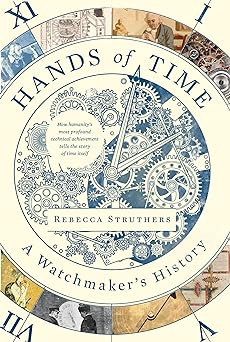
This book is one of those books. Chock full of fascinating information and history about the evolution of the watch. The watch is something we take for granted in 2023, isn’t it? I can’t even remember the last time I had an analog watch, and I bought my first Fitbit three years ago. Children and teens alike come into the library and stare at the analog clock we have mounted on the wall behind the customer service desk, trying to decipher its face and the time it presents. Eventually, most of them just ask us for the time. Theirs is a digital world and analog clocks, like cursive, have mostly fallen away. Although, admittedly, my own cursive skills are severely lacking!
Here are some interesting historical tidbits from the book! The first battery-powered wristwatch to make it to the market was the 1957 Hamilton Ventura, which, because production was rushed, was plagued with a short battery life. The world’s first commercial quartz watch, the Astron, came from Japan, released by Seiko on Christmas Day in 1969. Instead of a tuning fork, the new invention used piezoelectricity, a process discovered by Pierre and Jacques Curie in 1880. Amazing how old discoveries pop up in new inventions decades and centuries later, isn’t it? Finally, the very first digital watch was American, the Hamilton Pulsar, released in 1972. The Pulsar used LED technology developed at the Space Agency.
Timepieces have long accompanied us on our travels, from the depths of the oceans to the summit of Everest, the ice of the arctic to the sands of the deserts, outer space to the surface of the moon. The watch has sculpted the social and economic development of modern society; it is an object that, when disassembled, can give us new insights both into the motivations of inventors and craftsmen of the past, and, into the lives of the people who treasured them.
Hands of Time is a journey through watchmaking history, from the earliest attempts at time-keeping, to the breakthrough in engineering that gave us the first watch, to today – where the timepieces hold cultural and historical significance beyond what its first creators could have imagined. Acclaimed watchmaker Rebecca Struthers uses the most important watches throughout history to explore their attendant paradigm shifts in how we think about time, indeed how we think about our own humanity. From an up-close look at the birth of the fakes and forgeries industry which marked the watch as a valuable commodity, to the watches that helped us navigate trade expeditions, she reveals how these instruments have shaped how we build and then consequently make our way through the world.
A fusion of art and science, history and social commentary, this fascinating work, told in Struthers’s lively voice and illustrated with custom line drawings by her husband and fellow watchmaker Craig, is filled with her personal observations as an expert watchmaker—one of the few remaining at work in the world today. Horology is a vast subject—the “study of time.” This compelling history offers a fresh take, exploring not only these watches within their time, but the role they played in human development and the impact they had on the people who treasured them.
However, as with every invention, there is a dark side to the watch. Thanks to the discovery of radium by Marie and Pierre Curie, hollowed out watch hands were filled with luminous paint. This new invention helped soldiers accurately see the time on their watches while sitting in deep, dark trenches. But it wasn’t only the battlefield that employed this new paint. Watch dials, aeroplane instruments, gunsights and ships’ compasses were also starting to glow.
Dial factories sprang up across the US, and also in Switzerland and the UK. To apply the expensive and precious radium paint to the narrow spaces on the watch hands, women in the dial factories stuck the extremely fine camel hair brushes in their mouths to bring them to a point. They were assured by management that the trace amounts of radium they were ingesting wasn’t harmful, but when you consider these women were paid in dials painted, it started to add up. Radium was touted as a cancer destroyer, but it also has no ability to distinguish between healthy tissue and cancerous. Therefore it began to eat away at the very bones of the women ingesting it. If you would like to read a harrowing and informative book on this topic, I would suggest the following.














 Mead Public Library Blog