It’s that time of year again! The American Library Association has announced the winners of the 2024 Youth Media Awards. Materials for children and teens were selected by committees of literature and media specialists under different categories for their excellence. Check out some of the award winners below and click on the links to reserve your copies through the Monarch catalog. Scroll to the bottom of the post for a link to the full list of this year’s award recipients.
John Newbery Medal
The John Newbery Medal is awarded annually by the Association for Library Service to Children (ALSC) to the author of the most distinguished contribution to American literature for children. This year’s winner is The Eyes and the Impossible, written by Dave Eggers and illustrated by Shawn Harris.
Winter has finally arrived for us here in Wisconsin. I can’t say that I have been loving the biting winds on my walk to work. But it’s perfect weather to curl up with a book and get some reading done. I’ve rounded up the top fiction and nonfiction books from our holds list. This month we have The Women by Kristin Hannah and Oath and Honor by Liz Cheney blazing up our lists here at Mead. But don’t despair! There are a couple other books you can check out while you wait for those two books. For all of the books in this week’s post, I’ve included the book’s description from our catalog. Stay warm, everyone!
“When twenty-year-old nursing student Frances “Frankie” McGrath hears these unexpected words, it is a revelation. Raised on idyllic Coronado Island and sheltered by her conservative parents, she has always prided herself on doing the right thing, being a good girl. But in 1965 the world is changing, and she suddenly imagines a different choice for her life. When her brother ships out to serve in Vietnam, she impulsively joins the Army Nurse Corps and follows his path. As green and inexperienced as the men sent to Vietnam to fight, Frankie is overwhelmed by the chaos and destruction of war, as well as the unexpected trauma of coming home to a changed and politically divided America.”
As the new year quickly approaches, you’re probably looking forward to all of the exciting things you’ve planned to ring in the new year. That could be traveling, eating good food, seeing friends, or even just sitting from the comfort of your own home while watching the ball drop. Whatever it may be, you’re probably also thinking of a new year’s resolution for once the celebrating is over.
And if you picked running as your goal for the new year, you may feel a mixture of excitement and anxiety. Starting can seem like a daunting task, after all — as someone who got into running a little over a year ago, I can relate. There’s a lot of questions that come up in the beginning. How far should I run? What should I wear? And how do I stop chafing so much? (All questions I’ve asked myself)
Since I’ve started, I’ve learned a lot about the joys of running and come across many books on the subject. And today, I’d like to share some of my favorites with you. They cover a range of topics like how to get started, why to get started, and how to keep going, all while offering some helpful tips that runners of all levels can appreciate:
Ten years ago, Martinus Evans got some stern advice from his doctor: “Lose weight or die.” First defensive, but then defiant, Evans vowed that day to run a marathon, though his doctor thought he was crazy. Since then, Evans has run eight marathons and hundreds of other distances in his 300-something body, created his own devoted running community, and has been featured on the cover of Runner’s World.
This book is a blueprint for those who may not fit the image of a “traditional” runner – that is, someone who is larger in size, less athletic, out of shape, or dealing with any kind of health issue that slows them down – to feel empowered to lace up their shoes and embrace the body they have right now.
NOTE: Apologies! It was pointed out that the first version of this post had a book in it, The Stakes by Ben Sanders, where the only copy in the library system had been withdrawn – it wasn’t actually available! It’s been replaced with a new readalike below.
On the fiction side, we’ve got a new Nick Petrie book being requested like mad. It’s the eighth book in his Peter Ash series, so people who have gotten invested in them are clearly eagerly awaiting this new release. And there’s nothing to boost the popularity of a non-fiction book like being made into a movie, so it’s not surprising that Killers of the Flower Moon is seeing a surge in popularity (plus, my mom says it’s an amazing book!).
Lewis has helped Peter Ash out of more trouble than Peter cares to remember. So he doesn’t hesitate when Lewis asks a favor in return. Lewis has left his criminal past behind, but a former associate may be in trouble, and he and Peter must drive into the teeth of a blizzard to find him. When they discover blood in the snow and a smoldering cabin, both men know things are bad. Then they learn that someone has stolen notebooks full of incriminating secrets about Lewis’s long-ago crimes, and realize the situation is much worse than they’d thought.
To save Lewis’s wife, Dinah, and her two boys, Lewis and Peter must find the notebooks. With Peter’s longtime girlfriend, June Cassidy, they begin the search—facing ruthless and violent foes at each turn, including one powerful person who will stop at nothing for revenge. Will Peter and Lewis be able to keep that dark past buried? Or will they need to step into the darkness to save the people they love most?
Two months in a row with a non-fiction book topping the most-requested items list – it certainly seems to be the season of the memoir this fall! And this time, it’s Britney Spears’ new book, The Woman in Me, that everyone wants a copy of. And on the fiction side, we have quite a few familiar names as the big authors release new books in time for holiday gift-giving. At the top of that list is Kristin Hannah’s The Women. Get on the waitlists ASAP, and while you wait, check out the similar titles we’ve picked out below!
When twenty-year-old nursing student Frances “Frankie” McGrath hears these unexpected words, it is a revelation. Raised on idyllic Coronado Island and sheltered by her conservative parents, she has always prided herself on doing the right thing, being a good girl. But in 1965 the world is changing, and she suddenly imagines a different choice for her life. When her brother ships out to serve in Vietnam, she impulsively joins the Army Nurse Corps and follows his path.
As green and inexperienced as the men sent to Vietnam to fight, Frankie is overwhelmed by the chaos and destruction of war, as well as the unexpected trauma of coming home to a changed and politically divided America.
This month’s titles include the second entry in Travis Baldree’s groundbreaking cozy fantasy series, a multi-generational family story, and a pointed look at social mobility in America from the author of Maid.
In this worthy prequel to Legends & Lattes, a young Viv is laid up in the quiet town of Murk after her enthusiastic inexperience leads to a serious injury. She gradually assembles a group of friends including a swear-happy bookshop owner, a mercenary turned baker, and an irrepressible Gallina, eager to join Rackham’s Raiders. Murk doesn’t stay quiet for long with Viv around, and there’s plenty of coziness in the bookshop, eating delicious baked goods, and flirting with a new friend.
—Lauren Abner, KY Dept for Libraries & Archives, KY NoveList read-alike: Under the Whispering Door by TJ Klune
The DVD collection at Mead is fascinating. It honestly doesn’t matter what we add to the shelf, it tends to circulate like crazy. I replaced a copy of Harry and the Hendersons last year because the one we had in the catalog circulated OVER THREE HUNDRED TIMES and had been in the collection since 2008, which is bonkers that it played at all by that point (typically a disc is evaluated for condition after 100 circulations, we weren’t born in a barn over here). What I’m getting at, is that this collection doesn’t require a lot of promotion to maintain good circulation numbers. The exception being the non-fiction DVD portion of this collection. It’s arranged by Dewey Decimal, just like the print non-fiction, which makes browsing more difficult. There are comedy specials, nature shows, history lessons, musicals and concerts, you name it, to be found among the non-fiction DVDs. This is also where the documentaries live.
I wanted to give the documentaries a little more visibility apart from the wall of difficult-to-parse spine labels. The discerning Mead Library patron will notice a two-sided display adjacent to where the DVD collection is shelved on our first floor. On one side is a dazzling array of BluRay discs, another collection area that I wanted to highlight, and on the opposite side I have placed a rotating selection of non-fiction DVDs for your browsing convenience and delight. Below, I listed several docs that are total bangers. You’ll laugh, you’ll learn, and in the case of Dear Zachary, you’ll curl into the fetal position and cry a lot. Titles are linked to the Monarch catalog listing. Descriptions provided by publisher:
Where does voguing come from, and what, exactly, is throwing shade? This landmark documentary provides a vibrant snapshot of the 1980s through the eyes of New York City’s African American and Latinx Harlem drag-ball scene. Made over seven years, it offers an intimate portrait of rival fashion ‘houses,’ from fierce contests for trophies to house mothers offering sustenance in a world rampant with homophobia, transphobia, racism, AIDS, and poverty. PS: Mead owns the Criterion Collection version of this documentary so it will be extra fabulous.
I am not providing the publisher description here because it’s better to be devastated in real time while watching. Bring kleenex and prozac, and hug your loved ones close. Suffice to say, this particular documentary is excellent as well as devastating.
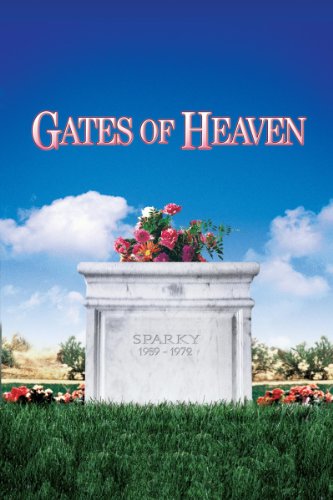
Errol Morris changed the face of documentary filmmaking in the US, and his career began with a remarkable tale of American eccentricity. He uses two Southern California pet cemeteries as the basis for a profound and funny rumination on love, loss, and industry.
Summer of Soul (2021) directed by Questlove In his acclaimed debut as a filmmaker, Ahmir “Questlove” Thompson presents a powerful and transporting documentary, part music film, part historical record, created around an epic event that celebrated Black history, culture, and fashion.
Over the course of six weeks in the summer of 1969, just one hundred miles south of Woodstock, The Harlem Cultural Festival was filmed in Mount Morris Park (now Marcus Garvey Park). The footage was largely forgotten, until now. This documentary shines a light on the importance of history to our spiritual well-being and stands as a testament to the healing power of music during times of unrest, both past, and present. The feature includes concert performances by Stevie Wonder, Nina Simone, Sly & the Family Stone, Gladys Knight and the Pips, Mahalia Jackson, B.B. King, The 5th Dimension, and more.
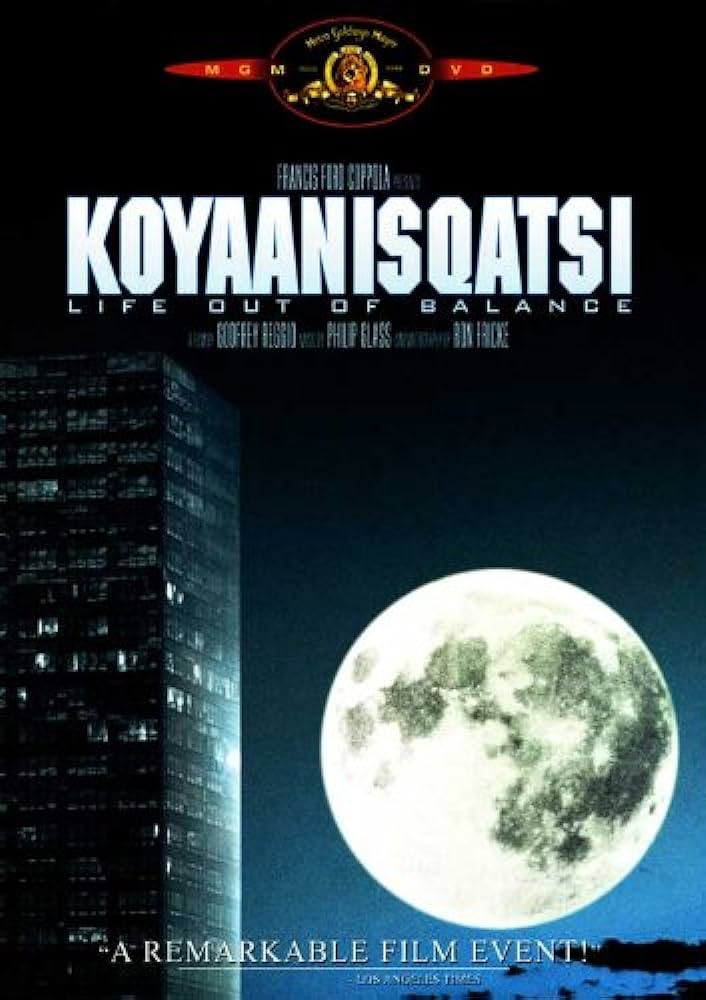
This first work of The Qatsi Trilogy wordlessly surveys the rapidly changing environments of the Northern Hemisphere, in an astonishing collage created by the director, cinematographer Ron Fricke, and composer Philip Glass. It shuttles viewers from one jaw-dropping vision to the next, moving from images of untouched nature to others depicting human beings’ increasing dependence on technology.
At the heart of this film is the question of whether Leni Riefenstahl was a Nazi, as her detractors claim, or whether she was the victim of society – a naïve, young woman who made Triumph des Willens on assignment, and simply did a very good job. This film does not judge, and Riefenstahl (a feisty 90 during production) is genuine in her protest. Or has the passage of 50-plus years simply rewritten history in her mind? Viewers must judge for themselves.
Additional totally awesome, informative, and entertaining documentaries:
Not so keen on reality? Check out these mockumentaries:
Best in Show (2001) directed by Christopher Guest Borat (2007) directed by Larry Charles CB4 (1993) directed by Tamra Davis Room 237 (2012) directed by Rodney Ascher; note, this was filmed as a straight documentary, but the contents cannot be taken seriously despite my best efforts. This is Spinal Tap (1984) directed by Rob Reiner What We Do in the Shadows (2014) directed by Taika Waititi
The above selections are a mere sliver of what riches await you within the non-fiction DVD collection. If none of the listed documentaries are appealing, allow me to direct your attention to our exclusive movie recommendation tool, Your Next Five Movies. Not a fan of the celluloid medium? Consider using Mead’s Your Next Five Books tool. We anxiously await your DVD requests. Any questions can be directed to us via telephone at 920-459-3400 option 4, or email us at publicservices@meadpl.org.
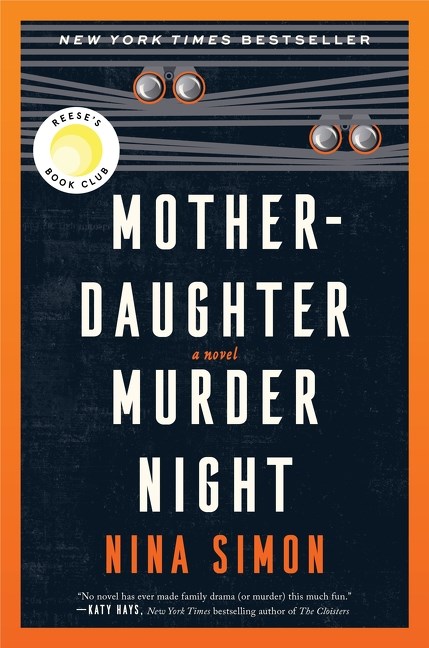
This is a first for this series – the non-fiction book this month has more holds than any of the fiction books! Sometimes, to be honest, I have to scroll quite a ways down our list of most popular holds to find a non-fiction book. People just prefer fiction, I guess! But this month, Jill Duggar’s memoir has shot way up the library’s charts. And on the fiction side, we have a murder mystery that is also a Reese Witherspoon Book Club pick. Get on the holds list, and check out some readalikes while you wait!
High-powered businesswoman Lana Rubicon has a lot to be proud of: her keen intelligence, impeccable taste, and the L.A. real estate empire she’s built. But when she finds herself trapped 300 miles north of the city, convalescing in a sleepy coastal town with her adult daughter Beth and teenage granddaughter Jack, Lana is stuck counting otters instead of square footage—and hoping that boredom won’t kill her before the cancer does.
Then Jack—tiny in stature but fiercely independent—happens upon a dead body while kayaking near their bungalow. Jack quickly becomes a suspect in the homicide investigation, and the Rubicon women are thrown into chaos. Beth thinks Lana should focus on recovery, but Lana has a better idea. She’ll pull on her wig, find the true murderer, protect her family, and prove she still has power.
Patron Lori T.* recently asked us to track her down some history and biography titles using our Your Next 5 Books service, and graciously allowed us to share her interests and answers. Lori was particularly interested in biographies of people in the entertainment industry, especially those from the mid-century era of glamour, as well as Wisconsin history, but wanted to stay away from World War II or true crime books.
My main interest is biographies. I especially enjoy biographies about famous people/stars in the 1940’s & 1950’s, including about places like the Catskill and French Riviera resorts during that time. I’d also like to find a biography of Lawrence O’Donnell and Rachael Maddow, and Desi Arnaz’s [of “I Love Lucy”] biography A Book.
Dear reader, have you ever been reading a book and just felt like it was one you wanted to buy? To highlight it, reread certain passages, or just simply to have it on your bookshelf, resting in the knowledge that it’s there, ready like a favorite comfy sweater, whenever you need it?
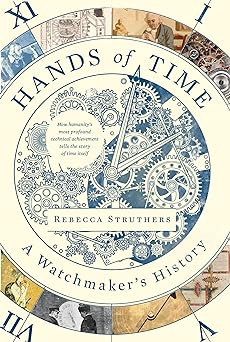
This book is one of those books. Chock full of fascinating information and history about the evolution of the watch. The watch is something we take for granted in 2023, isn’t it? I can’t even remember the last time I had an analog watch, and I bought my first Fitbit three years ago. Children and teens alike come into the library and stare at the analog clock we have mounted on the wall behind the customer service desk, trying to decipher its face and the time it presents. Eventually, most of them just ask us for the time. Theirs is a digital world and analog clocks, like cursive, have mostly fallen away. Although, admittedly, my own cursive skills are severely lacking!
Here are some interesting historical tidbits from the book! The first battery-powered wristwatch to make it to the market was the 1957 Hamilton Ventura, which, because production was rushed, was plagued with a short battery life. The world’s first commercial quartz watch, the Astron, came from Japan, released by Seiko on Christmas Day in 1969. Instead of a tuning fork, the new invention used piezoelectricity, a process discovered by Pierre and Jacques Curie in 1880. Amazing how old discoveries pop up in new inventions decades and centuries later, isn’t it? Finally, the very first digital watch was American, the Hamilton Pulsar, released in 1972. The Pulsar used LED technology developed at the Space Agency.
Timepieces have long accompanied us on our travels, from the depths of the oceans to the summit of Everest, the ice of the arctic to the sands of the deserts, outer space to the surface of the moon. The watch has sculpted the social and economic development of modern society; it is an object that, when disassembled, can give us new insights both into the motivations of inventors and craftsmen of the past, and, into the lives of the people who treasured them.
Hands of Time is a journey through watchmaking history, from the earliest attempts at time-keeping, to the breakthrough in engineering that gave us the first watch, to today – where the timepieces hold cultural and historical significance beyond what its first creators could have imagined. Acclaimed watchmaker Rebecca Struthers uses the most important watches throughout history to explore their attendant paradigm shifts in how we think about time, indeed how we think about our own humanity. From an up-close look at the birth of the fakes and forgeries industry which marked the watch as a valuable commodity, to the watches that helped us navigate trade expeditions, she reveals how these instruments have shaped how we build and then consequently make our way through the world.
A fusion of art and science, history and social commentary, this fascinating work, told in Struthers’s lively voice and illustrated with custom line drawings by her husband and fellow watchmaker Craig, is filled with her personal observations as an expert watchmaker—one of the few remaining at work in the world today. Horology is a vast subject—the “study of time.” This compelling history offers a fresh take, exploring not only these watches within their time, but the role they played in human development and the impact they had on the people who treasured them.
However, as with every invention, there is a dark side to the watch. Thanks to the discovery of radium by Marie and Pierre Curie, hollowed out watch hands were filled with luminous paint. This new invention helped soldiers accurately see the time on their watches while sitting in deep, dark trenches. But it wasn’t only the battlefield that employed this new paint. Watch dials, aeroplane instruments, gunsights and ships’ compasses were also starting to glow.
Dial factories sprang up across the US, and also in Switzerland and the UK. To apply the expensive and precious radium paint to the narrow spaces on the watch hands, women in the dial factories stuck the extremely fine camel hair brushes in their mouths to bring them to a point. They were assured by management that the trace amounts of radium they were ingesting wasn’t harmful, but when you consider these women were paid in dials painted, it started to add up. Radium was touted as a cancer destroyer, but it also has no ability to distinguish between healthy tissue and cancerous. Therefore it began to eat away at the very bones of the women ingesting it. If you would like to read a harrowing and informative book on this topic, I would suggest the following.







 Mead Public Library Blog