
Did you know that April 3rd is National Film Score Day? That’s still a while away, but there’s never a bad time for a dive into the fascinating world of film music. Can you imagine Star Wars without ‘Binary Sunset’, or Jaws without that musical panic attack of a main theme? I’ve been a bit of a nerd about movie music for as long as I can remember. Maybe that comes from growing up around the time that Peter Jackson’s Lord of the Rings trilogy (scored by Howard Shore) was coming out, and having my mind blown by Guillermo del Toro’s Pan’s Labyrinth (scored by Javier Navarrete) a little later. In my opinion, the right score is often what takes a good movie and makes it truly great. Today, I’ll be writing about a selection of movies, all available through the Monarch Library System, that I feel exemplify the art of the film score. Let’s get started!

Anna Karenina
To adapt Tolstoy’s classic about a woman pursuing forbidden love in a society where reputation is paramount, director Joe Wright took a high-concept approach. To convey the artificiality of the story’s world of 19th-century Russian aristocrats, this adaptation sets the bulk of the action on a literal stage. Dario Marianelli’s score is the perfect companion for this ambitious adaptation, sweepingly theatrical where it needs to be, and then all at once achingly real. One thing I love about this score is the variety of musical arrangements involved, including brass ensembles, romantic strings, a haunting vocal solo, and more. If you’re a fan of period pieces, and especially of any of Joe Wright’s previous work – which includes the beloved 2005 adaptation of Pride and Prejudice – you should definitely check out this gorgeous and underrated film.
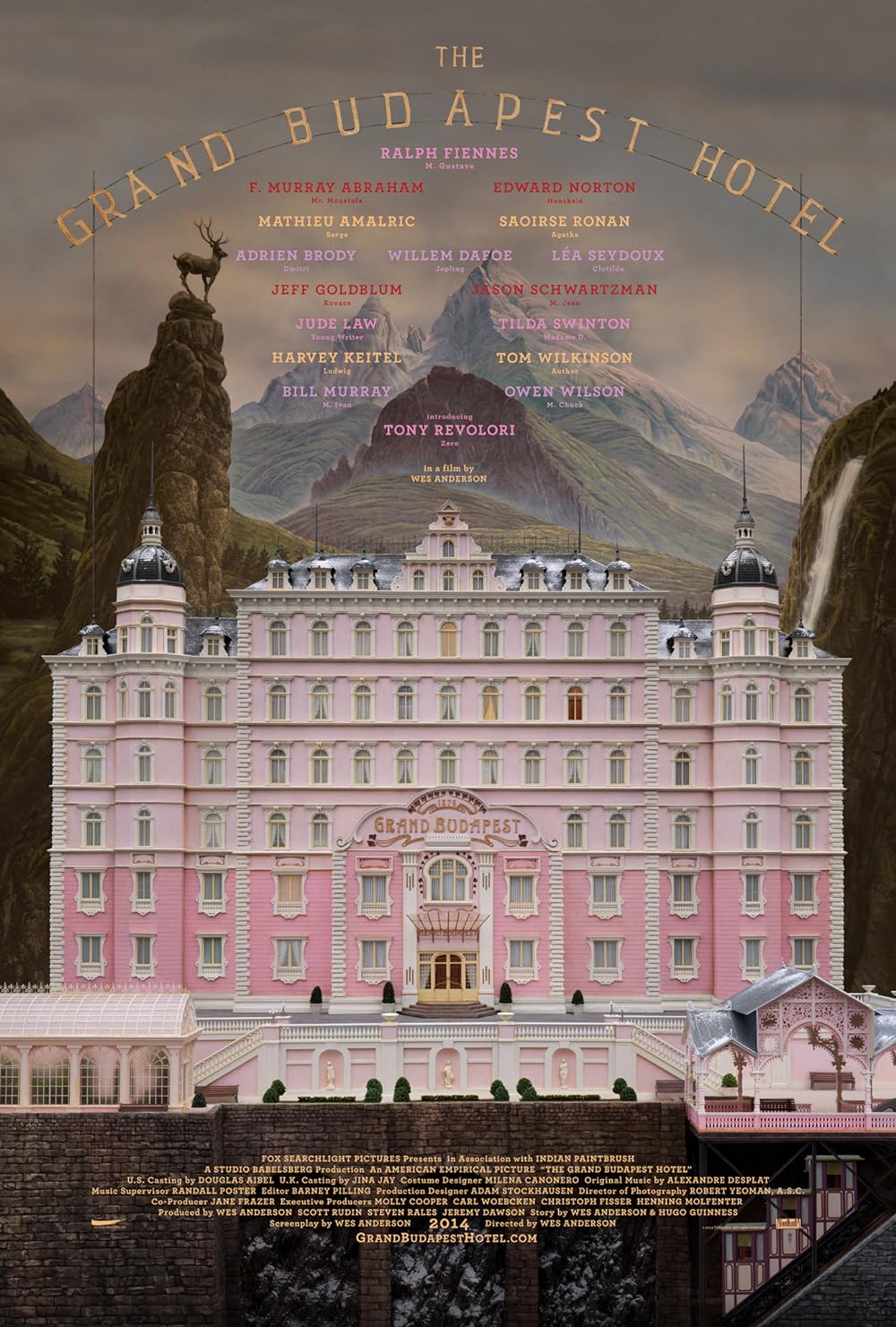
The Grand Budapest Hotel
There’s a definite case to be made that of all of Wes Anderson’s films, this is the most Wes Anderson-y. In his signature style, Anderson tells the story of Zero, the new lobby boy at the Grand Budapest Hotel, and his unlikely friendship with concierge Gustave H. Together, the two outwit vengeful aristocrats and an impending fascist takeover of Gustave’s beloved hotel, all the while accompanied by Alexandre Desplat’s enchanting score. After a quick glance at Wikipedia, I discovered that the plucked strings that fill this movie’s soundtrack were not mandolins as I originally thought, but rather the balalaika. In this score, Alexandre Desplat accomplishes no less than making the unreal feel real, sweeping the audience into Anderson’s vision of a history that never was. The Academy clearly felt the same way, since Desplat received the Oscar for Best Original Score in 2014. If you want to see a movie like no other – and hear a soundtrack like no other as well – The Grand Budapest Hotel should definitely be on your list.
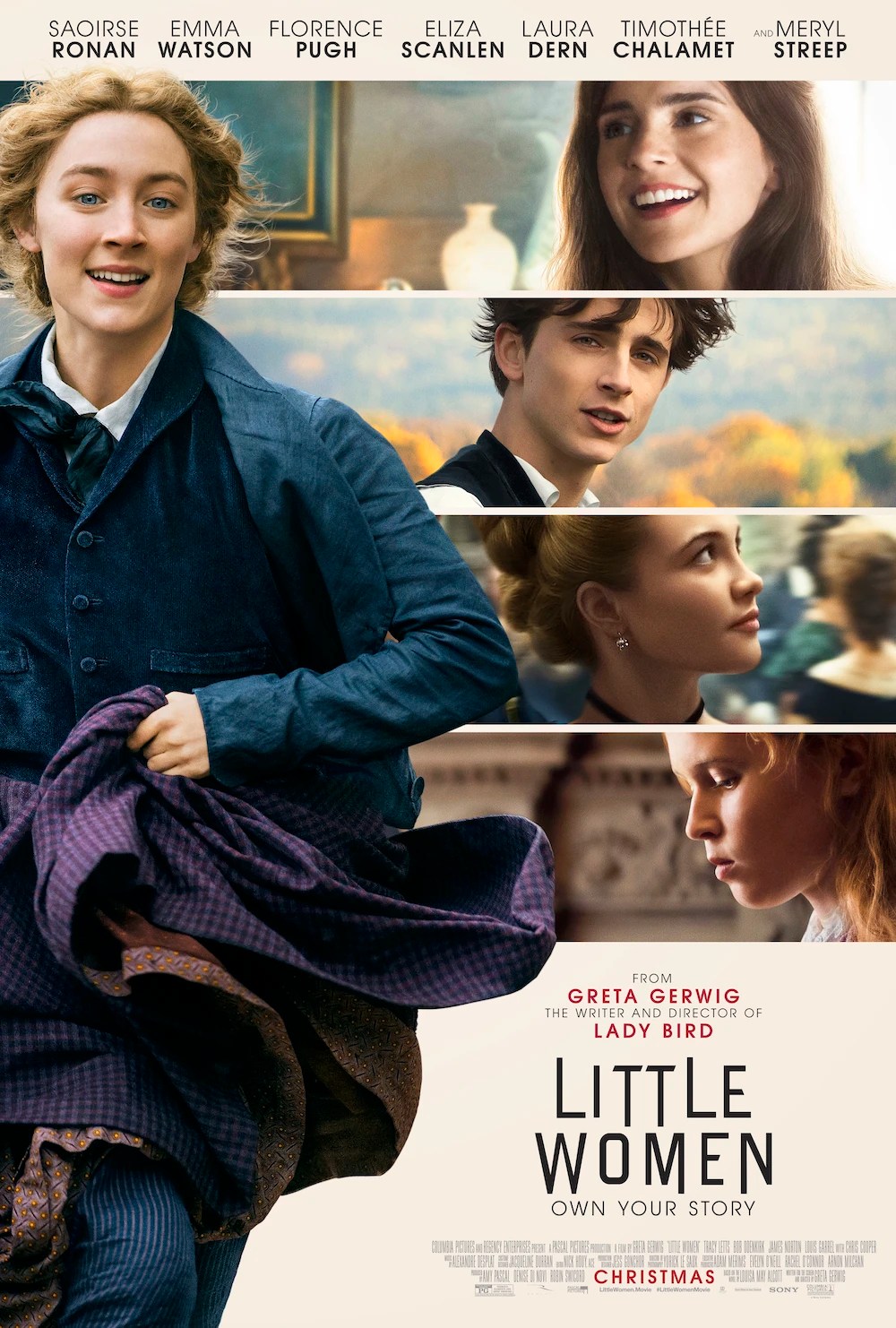
Little Women
Director Greta Gerwig hit a home run in her 2019 adaptation of Louisa May Alcott’s classic Little Women. The film is obviously an achievement in casting, featuring Saoirse Ronan as Jo March, Florence Pugh as Amy March, Timothée Chalamet as Laurie, and Laura Dern as Marmee, among others. The film received six academy award nominations, including one for the score, composed by Alexandre Desplat. Desplat didn’t win the Oscar this time, but this score still shines. With tender melodies, aching harp, and sweeping strings, Desplat masterfully charts Jo’s journey from the rose-tinted memories of childhood, through the hardships of loss and failed romance, and finally her transformation into a self-assured young woman, finding a place for herself in the man’s world of the 19th century. However many iterations of this story you’ve seen, Gerwig’s packs an emotional punch all its own, and Desplat’s score is a big part of why.
Blade Runner
When I ask you to imagine what a film score sounds like, your mind’s ear probably conjures the sound of a full orchestra. That’s understandable, but I think it’s important not to forget the many great film scores that feature electronic music – and I think Vangelis’ score for Ridley Scott’s 1982 Blade Runner is one of the best. Accompanying the story of a detective tasked with hunting a rogue android, Vangelis’ score alternates between majesty and haunting melancholy, perfectly reflecting the protagonist’s journey as he’s confronted with questions about what it means to be human. Blade Runner remains one of the most iconic works of cyberpunk fiction ever made, and I think Vangelis’ score has a lot to do with that. While authors like William Gibson and Neal Stephenson and directors like Ridley Scott and Mamoru Oshii introduced cyberpunk to the world, Vangelis defined what cyperpunk sounded like in the minds of many fans – an enduring contribution to a genre that’s going strong to this day.
 Mead Public Library Blog