
The weather is crisp, the leaves are abandoning ship, and I’m thinking of all the ways I can stay as cozy as possible. Reading and pouring myself cups of tea are essential activities. This is also the stretch of time where I carry my knitting projects in my bag everywhere I go. If you’re even mildly curious about knitting, or already deep in the craft, our catalog has a great assortment of books to inspire you to make something out of seemingly nothing.

Vogue Knitting: The Ultimate Knitting Book
Vogue has published many knitting books over the years—some excellent, some… less so. But if there’s one to add to your shelf, Vogue Knitting: The Ultimate Knitting Book is the one. It’s more of a tome than a travel companion, but it covers almost everything you might want to know: a stitch dictionary, patterns, fiber guides, yarn weights, and more.
My favorite part is the clear breakdown of garment shaping and construction. Understanding why something comes together the way it does is invaluable. If you can “read” your knitting, it becomes much easier to identify mistakes, fix them, and even adjust or design your own patterns.
Standout: The fiber guide is wonderfully thorough. In my early days, I picked yarn at random and then wondered why my finished hat didn’t match the slouchy photo in the pattern. Turns out fiber matters.

Knitting Without Tears by Elizabeth Zimmerman
I owe Reddit for pointing me toward this gem. First published in 1971, Knitting Without Tears is a beloved classic, and I was delighted to discover we have a copy at Mead. I wish I’d had it when I first started knitting.
This book makes knitting feel joyful and approachable. Its conversational tone draws you in, and information is dispelled as wisdom. You learn basic principles and stitches almost without noticing. It’s often described as a “knitting treatise,” and I’d agree. It covers a wide range of topics — from seamless sweaters to sock heels to afghans — while highlighting concepts you might not expect to matter but absolutely do. The best part about this book is you walk away thinking and feeling like a knitter.
Standout: Before I learned to read knitting patterns, the symbols made my impatient brain crash. This book includes patterns, but they’re presented narratively, guiding you line by line. It’s a perfect foundation for later untangling formal pattern language.
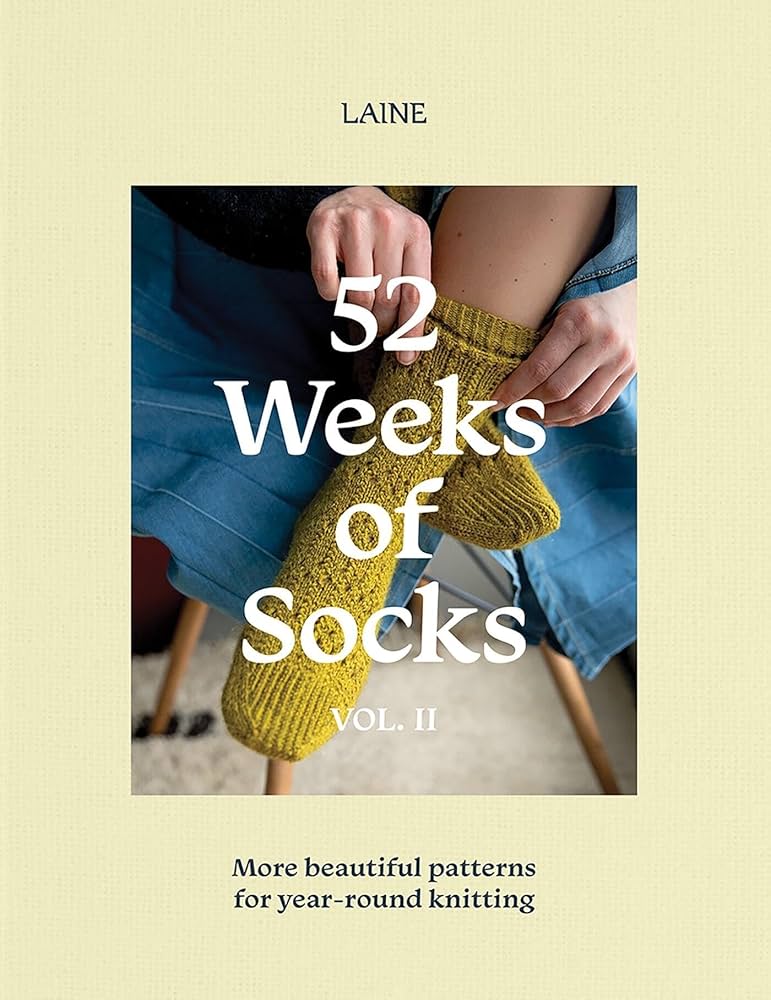
52 Weeks of Socks. Vol II by Laine
Socks are famously love-or-hate projects. They demand patience and heart. But 52 Weeks of Socks might either deepen your affection or convert you entirely. Produced by the beloved Finnish magazine Laine, this collection transforms the humble sock into art.
Inside are 52 unique sock patterns, one for each week of the year, created by designers from around the world. The book itself is gorgeous: beautifully photographed, thoughtfully organized, and printed on thick matte pages that make browsing as enjoyable as knitting. Styles range from delicate lace and bold stranded colorwork to cozy cables and minimalist designs. It’s an endless source of inspiration.
Standout: This book captures the feeling of slowing down and crafting. Imagine a winter morning, a cup of coffee, soft wool, and this book beside you. That is my dream.
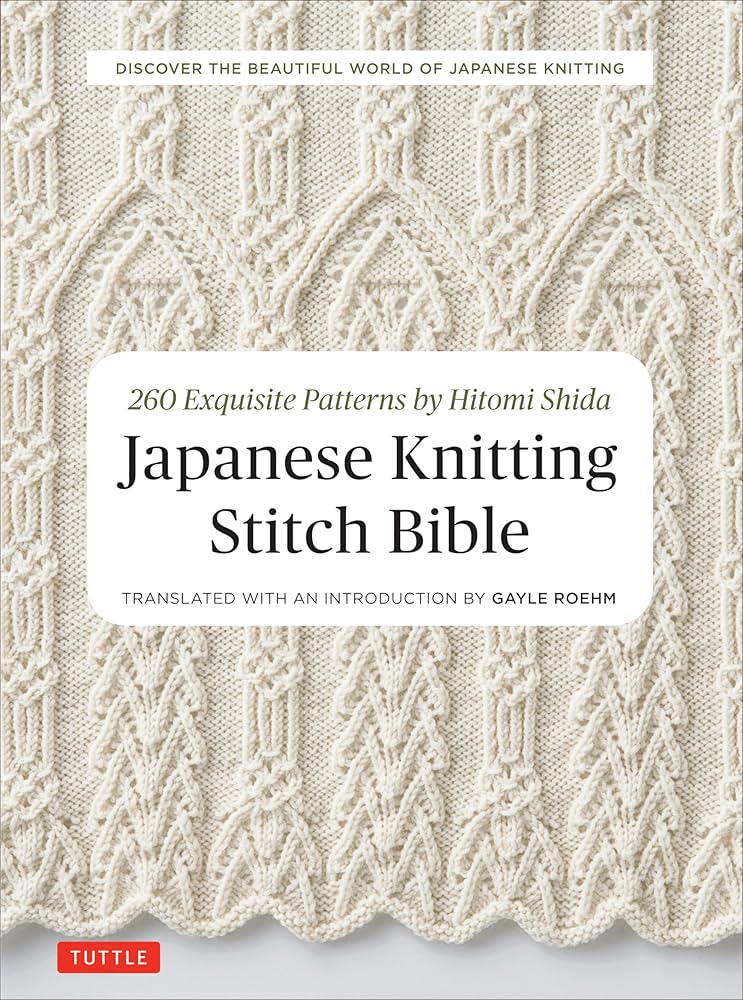
Japanese Knitting Stitch Bible by Hitomi Shida
Here’s a fun bit of history: samurai were among the first knitters in Japan. After the Meiji-era abolition of the feudal clan system, many low-ranking samurai turned to hand-knitting for income, using thin rods and cotton or silk thread to make tabi socks and handguards for swords.
Okay — now to the book. The Japanese Knitting Stitch Bible by Hitomi Shida is a beloved classic, offering 260 stitch patterns full of lace, cables, and twisted stitches. These motifs exemplify Japanese knitting design: intricate, airy, and beautifully structured. Each chart is meticulously organized, blending creative design with mathematical precision (a necessary evil in knitting). This book is probably best suited for experienced knitters eager to design their own patterns and experiment with established stitch motifs.
Standout: The charts are exceptionally clear and easy to follow, even if you’re new to more involved lacework or chart reading.
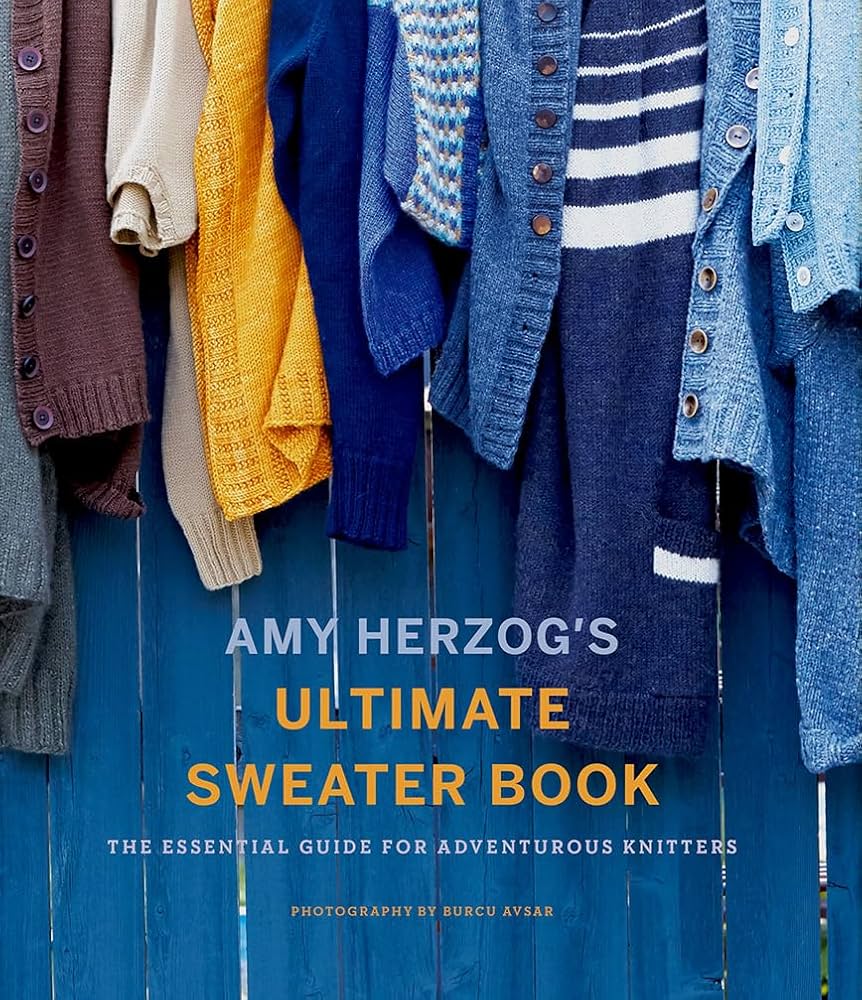
Ultimate Sweater Book by Amy Herzog
Sweater sizing never perfectly matches every body. Sometimes it doesn’t matter, other times you want a sweater that fits just right. Amy Herzog’s Ultimate Sweater Book is a friendly, illustrated guide to sweater design that makes that possible.
Before knitting, I had no idea how many “types” of sweaters existed, categorized by neckline, sleeve, and construction. This book breaks all of that down and covers essentials like body measurements, swatching, and ease. Whether you want to design from scratch or modify an existing pattern, this resource gives you the tools.
Standout: The 24 included sweater patterns let you put the newly learned theory into practice. It all comes fully circle in a lovely way.
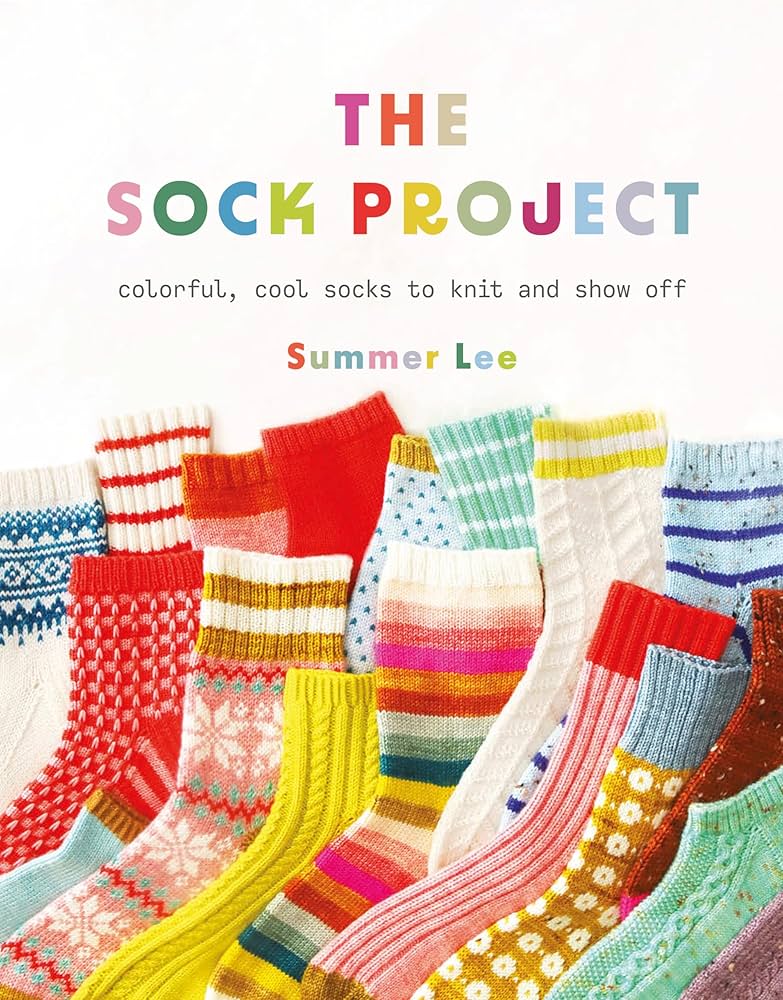
The Sock Project by Summer Lee
I’m in a sock-knitting phase, so this recommendation reflects my current inclination, but The Sock Project is a fantastic choice for beginners. It avoids the overwhelm that often comes with sock knitting by starting simple and building skills gradually. The first pattern teaches basic stitches and heels; later ones introduce more challenging techniques, like colorwork, once you’re ready. Each pattern also includes step-by-step photos – I can’t emphasize enough how well The Sock Project is made for learning.
Standout: The variety is delightful: toe-up and cuff-down socks, multiple heel types, stripes, hearts, polka dots, and more. Even seasoned knitters will find something useful.
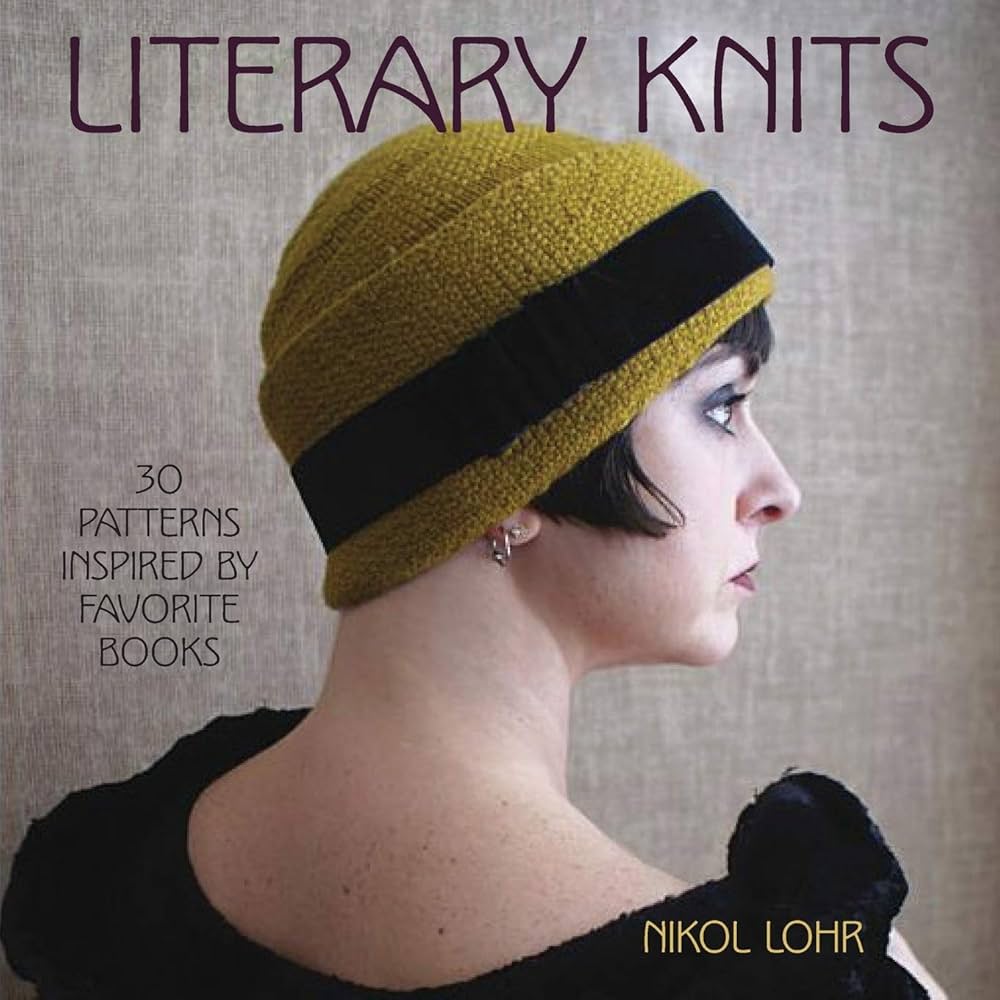
Literary Knits by Nikol Lohr
It feels fitting to end with something bookish. While we don’t have a physical copy at Mead, Literary Knits is available digitally through Libby. I recommend browsing it on a larger screen for the best view.
Designer Niki Lohr created a patchwork of patterns inspired by classic literature. From Little Women to One Hundred Years of Solitude to Anna Karenina, each project turns a story into a wearable knit piece. You’ll find everything from funky hats to decadent leg warmers to gorgeous shawls. Patterns come with clear instructions, material notes, and thoughtful commentary linking each design to its literary source.
Standout: As someone who often has to choose between knitting and reading, I love a book that merges both pastimes. It feels right to this library assistant that knitting can help us inhabit the spirit of treasured stories.
Special Shout-Out
It would be wrong not to mention themed knitting books. For all your special-interest indulgences, here are just a few available at Mead:
 Mead Public Library Blog