
Dear reader, I have found myself going back in time this winter. Where do you ask? Why, the regency era of England of course! You know where this is going, don’t you? The word romance is in the title, so how could you not? That’s right, today’s blog is about regency romance novels. They happen to be my obsession this winter. Think of them as my comfort food, but in book form.
Maybe you’ve been reading regency romance novels too, but have you ever given thought to what the regency era actually was? I admit I did not until I researched it for this blog post. The regency was an era between 1811-1820, though historians generally look at the years 1780-1830 as the Regency period because those years were influenced by the role of the prince regent. The prince regent ruled as proxy as his father, King George III, was unable to rule due to his illness and mental instability.
Most regency romances focus on the upper class society, known as the ton. They operated on a complex and rigid set of rules that dictated their every behavior, from socially acceptable calling hours, having a chaperone or escort when a young man and woman were together, and appropriate dances. To be caught going against any of these rules would be grounds for endless gossip, or even a social pariah.
Dear reader, let me now tell you about some of my most recent favorite regency romance novels.

A Heart Worth Stealing by Author
Miss Genevieve Wilde—a magistrate’s daughter and independent heiress—is determined to meet life’s challenges all on her own, just as her late father had taught her. So when her father’s pocket watch is stolen, she will do anything to get it back, especially when the local authorities prove incompetent.
Upon reading an advertisement in the paper, she takes a chance and contacts a thief-taker to find the watch. It’s a choice Ginny regrets when former Bow Street officer Jack Travers arrives on her doorstep. He is frustratingly flirtatious, irritatingly handsome, and entirely unpredictable, and Ginny wonders if she’ll be able to resist such a man.
But after Ginny discovers that the missing watch is just a small part of a larger, more frightening plot against her, she needs Jack’s help more than ever. To protect her home and her reputation, the two enter into a risky charade—pretending Jack is her cousin so he can begin his investigation, starting with the household staff. As they work together to unravel the mystery, Ginny finds herself falling fast for her charismatic thief-taker, leaving her heart in just as much danger as her life.
Dear reader, given the norm of arranged marriages at the time, is it any surprise that many regency romance novels center around the main female character declaring she will marry for love, instead of money, fame, title, etc.? I’ve lost track of how many books I have read in this vein, and yet I never tire of them! How realistic that was for the time is up for question, but that doesn’t detract from my enjoyment in the least.

The Lady and the Highwayman by Sarah M. Eden
Elizabeth Black is the headmistress of a girls school in 1865s Victorian London. She is also a well-respected author of silver-fork novels, stories written both for and about the upper-class ladies of Victorian society. But by night, she writes very different kinds of stories–the Penny Dreadfuls that are all the rage among the working-class men. Under the pseudonym Charles King, Elizabeth has written about dashing heroes fighting supernatural threats, intelligent detectives solving grisly murders, and dangerous outlaws romancing helpless women. They contain all the adventure and mystery that her real life lacks.
Fletcher Walker began life as a street urchin, but is now the most successful author in the Penny Dreadful market, that is until Charles King started taking all of his readers. No one knows who King is, including Fletcher s fellow members of the Dread Penny Society, a fraternity of authors dedicated to secretly fighting for the social and political causes of their working-class readers. The group knows King could be an asset with his obvious monetary success, or he could be the group s undoing as King s readership continues to cut into their profits.
Determined to find the elusive Mr. King, Fletcher approaches Miss Black. As a fellow-author, she is well-known among the high-class writers; perhaps she could be persuaded to make some inquiries as to Mr. King s whereabouts? Elizabeth agrees to help Fletcher, if only to insure her secret identity is never discovered. What neither author anticipated was the instant attraction, even though their social positions dictate the impossibility of a relationship.
For the first time Elizabeth experiences the thrill of a cat-and-mouse adventure reminiscent of one of her own novels as she tries to throw Fletcher off her scent. But the more time they spend together, the more she loses her heart. Its upper-class against working-class, author against author where readers, reputations, and romance are all on the line.
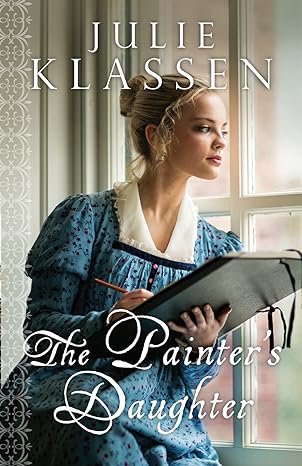
The Painter’s Daughter by Julie Klassen
Sophie Dupont, daughter of a portrait painter, assists her father in his studio, keeping her own artwork out of sight. She often walks the cliffside path along the north Devon coast, popular with artists and poets. It’s where she met the handsome Wesley Overtree, the first man to tell her she’s beautiful.
Captain Stephen Overtree is accustomed to taking on his brother’s neglected duties. Home on leave, he’s sent to find Wesley. Knowing his brother rented a cottage from a fellow painter, he travels to Devonshire and meets Miss Dupont, the painter’s daughter. He’s startled to recognize her from a miniature portrait he carries with him–one of Wesley’s discarded works. But his happiness plummets when he realizes Wesley has left her with child and sailed away to Italy in search of a new muse.
Wanting to do something worthwhile with his life, Stephen proposes to Sophie. He does not offer love, or even a future together, but he can save her from scandal. If he dies in battle, as he believes he will, she’ll be a respectable widow with the protection of his family.
Desperate for a way to escape her predicament, Sophie agrees to marry a stranger and travel to his family’s estate. But at Overtree Hall, her problems are just beginning. Will she regret marrying Captain Overtree when a repentant Wesley returns? Or will she find herself torn between the father of her child and her growing affection for the husband she barely knows?
Dear reader, whether your trope is enemies to lovers, secret identities, or two people overcoming differences in class and going against the norms of society, I hope you enjoy these books and many others in the regency romance genre. Lets all warm our hearts this winter, shall we?
 Mead Public Library Blog