
Are you looking for more opportunities for your children ages 2-5 to socialize and play with others this summer? Join us at Bitty Book Club, the third Tuesday of each month! We read, play, and learn together through books and hands-on activities that support the social, motor, and language development. Every month we feature a new story, and a variety of activities that are designed to extend what we read about. Free copies of the book are available for families, first come-first served.
Join us on June 19th for a story about gardens and what we find there when we look closely. The Sheboygan Community Gardeners Association will be present to help children add native plants to our Library Gardens. For more information about the program, check out this blog post, and visit our calendar of events. To learn more about the Sheboygan Community Gardeners, visit their Facebook page.
These are a few of our favorite stories featured over the past six months during Bitty Book Club:

We’re Going on a Bear Hunt
By Michael Rosen
Illustrated by Helen Oxenbury
No matter how many times you go on a bear hunt, chances are your child will want to go on another! This book is a staple on any bookshelf, as it encourages storytelling through repetition of patterns, creative movement, and song.
This is the perfect story for retelling in imaginative ways. Countless books have been written in it’s style- go on a lion hunt, an alien hunt, a bug hunt- whatever you can imagine with your child! Using simple clip art images, or cutouts from a magazine, or simply using your imagination and body – you and your child can create your own adventure of obstacles and the words and motions of how to move through them.

Dazzling Diggers
By Tony Mitton and Ant Parker
Dig, Scoop and Lift through this board book all about construction vehicles. Can you act the part of the steam roller, or the excavator? A fun read aloud with opportunity for movement, and playing with sounds (onomatopoeia).
We explored construction inspired activities during this month’s program, moving big blocks in trucks and building towers. Sensory bins filled with black beans and small construction vehicles were also a hit. This is a great theme for both large gross and fine motor skill development.

Head, Shoulders, Knees and Toes
By Skye Silver
Illustrated by Mariana Ruiz Johnson
Slightly different from the traditional song, this one adds additional verses about ways we grow and stay healthy. You can sing your way through this story, while talking about important milestones.
A fun activity to learn about the body is making funny faces with different materials. All you need is to print off the outline of a face, and a few different eyes, noses, and mouths and you and your child can spend time making silly faces, and making up stories about the different people you create.

Goodnight Moon
By Margaret Wise Brown
Illustrated by Clement Hurd
There is a lot to discover in the illustrations of this bedtime classic. Telling stories using inspiration and cues just the illustrations is one way to “read” a book without using the printed words on the page.
This month, we explored this title by adding key images to a sensory bin. Caregivers and children could retell the story in any order as they found images within the bin. Or go on a hunt for specific images as they are mentioned in order in the book.

Pete the Cat I Love My White Shoes
By Eric Litwin
Illustrated by James Dean
Our favorite cat Pete steps in all sorts of colorful messes in this Pete the Cat classic. The repetitive phrasing is great for young learners to predict what comes next in the story, and is a helpful lesson in perseverance and maintaining a positive attitude.
Identifying and naming colors was top on our list of activities this month. We created our own color path, where kids could retell the story, and practice naming their colors. We also used one of our favorite supplies, dot markers, to add colorful splashes to paper shoe cutouts.
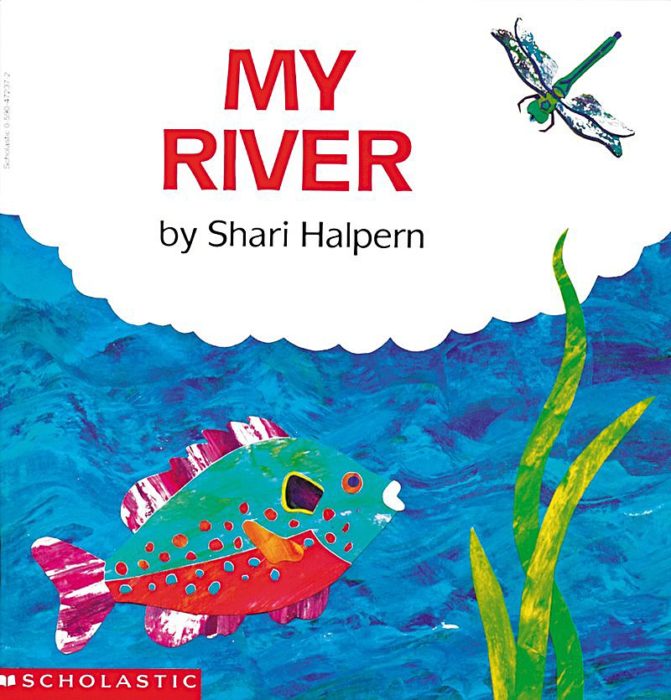
My River
By Shari Halpern
A basic introduction to the ecosystem of a river, your child will love the colorful spreads, simple text, that capture the numerous and varied inhabitants, as well as the children who play along the banks.
To play a role in the conservation of our ecosystem, we made seed balls. Using shredded paper, wildflower seeds, and a bit of water – kids squished the wet paper between their hands until it became more of a pulp. Next, we squished in seeds and wrapped it with tissue paper, encouraging children to plant wildflower seeds with the help of their adults.
.
 Mead Public Library Blog