
I started a new semester of school in January, and so any room for personal reading has shrunk exponentially, sadly. When this happens, I tend to reach for shorter, sometimes breezier, books. I want to be mostly entertained, and I don’t want to have to work for a story. If you’re also in need of a quick-ish read amidst a hectic schedule, I’m sharing a few of my recent reads that require minimal commitment. I hope you find something you enjoy!
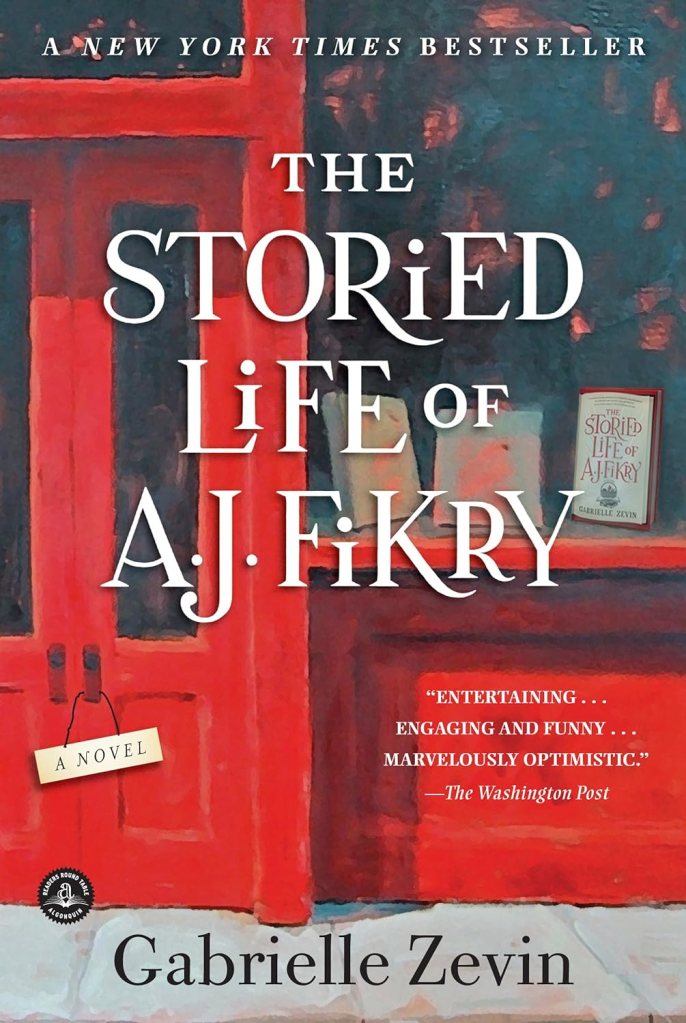
The Storied Life of A.J. Fikry by Gabrielle Zevin
I started the year strong with The Storied Life of A.J. Fikry, by the same author who wrote Tomorrow, and Tomorrow, and Tomorrow, a book I loved. Like that novel, this one is charming and moving without ever feeling too dense or heavy.
Once upon a time, A.J. Fikry moved to Alice Island with his wife to open a bookstore. This pleasant life temporarily softened his cynical outlook. Everything changes when his wife unexpectedly dies. Now a widowed bookseller, there’s not much keeping him tethered to Alice Island… or to life, for that matter. He devises a simple plan: sell his rare Edgar Allan Poe book and leave town for good.
But when the precious book goes missing, his early retirement evaporates into thin air. And that’s only the beginning. Another surprise soon implodes his carefully laid plans in a much more meaningful way. The unexpected twists and turns offer A.J. something he never anticipated: a second chance. He might have become an isolated, grumpy older man, but instead life offers him love, community, and a renewed sense of purpose through books.
This novel was such a joyful reading experience. A.J.’s life has its ups and downs, as all lives do, but the story never feels like an unwieldy roller coaster. It’s more like a Ferris wheel: you reach a high point almost without realizing it, and then steadily come back down. The triumphant moments feel like delightful gifts; the harder ones are easier to swallow. Each chapter opens with a short literary review written by A.J., which feels like a little bonus for fellow bookworms.
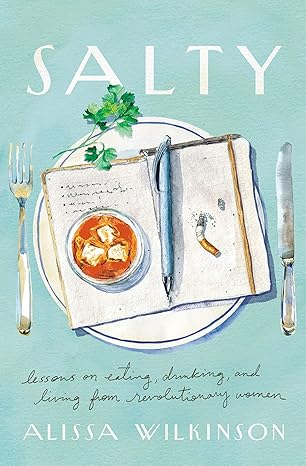
Salty: Lessons on Eating, Drinking, and Living from Revolutionary Women by Alissa Wilkinson
I really loved the concept of this one. The premise is Wilkinson’s response to who she’d invite to a dinner party, resulting in women who have made meaningful contributions in their fields gathering to break bread together. Each chapter then dives into one woman’s life, tracing how food or drink connects to her work. At the end of every chapter, there’s a recipe, either from the woman featured or from the author herself.
For context: I love food writing. Phrases like “sear a rump of lamb,” “flaky salt,” and “hot cast iron pan” conjure images so vivid I can practically taste and smell them. That sensory richness is very much present here. It was fascinating to read about each woman’s relationship with food and drink. Whether they loved to cook or preferred to observe, each used meals as a way to gather, reflect, and examine the world around them.
I also enjoyed learning about the women featured. I was familiar with some, like Octavia E. Butler, but it was equally exciting to discover others, like French director Agnès Varda. I ended up watching her film Cléo from 5 to 7 afterward (you can find it on Kanopy!). Each chapter also includes a mini bibliography of the spotlighted woman’s work. I now have a growing stack of titles I’d love to check out.
My only complaint is that, aside from the introduction, the dinner party framework fades into the background. It initially drew me in, but I found myself forgetting about it entirely. The book ultimately reads more like a collection of mini essays, which didn’t diminish my interest. Still, I think the dinner party concept, if woven throughout more intentionally, could have strengthened the underlying theme of community.
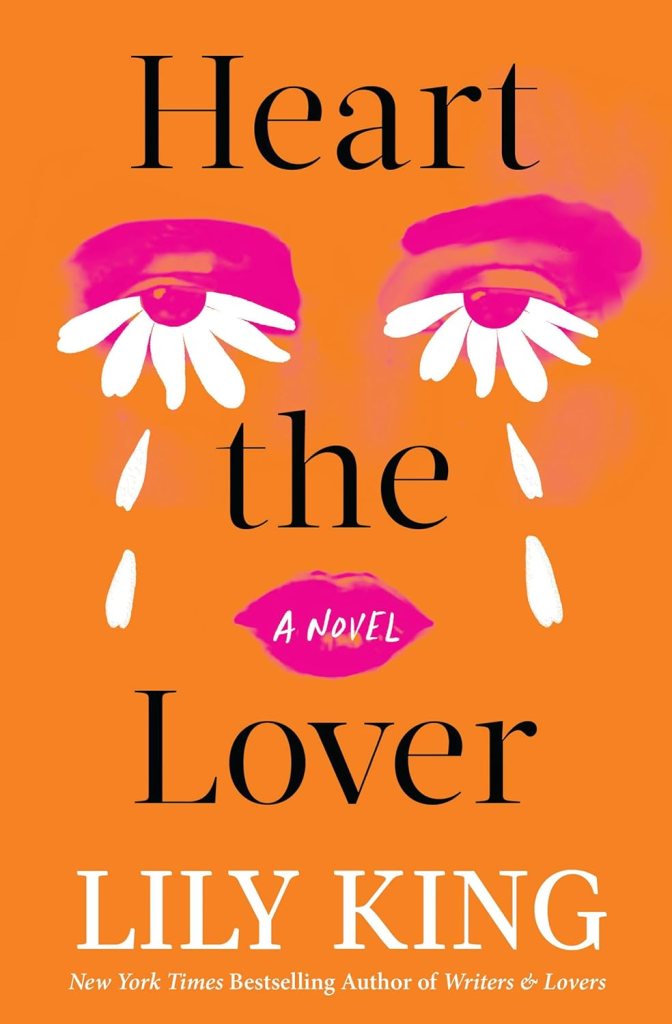
Heart the Lover by Lily King
I was excited to read Heart the Lover because I previously loved Lily King’s Writers & Lovers, which I read in one fervent sitting. I’m also predisposed to enjoy a story about twenty-something college students entangled in messy relationships. I don’t know why; it’s just the way it is.
At first glance, Heart the Lover feels like a coming-of-age story. Three students, Sam, Yash, and Jordyn, meet in a 17th-Century Literature class. Soon they become nearly inseparable, and their days are filled lofty ideas, card games, and quick wit. The whole world feels wide open for them. Their friendship turned love triangle is complicated and feels fragile, like glass. As a reader, it’s easy to see a thousand better decisions they could make. But their recklessness and intensity are mostly recognizable signs of youth.
Midway through the novel, the story fast-forwards to middle-age. I’ve always loved when a book finds you at the right time in your life. I don’t think I would have appreciated this novel five years ago. Now, it resonates in a meaningful way.
When the characters reunite in their forties after a tragic event, life looks much less glossy. They’ve each charted separate paths. Time has softened old grudges and reshaped their understanding of past mistakes. There’s hard-won wisdom here. Sam, Yash, and Jordyn revisit their shared history from a new vantage point, leaning into a bittersweet acceptance of truth, contradiction, and the complicated nature of love.
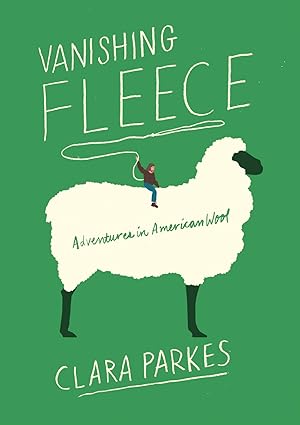
Vanishing Fleece: Adventures in American Wool by Clara Parkes
When Clara, a yarn writer and critic (it’s a thing!), receives a rare opportunity to purchase a 676-pound bale of merino fleece, she gets the idea to trace the life cycle of a skein of commercial yarn. This propels Clara on a journey across the United States, beginning at an old dairy barn in Maine with a flock of sheep getting sheared. From there, she visits one of the last remaining scouring plants, where wool is carefully washed free of oils, grass, and, yes, feces. Eventually, her bale of fleece must be spun and dyed, too.
What starts as a quest to understand how wool becomes a sellable product turns into something of a reckoning. Along the way, Clara speaks with the many people who make up the country’s textile industry, from mill operators to small-scale dye producers. Through these conversations, she discovers an industry under real strain. The work is costly, the infrastructure is shrinking, and practices like offshoring pose a serious threat. Globalization has not been kind to the already waning wool industry.
Still, the book is far from doom and gloom. Clara also highlights the dedicated people working to keep local mills and small operations alive. Vanishing Fleece ultimately feels like an act of advocacy for wool, a call to producers and consumers alike to consider the importance of what we wear. I do wish there had been pictures to accompany some of the more technical descriptions, but overall it was a delightful and fascinating read.
 Mead Public Library Blog