Posted in Uncategorized

New Year Old Books

People generally look ahead in the New Year, to the dawning possibilities and the existential dread of endless choice. It’s not for me, this embarrassment of variety, this perversion of content creation, this deluge of intellectual property. Let’s, you and I, with the power of library catalog software, look at some of the books that have been available for checkout since their publication or since Mead first opened its doors in 1897.
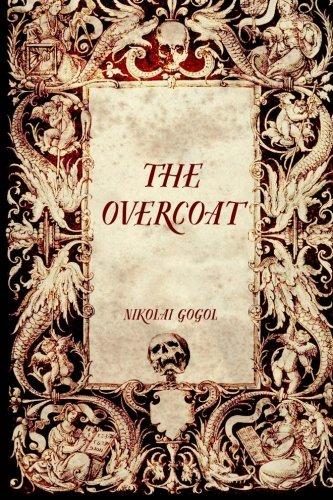
The Overcoat (1842) by Nikolai Gogol
The Russians are great to read in winter. I love feeling desolate. Gogol is my particular favorite among them. His writing is bleak and luminous, much like some winter days. This short story is considered his greatest. 

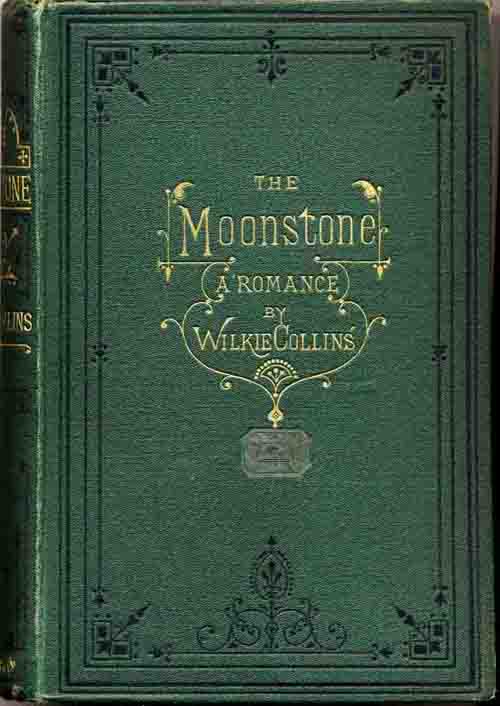
The Moonstone (1868) by Wilkie Collins
Collins is often credited for writing some of the first stories we could compare to modern mystery fiction. As a fan of classical mysteries myself, I have found Collins to be slightly long-winded and dusty, but others will revel in his gilded language. He is contemporaneous to Sir Arthur Conan Doyle, who I encountered first, and who is still my Victorian ideal for mystery/adventure writing. 

The Hamlet (1940) by William Faulkner 
Faulkner makes my head hurt. He is not for me. I find the prose dense and hard to parse. The rest of the world disagrees, and the rest of the world has a bigger, higher-functioning brain than I, with which to comprehend Faulkner. Visit any library in the country and you are likely to find something by William Faulkner, and Mead is no exception. 

A Tree Grows in Brooklyn (1943) by Betty Smith
I have never read this book but I always knew about it. There was this gag in a 1940s Looney Tunes cartoon in which a bunch of tough New York City dogs are getting ready to kick Bugs Bunny’s ass, so he grasps around him and holds something out to defend himself. All of a sudden all the dogs RACE away from Bugs, which is when we learn the title of the book: A Tree Grows in Brooklyn. That’s right. A dog pee joke. Mid 20th century animation has provided me with an education in the humanities, and has made me the refined citizen I am today. 

Anyhoo, I bet the book is worth a read since it has been in continual circulation since its publication. 

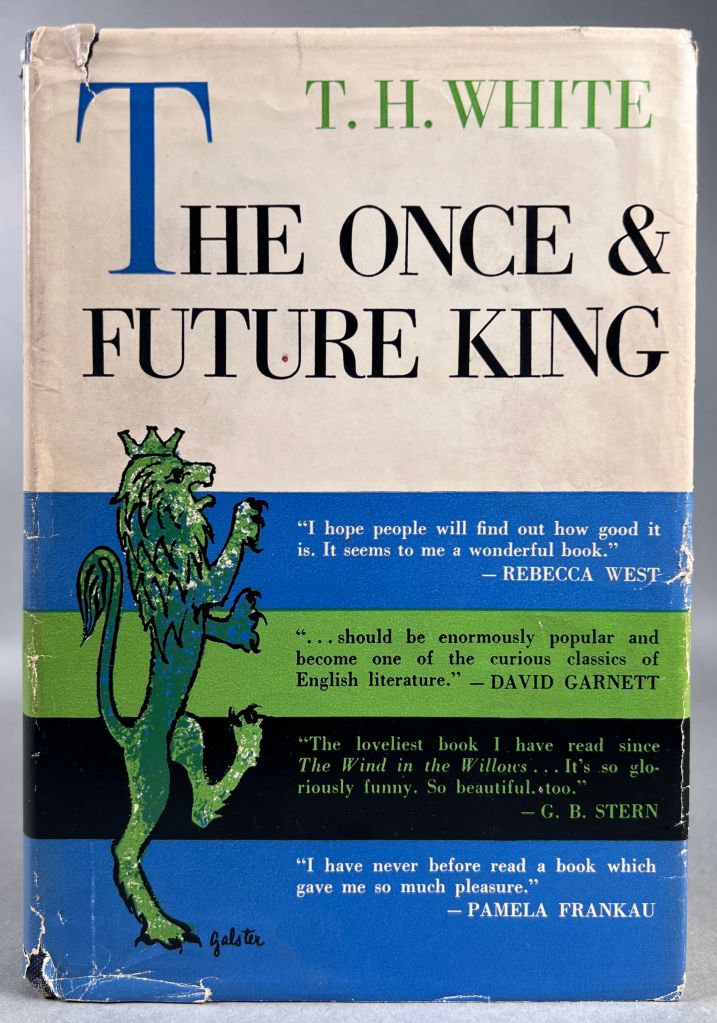
The Once and Future King (1958) by T.H. White
This is the five-book collection of White’s definitive retelling of the Arthurian legend. The first book, The Sword in the Stone, was published in 1938, and is an abiding classic. Mead’s copy was published in 1958 and has been in constant circulation since. Do you get a sense of time and place from old objects like books? I do. 

Memories, Dreams, Reflections (1962) by C.G. Jung
The esteemed Swiss psychiatrist and physiotherapist spent his last days finalizing this autobiographical work. His contribution to the field of psychiatry has impacted the study of religion, philosophy, archeology, anthropology, and literature. The man defined the concepts of introversion and extroversion, for one, and we all frame ourselves through this lens. Read all about it, in his own words here. 
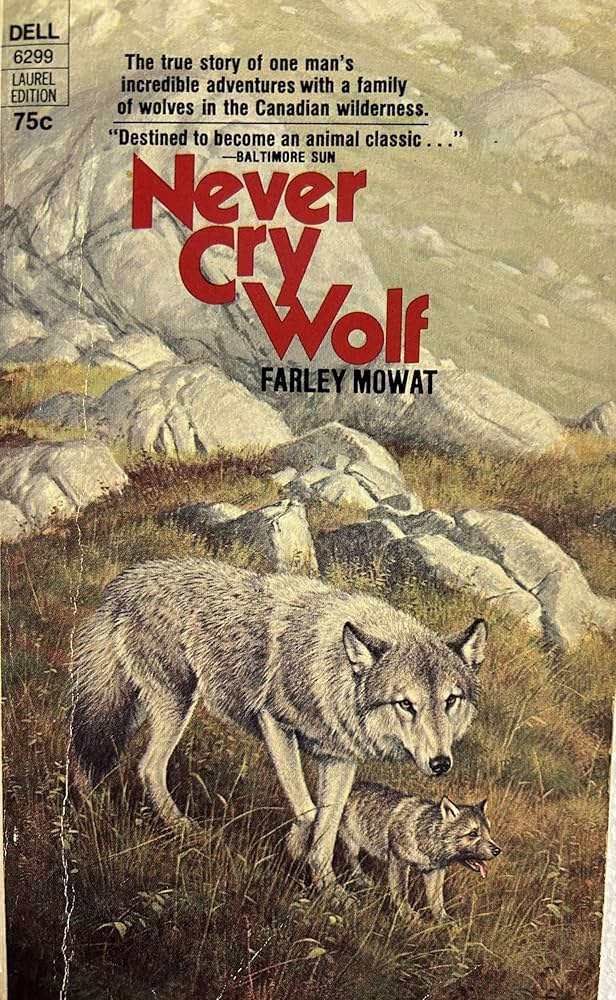
Never Cry Wolf (1963) by Farley Mowat
Hey, I never read this book either, but I HAVE seen the movie. There is a scene relating to canines and canine urine in this story, which I think dovetails nicely with my remarks about A Tree Grows In Brooklyn

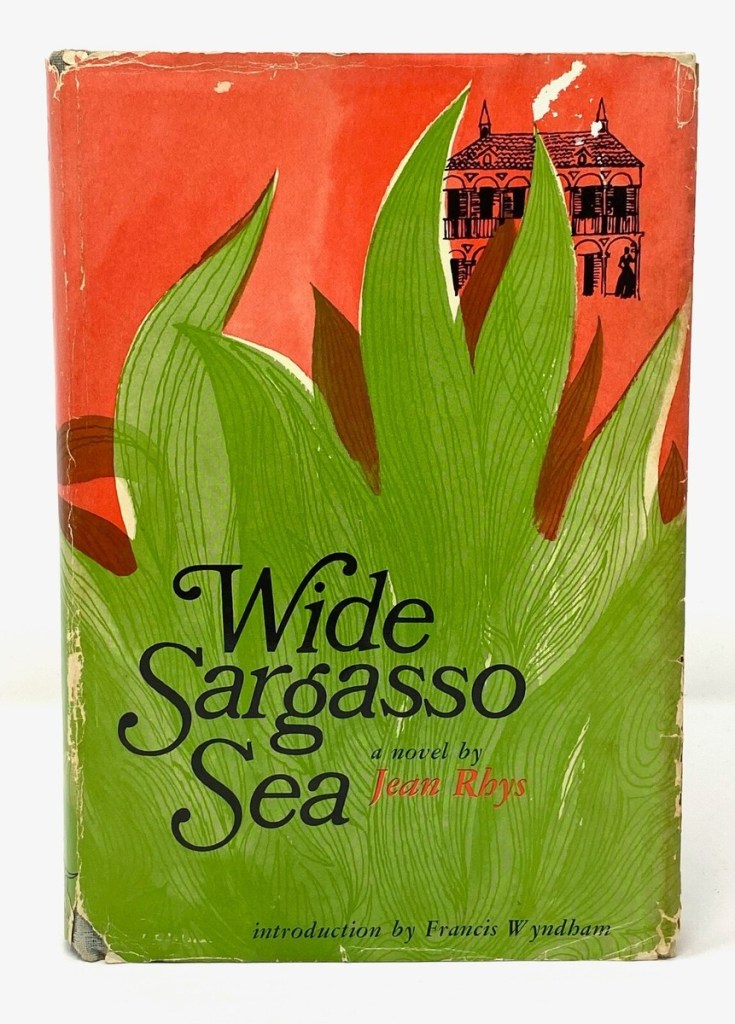
Wide Sargasso Sea (1966) by Jean Rhys
Remember how Mr. Rochester was keeping his crazy wife hidden in the attic? Yeah, that wasn’t so cool, was it? The mad wife has a name, Antoinette Cosway, and this is her story. 

Twiggy: How I probably just came along on a white rabbit at the right time, and met the smile on the face of the tiger (1968) by Twiggy
This book is tall and thin, just like Twiggy. Damn her, for pushing these unrealistic beauty standards on printed material. 
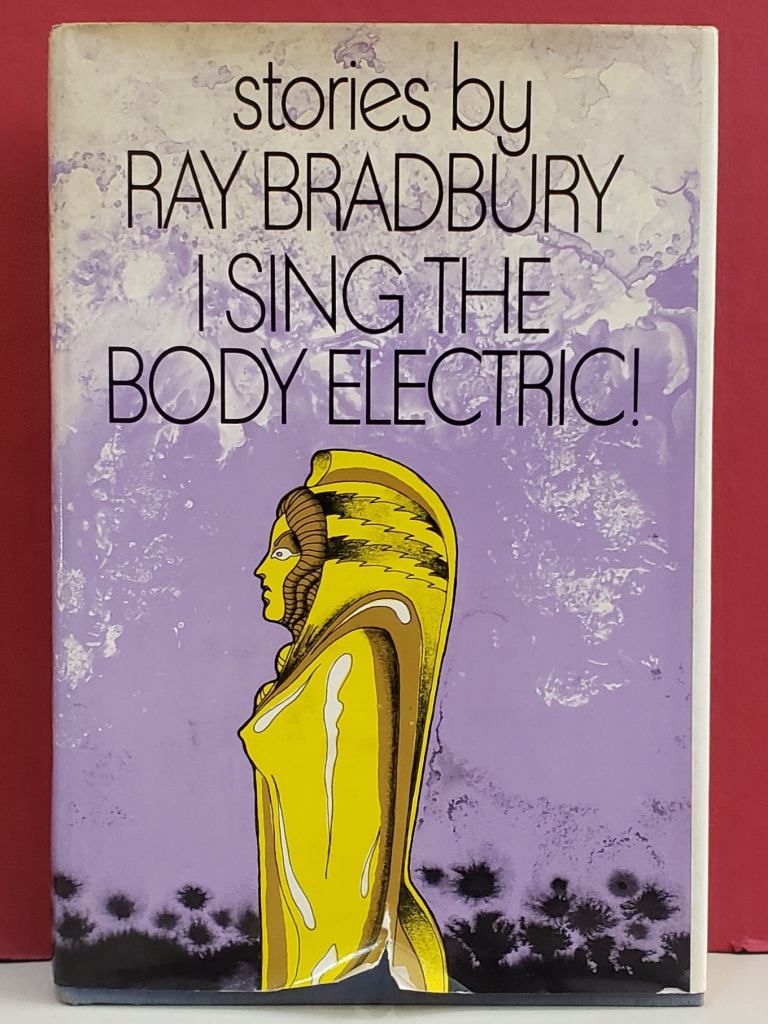
I Sing the Body Electric! And Other Stories (1969) by Ray Bradbury
Isn’t that the title of a song from the hit 1980 musical, Fame? That’s what I thought for a long time until I became familiar with the work of Walt Whitman. We all learn at a different pace. 

As for Bradbury, his work doesn’t need promoting. He is easily one of the most beloved authors of the 20th century. We had to read one of the Illustrated Man short stories in 6th grade English class and then we had to read the same story in freshman English four years later. Sheboygan Area School District’s failure to branch out from “The Veldt” in the 1990s is a failing I won’t soon forgive. 

How does Mead staff decide what stays on the shelf and what goes? Once material has been added to the collection, it mostly depends on how often something circulates. Books that sit unmoving for three years are usually removed from the collection, or “weeded”, to make way for newer, more sought-after titles. This material is donated to the Friends of the Mead Public Library, who then use it to stock their fabulous annual book sale. I love the process of managing the collections at our library, and I love the ecosystem of access it creates.

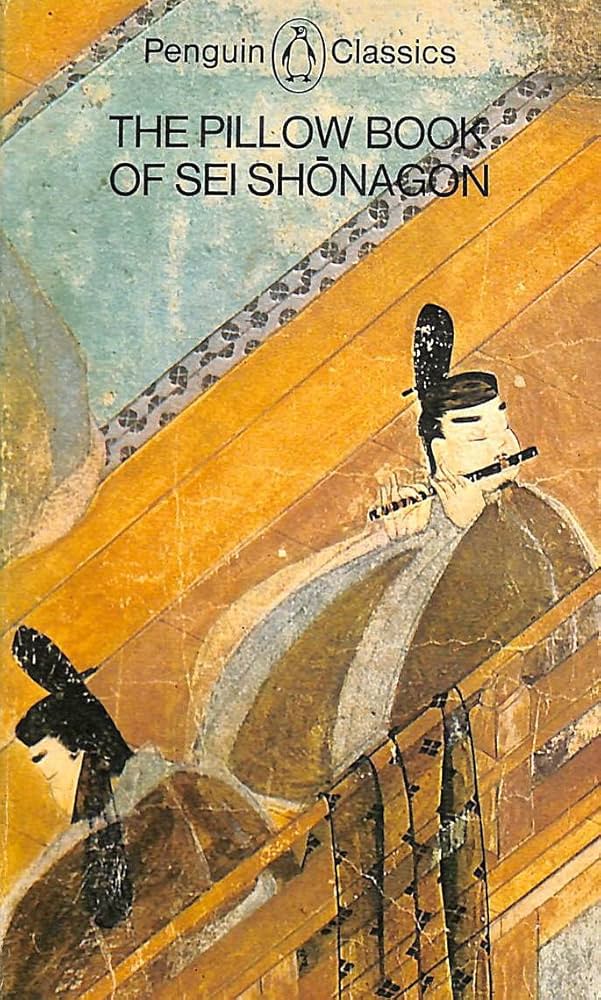
What are your favorite books published in the 20th century or earlier? What is the earliest-published book you have ever read? Mine is The Pillow Book of Sai Shonagon, first published in Heian-era Japan in the year 1002. Available now in the Monarch catalog!

Posted in Uncategorized

When your ship hasn’t come in yet

Dear reader, although November has come and gone, the shipping season on the great lakes won’t end until the Soo Locks close at 11:59pm on January 15th 2026. And even once they do close we can still talk about ships because how else will us ship nerds survive the long barren winter?

But there’s more to wait for than the reopening of the Soo Locks on March 25th 2026. What’s that, you ask? The new book about the Edmund Fitzgerald, The Gales of November by John U. Bacon. This book was released just ahead of the 50th anniversary of the ship’s sinking. However, I can’t talk about it because I haven’t read it yet! The last time I checked I’m still number 32 in the holds queue for it. Isn’t there something exciting about checking your placement in the holds queue for a book you really want? It’s like Christmas day when you finally get the notification that it’s available for checkout!

So while you wait for your copy of The Gales of November to come in, I’ll spend our time together talking about other books either about the Fitzgerald sinking or other shipwrecks that have happened on the Great Lakes.

The Gales of November by John U. Bacon

For three decades following World War II, the Great Lakes overtook Europe as the epicenter of global economic strength. The region was the beating heart of the world economy, possessing all the power and prestige Silicon Valley does today. And no ship represented the apex of the American Century better than the 729-foot-long Edmund Fitzgerald—the biggest, best, and most profitable ship on the Lakes.

But on November 10, 1975, as the “storm of the century” threw 100 mile-per-hour winds and 50-foot waves on Lake Superior, the Mighty Fitz found itself at the worst possible place, at the worst possible time. When she sank, she took all 29 men onboard down with her, leaving the tragedy shrouded in mystery for a half century.

In The Gales of November, award-winning journalist John U. Bacon presents the definitive account of the disaster, drawing on more than 100 interviews with the families, friends, and former crewmates of those lost. Bacon explores the vital role Great Lakes shipping played in America’s economic boom, the uncommon lives the sailors led, the sinking’s most likely causes, and the heartbreaking aftermath for those left behind—”the wives, the sons, and the daughters,” as Gordon Lightfoot sang in his unforgettable ballad.

Focused on those directly affected by the tragedy, The Gales of November is both an emotional tribute to the lives lost and a propulsive, page-turning narrative history of America’s most-mourned maritime disaster.

Dear reader, one thing I love the most about nonfiction books is the fact that they not only give an in-depth account of the topic they’re covering, they also give you the backstory leading up to it, such as the political climate, social attitudes, etc. It’s especially fascinating to read about such things when you haven’t grown up in the time period the book is covering.

For instance, in a recent documentary I watched on the Edmund Fitzgerald it was mentioned how the Coast Guard was trying to cut costs by automating certain lighthouses. It was strongly advised not to automate the Whitefish Point lighthouse, which was a crucial point to warn sailors of dangerous shoals, but automated it was and on the night of the Fitzgerald’s sinking the infamous storm had knocked out power to the lighthouse, thus depriving the Fitzgerald’s crew of yet another point of navigation. In the same documentary it said while the Fitzgerald was at the ore dock in Superior, WI a crane operator had damaged the ship’s navigational equipment, so by the time they were out in open water and in the thick of the storm they were basically running blind. One speculation on the cause of the Fitzgerald’s sinking is, due to this lack of navigational equipment, they inadvertently steamed too close to the shoals of Caribou Island and damaged the hull of the ship unknowingly. Even 50 years later we still do not know what ultimately led to the Fitzgerald’s tragic sinking. Her final resting place in Canadian waters was in 2006 declared a gravesite due to the remains of all 29 crew members still being on board, so there are no longer dives down to the wreck to investigate it.

When she was built the Fitzgerald was the largest and fastest ship on the Great Lakes. In fact, when she was launched into the water for the first time she was the largest to have done so. In the same documentary it mentioned how her accommodations for visiting dignitaries and their families were appointed with the most up to date technology and luxuries of the time. She was the star of her fleet and consistently broke old records and created new ones for the most cargo hauled in a season. She was also the first ship to have a welded hull. This allowed her to be built in record time. Here lies another speculation on the cause of her sinking, with some saying it was this accelerated, welded design that led to a compromise in structural integrity.

This theme of being the largest ship on the Great Lakes also applies to another shipwreck, that of the Carl D. Bradley, which sank in Lake Michigan in 1958.

Continue reading “When your ship hasn’t come in yet”
Posted in Uncategorized

‘Tis the Season for Some Knits!

The weather is crisp, the leaves are abandoning ship, and I’m thinking of all the ways I can stay as cozy as possible. Reading and pouring myself cups of tea are essential activities. This is also the stretch of time where I carry my knitting projects in my bag everywhere I go. If you’re even mildly curious about knitting, or already deep in the craft, our catalog has a great assortment of books to inspire you to make something out of seemingly nothing.

Vogue Knitting: The Ultimate Knitting Book

Vogue has published many knitting books over the years—some excellent, some… less so. But if there’s one to add to your shelf, Vogue Knitting: The Ultimate Knitting Book is the one. It’s more of a tome than a travel companion, but it covers almost everything you might want to know: a stitch dictionary, patterns, fiber guides, yarn weights, and more.

My favorite part is the clear breakdown of garment shaping and construction. Understanding why something comes together the way it does is invaluable. If you can “read” your knitting, it becomes much easier to identify mistakes, fix them, and even adjust or design your own patterns.

Standout: The fiber guide is wonderfully thorough. In my early days, I picked yarn at random and then wondered why my finished hat didn’t match the slouchy photo in the pattern. Turns out fiber matters.

Continue reading “‘Tis the Season for Some Knits!”
Posted in Adult, History, Science, Staff Picks, Teen & Young Adult, Uncategorized

Let’s Celebrate National Parks!

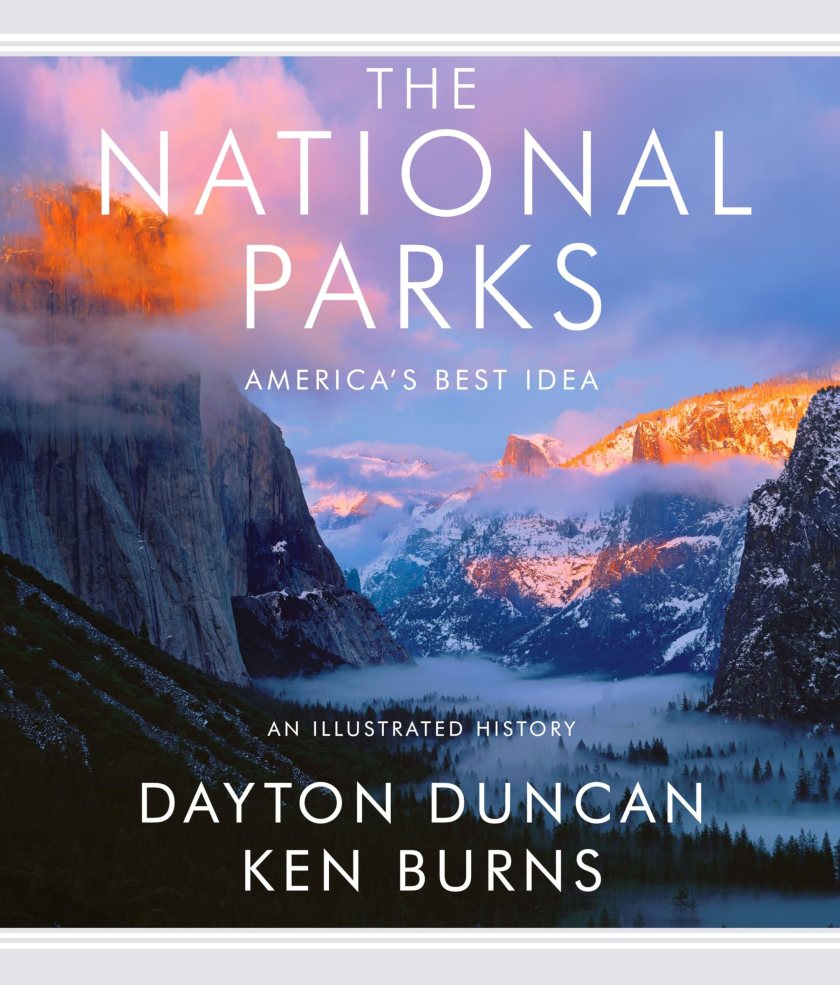
It is that time of year again. The weather is getting warmer and most of us just want to be outside. I grew up in Dundee Wisconsin surrounded by the vast Kettle Moraine State Forest. I would spend hours as a child running through the meadows, climbing rocks and trees, and exploring the woods. When I was very little my grandfather would babysit me at his office at the Ice Age Center. He was a naturalist there. He and Grandma made sure that my cousins and I had the chance to travel and explore many of the national parks where Grandpa had worked in his younger years. Each summer they took us somewhere new. I was blessed to be able to see The Grand Canyon, Yellowstone National Park, Mount Rushmore, Mesa Verde, and The South Dakota Badlands. Our grandparents also took us east to Niagara Falls, Gettysburg, The Finger Lakes of upper New York, and Washington D.C. As an adult it is more difficult to travel to these places as life is busy. This time of year I get out and explore the many beautiful natural areas closer to home. Though I am unable to travel to the national parks whenever I may like, I do still carry a deep appreciation for our country’s protected wilderness areas. These national parks deserve to be celebrated and protected for all future generations to enjoy. Dear reader, please join me on a literary tour and celebration of our national parks through the books I have selected below.

Continue reading “Let’s Celebrate National Parks!”
Posted in Uncategorized

Abbie’s Recent Reads

Dear Readers, welcome to another installment of Abbie’s Recent Reads! Over the last few months the main genres I have been reading have been Nonfiction and Horror. The Nonfiction reads have ranged from the true crime genre, ballet, to Polar exploration. Prepare for a wild ride through time, space, and the globe as I share some of my recommended books I have read recently!

The Stowaway by Laurie Gwen Shapiro

I will read any book I can find on Antarctic Exploration or North Pole Exploration. While awaiting my hold of Madhouse at the End of the Earth on Libby, The Stowaway was recommended to me as a similar read to enjoy while I waited. (I am still awaiting my hold of Madhouse at the End of the Earth to come in.) I am really glad I read this one. As I have read many books on Polar exploration, I have always wondered what it would be like to be along with the explorers on their grand adventures. Apparently a lot of other people at the time of these explorations were thinking the same thing! The Stowaway is the true story of Billy Gawronski, an ordinary teenage son of Polish immigrants living in New York. In the 1920’s Billy has grown up on adventure stories and dreams of going off on one of his own. He becomes obsessed with Captain Byrd and the expedition being planned to explore the Antarctic. Billy’s father and mother do not approve of their son’s dreams as Billy is expected to take over the family upholstery business. Billy feels he has no choice. If he wants any chance at adventure he is going to have to stowaway on Captain Byrd’s ship! The plot sounds like something out of a kid’s adventure novel, but this is a TRUE story! I took great delight in following Billy through his adventures and cheering him on along the way. As I followed Billy’s story I found myself asking on more than one occasion “could I be that brave and daring?” I greatly recommend this for anyone who loves reading about history, exploration, and scrappy underdog characters.

Click HERE to request The Stowaway!

Continue reading “Abbie’s Recent Reads”
Posted in Uncategorized

Real Life and Real Action! Nonfiction Favorites!

I read a LOT. Most of what I read is fiction, but sometimes I get that craving for a good nonfiction novel. I have always been a complete history nerd so historical nonfiction is usually what I gravitate to. It really does not matter what period of history I am reading about, I enjoy the personal stories and struggles of people who really lived. In reading about a different time I feel I can transport myself to that era and see through the eyes of those who lived there. In a sense historical nonfiction is a type of time machine easily accessed and free with a library card! The following are some of my recent favorites!

Labyrinth of Ice by Buddy Levy

I have always been fascinated with any story about exploration or sailing ships, so this one captivated me. I had never heard of the Greely Expedition before, but the author had me feeling like I was along for the ride! (While being curled up with a blanket and lemonade…) The goal of Greely and crew was to be the first people to get to the North Pole. They had to deal with sub zero temperatures without any modern amenities. They had to defend against wild animals, days of total darkness, dwindling supplies, and a punishing icy environment. Each individual had to find the strength to stay sane and alive while going where no one had gone before. This book was one wild ride!

Recommended for fans of exploration, ships, survival, and adventure. *may contain cannibalism based on evidence discovered by rescuers*.

Click the title to request Labyrinth of Ice!

Continue reading “Real Life and Real Action! Nonfiction Favorites!”